
As the UAE’s project pipeline approaches USD 650 billion and Saudi Arabia’s Vision 2030 drives over USD 1 trillion in construction investment, the specification of façade systems for commercial towers has never carried greater technical and commercial consequence. For architects, façade consultants, and project developers operating across Dubai, Abu Dhabi, Riyadh, Doha, and Muscat, choosing the right cladding system is not merely an aesthetic decision — it is a structural, regulatory, and lifecycle engineering commitment.
This guide examines the performance requirements, material options, wind-load engineering principles, fire safety obligations, and maintenance access strategies that define best-practice façade specification for commercial high-rise buildings in the UAE and wider GCC region.
Why Façade Specification Is a Critical Engineering Decision in GCC High-Rise Projects
Commercial towers in the UAE and GCC must contend with a unique convergence of environmental stressors. Ambient temperatures regularly exceed 45 °C in summer months, solar radiation intensity is among the highest globally, and coastal developments from Dubai Marina to Doha’s West Bay face sustained salt-laden winds. Simultaneously, the region’s regulatory environment has evolved substantially following high-profile cladding fire incidents at prominent Dubai towers, leading to a markedly more stringent interpretation of the UAE Fire and Life Safety Code of Practice.
Against this backdrop, façade engineering in GCC commercial towers must simultaneously satisfy four overlapping performance mandates: structural integrity under dynamic wind loads, fire-spread containment, thermal energy management, and long-term maintainability. The cladding system selected at specification stage will govern all four outcomes for the building’s operational lifetime, which on major commercial assets can extend 40–60 years.
Understanding Wind Load Engineering for UAE Commercial Tower Façades
Wind load is the primary structural design driver for façade systems on commercial towers above 60 metres in the GCC. Buildings in Dubai and Abu Dhabi are governed by wind exposure categories derived from ASCE 7 and BS EN 1991-1-4 (Eurocode 1), with dynamic pressure calculations factoring in terrain category, building height, and local topographic amplification. On supertall towers above 200 metres — of which the GCC hosts a disproportionate global share — aeroelastic effects require wind-tunnel testing as a project-specific engineering input, not a generic code lookup.
Cladding panel connections and subframe design under wind suction
The most consequential wind-load scenario for external cladding is not positive wind pressure but suction — the negative pressure differential on the leeward façade face, building corners, and roof parapets. Panel fixing systems must be engineered to resist both serviceability-level and ultimate-limit-state suction forces without panel disengagement or subframe bracket failure. For ventilated façade systems employing extruded porcelain, sintered stone, or fibre cement panels, kerf-and-hook or invisible mechanical anchoring systems are generally specified on high-rise applications above 80 metres, as adhesive and front-fixed systems carry unacceptable risk under sustained cyclic wind loading.
Panel thickness and self-weight at altitude
Material self-weight becomes an increasingly significant design variable at tower heights where crane lifting capacity and subframe dead-load capacity are constrained. Extruded porcelain panels in the 14–20 mm thickness range typically offer a favourable strength-to-weight ratio for high-wind zones, while large-format sintered stone panels (up to 3200 × 1600 mm) require bespoke engineering sign-off for installations above 100 metres due to their combined flexural stress and connection point sensitivity. Fibre cement panels in the 8–12 mm range remain one of the most wind-load-efficient options on a mass-per-unit-area basis, a property that directly reduces subframe steel tonnage and foundation load transfer calculations.
Ventilated Façade Systems: The Architecture of Choice for GCC Commercial Towers
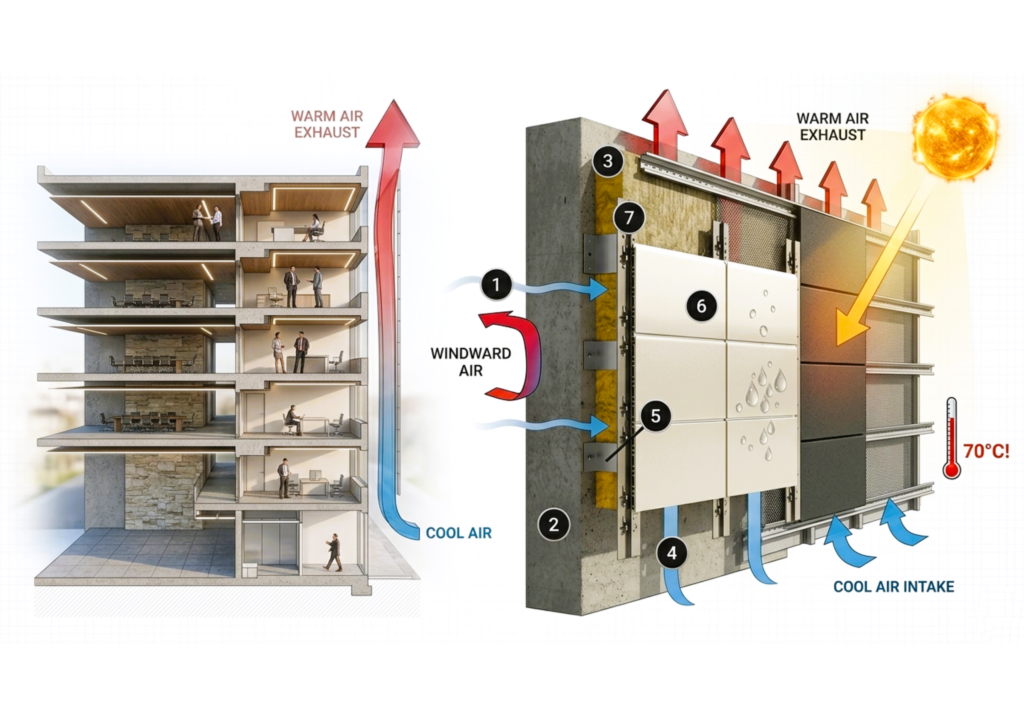
The ventilated façade — comprising an outer cladding layer, a drained and back-ventilated air cavity, a thermal insulation layer, and a structural substrate — has become the dominant specification on commercial tower projects across the GCC for a combination of technical and sustainability-driven reasons. Ventilated cavity systems captured 51% of incremental contract awards in the UAE in 2025, reflecting their growing adoption over sealed, non-ventilated assemblies.
How the ventilated cavity performs in GCC climate conditions
The air gap — typically 30–50 mm on commercial façades — serves multiple interdependent functions in the Gulf climate context. During daylight hours, solar radiation heats the outer cladding panel surface to temperatures that can exceed 80 °C on south- and west-facing elevations. The ventilated cavity allows this heat load to be expelled through convective airflow before it conducts into the building envelope, substantially reducing cooling energy demand. Independent thermal modelling consistently demonstrates 20–35% reductions in façade-transmitted heat gain on ventilated assemblies compared with directly bonded cladding applied over insulation — a performance differential that is material to UAE Green Building Regulations compliance and Pearl Building Rating System targets.
Moisture management in coastal GCC environments
In coastal locations from Dubai Marina to Abu Dhabi’s Corniche and Bahrain’s financial district, façade moisture management is a year-round engineering challenge. Salt-laden humidity drives interstitial condensation risk, and any cladding system that relies on sealed adhesive bonds at the substrate is inherently susceptible to progressive delamination over a 15–20-year horizon. The drained ventilated cavity provides a positive drainage plane for any moisture that penetrates beyond the outer cladding, eliminating the moisture entrapment pathways that cause premature failure in direct-fix and EIFS systems in maritime climates.
Façade Material Performance Analysis: GCC Commercial Tower Applications
The selection of cladding panel material for a commercial tower façade in the UAE or GCC should be driven by a structured performance matrix rather than aesthetic preference alone. Below is a technical assessment of the principal material systems relevant to high-rise commercial specification in the region.
Extruded porcelain façade panels
Extruded porcelain — technically distinct from pressed ceramic tile due to its through-body extrusion process and fired density above 2,300 kg/m³ — has established itself as one of the most technically robust cladding materials for GCC commercial towers. Its water absorption rate, typically below 0.1%, makes it effectively impermeable in the humidity and salt-spray conditions of coastal UAE projects. The material’s A1 fire classification to EN 13501-1 (non-combustible) satisfies the UAE Fire and Life Safety Code of Practice for high-rise external cladding without the need for additional fire testing at system level for the panel material component. Extruded porcelain also demonstrates exceptional resistance to thermal cycling — a critical advantage in a climate where surface temperatures swing between 15 °C at night and 80 °C+ under direct midday sun.
Versatile fibre cement cladding
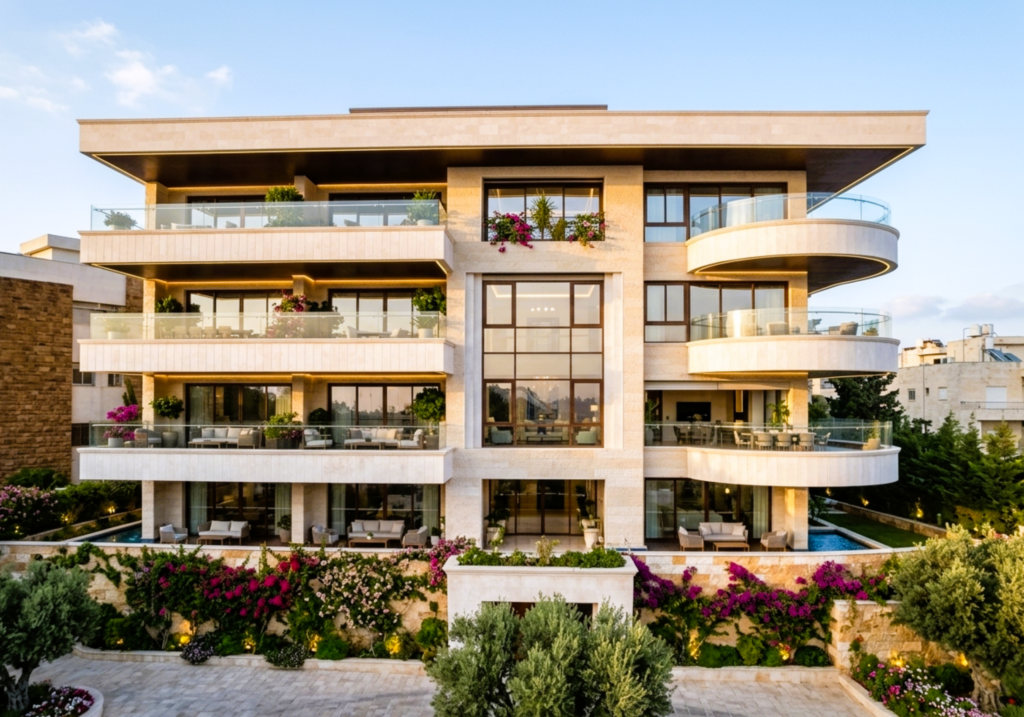
Fibre cement panels have evolved substantially from their utilitarian origins and now represent a technically sophisticated cladding solution for commercial façades in demanding climates. Modern fibre cement boards are non-combustible, moisture-resistant, and dimensionally stable across the temperature ranges experienced in GCC service conditions. Their light weight — particularly relevant for post-2020 high-rise projects where structural steel tonnage reduction is increasingly valued — makes them compatible with thinner subframe profiles and faster installation programmes. The material’s workability allows integration of perforations, textures, and customised profiles, enabling architects to achieve articulated façade compositions without the weight premium of comparable natural stone or sintered stone configurations.
Sintered stone and engineered natural stone
Sintered stone panels — produced by subjecting mineral compounds to extreme heat and pressure — offer the visual register of natural stone with the dimensional consistency and structural homogeneity demanded by high-rise specification. For commercial tower lobbies, podium façades, and feature elevations on prestige assets, sintered stone provides a compelling specification argument: scratch resistance well in excess of natural stone, UV colour stability over extended service life, and a surface density that resists the staining and biological growth that can degrade natural stone in the humid coastal environments of the UAE. Large-format options up to 3200 × 1600 mm allow architects to specify seamless-looking elevations on tower podiums and transfer floors where large-panel aesthetics are valued.
High-tech ceramic cladding
Technical ceramic cladding systems — engineered for façade installation rather than floor application — offer a combination of colourfast finishes, high compressive strength, and verified fire performance that positions them well for GCC commercial specification. Porcelain-bodied ceramic façade panels with photocatalytic surface treatments have gained traction on sustainability-oriented projects, with titanium dioxide (TiO₂) coatings demonstrated to reduce NOₓ surface concentrations, support passive self-cleaning in sandstorm-exposed environments, and maintain façade surface brightness over extended periods between maintenance cycles — a property of direct operational relevance to high-rise buildings in Dubai and Abu Dhabi where rope-access maintenance is logistically complex and commercially significant.
Natural wood veneer cladding
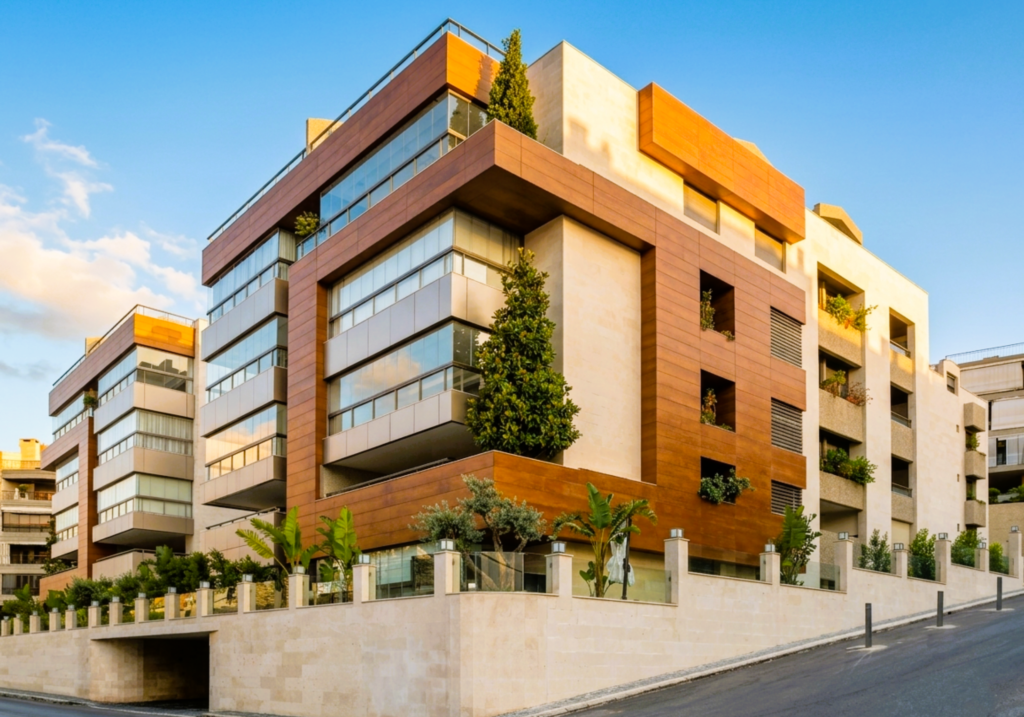
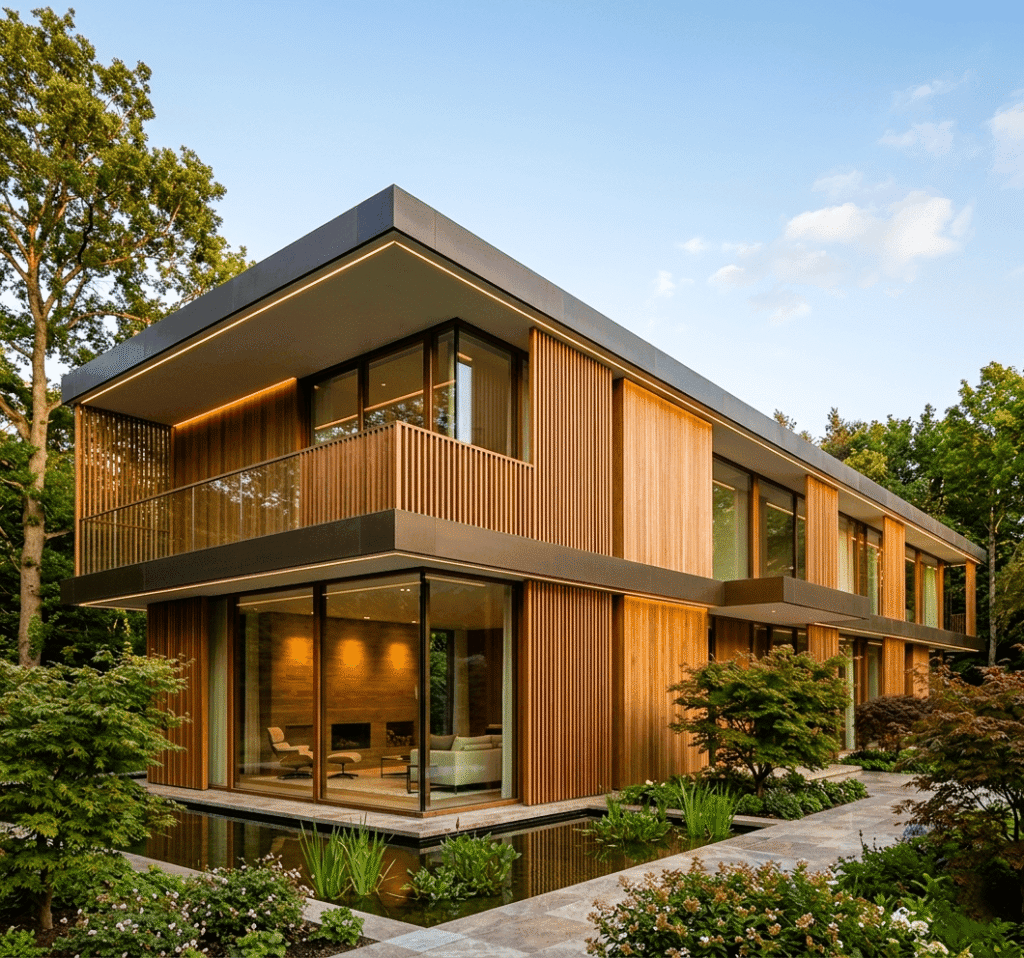
Stabilised natural wood veneer systems represent a premium specification option for commercial interiors, hospitality F&B concepts, and sheltered external applications on mixed-use towers. The warm material register of genuine wood veneer is unreliable by synthetic alternatives and carries strong resonance in luxury hospitality and executive office environments. On exterior applications in the GCC, wood veneer systems require careful micro-climate assessment — covered soffit areas, projecting canopy structures, and glazed atrium façades create sheltered zones where stabilised wood veneer can perform with confidence, provided the underlying ventilated cavity system is correctly specified for moisture drainage.
Wood composite slats, louvres, and decking
Engineered wood composite products — combining cellulose fibres with stabilised polymer binders — offer the visual language of timber without the moisture sensitivity and maintenance commitment that real wood demands in GCC climate conditions. On commercial towers, wood composite louvres and vertical fins are increasingly specified on mixed-use retail podiums and rooftop amenity levels, where they deliver solar shading performance alongside architectural articulation. Composite decking solutions on sky gardens, amenity terraces, and pool decks across UAE commercial and hospitality towers represent a growing application, with the category projected to see significant demand growth as biophilic design principles become more deeply embedded in UAE design guidelines.
UAE Fire and Life Safety Code Compliance for High-Rise Cladding
The regulatory framework governing external cladding on high-rise buildings in the UAE underwent a fundamental reconfiguration following several high-profile tower façade fires in Dubai. The UAE Fire and Life Safety Code of Practice, originally released in 2011 and substantially updated since, is the primary legislative instrument governing façade material and system performance requirements. The Code is enforced by the UAE General Headquarters of Civil Defence, with the Dubai Civil Defence (DCD) and Abu Dhabi Civil Defence (ADCD) as the principal emirate-level enforcement bodies.
Material and system-level testing requirements
The UAE Fire Code mandates a Type 5 conformity programme for cladding materials on high-rise buildings, requiring demonstration of fire propagation behaviour through one of four recognised test methodologies: NFPA 285 (fire propagation characteristics of exterior wall assemblies containing combustible components), FM 4881 (Class 1 exterior wall systems), BS 8414 (external cladding systems on masonry substrates), or ISO 13785-2. Critically, compliance must be demonstrated at the system assembly level — not merely at individual material level — meaning the panel, insulation, subframe, and fixing configuration used on the actual project must be tested or correlated to tested assembly configurations.
For Class A material classifications under NFPA 255 / ASTM E84, non-combustible materials such as extruded porcelain, fibre cement, and ceramic cladding panels inherently satisfy the material-level requirement. However, the surrounding cavity insulation, vapour barrier membranes, and any combustible subframe components must be carefully assessed within the system context to ensure the assembly as a whole meets the Code’s propagation requirements.
EN 13501-1 / A1
The non-combustible fire classification standard required for external cladding panels on high-rise buildings in the UAE. Extruded porcelain, fibre cement, and sintered stone panels produced by leading suppliers achieve this classification, providing a strong compliance baseline for UAE Civil Defence approval processes.
Implications for specification practice
For architects and façade consultants working on UAE commercial tower specifications, the practical implication is clear: cladding system specifications must be developed in conjunction with fire engineering input from the earliest design stages, not retrospectively at tender or construction phase. Façade fire risk assessments, conducted in parallel with prescriptive code compliance reviews, are increasingly considered best practice on high-rise commercial projects across the GCC — particularly given the insurance underwriting scrutiny that combustible cladding assemblies now attract in the regional market.
Maintenance Access Engineering: The Underspecified Variable in GCC Tower Façades
The operational economics of high-rise façade maintenance in the UAE are substantial. A commercial tower of 50 floors in Dubai may require external façade cleaning cycles of 4–8 times per year due to the combination of dust, humidity, and salt deposition that characterises Gulf coast environments. Over a 30-year operational lifetime, the cumulative cost of rope-access maintenance, building maintenance unit (BMU) operation, and periodic panel replacement can represent a financial obligation that equals or exceeds the original cladding installation cost.
Designing for maintainability from specification stage
Ventilated façade systems offer an inherent maintainability advantage over adhesively bonded or sealant-dependent assemblies: individual panels can typically be accessed and replaced without disturbing adjacent elements. On high-rise towers where panel replacement at altitude involves significant rope-access or BMU time, the ability to remove a single damaged or stained panel without cascading disruption to the surrounding façade surface is a meaningful lifecycle cost variable that should be quantified in the total cost of ownership modelling submitted to developers at design stage.
Surface treatment selection for minimum maintenance frequency
Cladding surface treatment significantly influences cleaning frequency requirements on UAE commercial façades. Photocatalytic ceramic and porcelain surfaces with TiO₂ coatings reduce biological growth and airborne particulate adhesion, extending intervals between cleaning cycles. Polished sintered stone and through-body porcelain surfaces resist staining more effectively than textured or porous alternatives in sandstorm-exposed environments. For the UAE specification market, a documented surface maintenance protocol — including cleaning chemical compatibility data, scratch resistance ratings, and replacement panel availability guarantees — is increasingly expected from material suppliers as a component of the project specification package.
BMU integration and façade geometry constraints
Building maintenance unit track integration must be considered at the façade subframe design stage on commercial towers in the UAE. Where parapet geometry, plant room structures, or atrium roof configurations create maintenance access gaps, the façade system must accommodate supplementary rope-access anchors at structural engagement points — a requirement that influences subframe bracket spacing, panel joint alignment, and the location of cavity cavity drainage outlets. These constraints are most effectively managed when façade engineer, cladding supplier, and BMU consultant are engaged in a coordinated technical review at RIBA Stage 2 / Schematic Design, rather than at the construction documentation phase when geometry changes carry programme cost consequences.
Sustainability, Energy Performance & Green Building Certification
The UAE’s Green Building Regulations — mandatory in Dubai since 2011 and progressively strengthened through subsequent iterations — establish minimum energy performance requirements for commercial building envelopes that directly shape façade specification decisions. The building envelope’s overall thermal transmittance (U-value) and solar heat gain coefficient (SHGC) are regulated parameters under Dubai’s Al Sa’fat and Abu Dhabi’s Pearl Building Rating System frameworks, both of which align broadly with ASHRAE 90.1 energy benchmarks.
Ventilated façade systems with continuous mineral wool or rigid insulation panels consistently outperform direct-fixed cladding assemblies in both U-value and thermal bridging performance, as the drained cavity interrupts conductive pathways that would otherwise allow subframe brackets to create linear thermal bridges through the insulation layer. On LEED-certified or Estidama Pearl-rated commercial projects, the verified thermal performance of the cladding assembly contributes to energy credit categories that can differentiate specifications at tender stage.
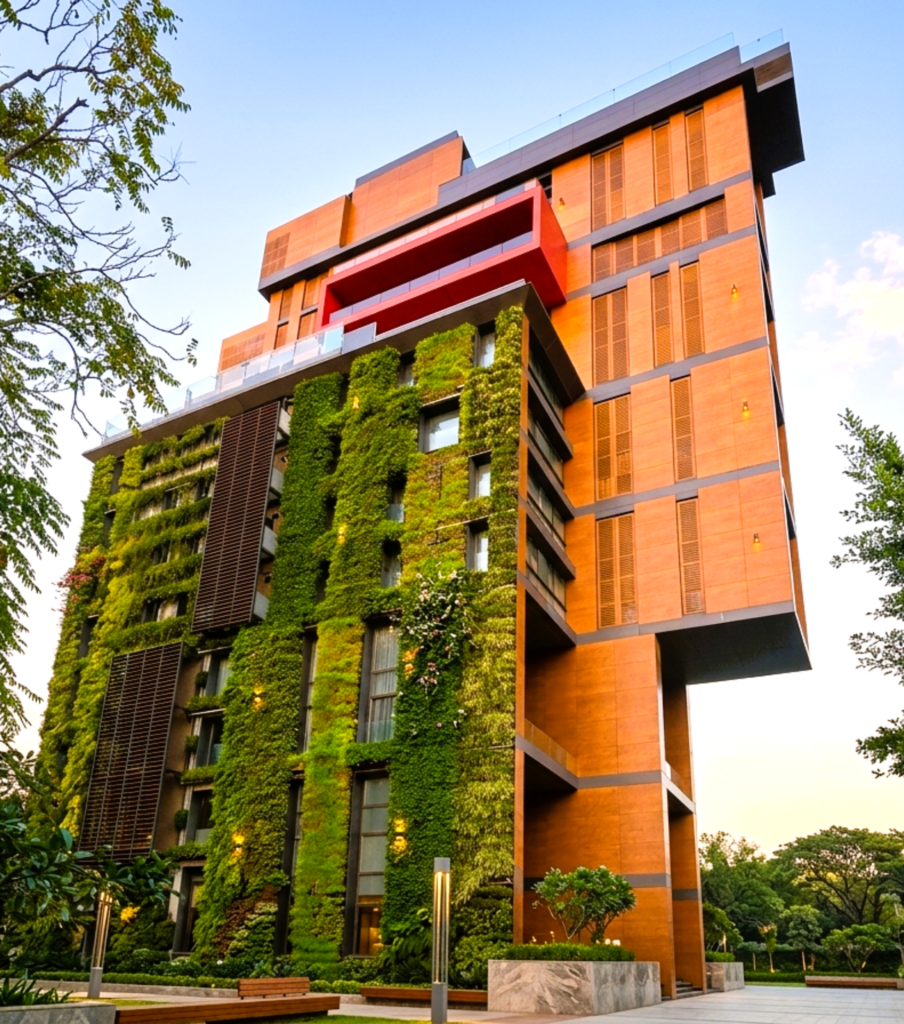
Material embodied carbon is an emerging specification consideration in GCC commercial development, with several major UAE developers now requesting EPDs (Environmental Product Declarations) from cladding material suppliers as part of the sustainability documentation package. Sintered stone, extruded porcelain, and fibre cement panels produced under ISO 14025-compliant EPD programmes provide the documentation framework needed to support LEED v4 Material and Resources credits and BREEAM responsible sourcing requirements on internationally benchmarked projects.
Market Outlook: GCC Commercial Tower Façade Specification 2025–2030
The forward pipeline for commercial tower façade specification across the GCC remains exceptionally strong. Dubai’s 30,000-plus building permit surge in H1 2025, Saudi Arabia’s Vision 2030 investment programme, and Abu Dhabi’s rapidly advancing urban development agenda collectively sustain the deepest order book the regional façade supply sector has experienced. Ventilated systems are projected to grow at 7.1% CAGR through 2030, with rainscreen cladding configurations forecast at 7.3% — both significantly above the broader construction market growth rate.
Key specification trends shaping the GCC commercial tower façade market over the next five years include: the accelerating shift toward unitised and semi-unitised panel systems that reduce on-site installation time on fast-track commercial programmes; growing architect and developer preference for large-format panels that minimise visual joint frequency; the mainstreaming of photovoltaic-integrated façade elements (BIPV) on sustainability-rated assets; and the increasing specification of biophilic material palettes — natural stone, wood veneer, and composite timber — on mixed-use towers where amenity and hospitality uses occupy significant floor plates.
For material suppliers, the GCC commercial tower segment rewards technical depth of documentation, system-level testing credentials, demonstrated UAE Civil Defence approval track records, and the ability to support architects and consultants from early specification through construction-phase technical assistance. These attributes — consistently applied across project engagements — are the foundation of durable specification authority in the region’s high-value façade market.
What is the best façade cladding system for high-rise commercial towers in Dubai?
For commercial towers in Dubai and the wider UAE, ventilated façade systems using non-combustible panel materials — such as extruded porcelain, fibre cement, or sintered stone — are generally considered the highest-performing specification choice. Ventilated assemblies provide thermal performance advantages through the cavity-driven reduction of solar heat gain, achieve UAE Fire and Life Safety Code compliance at material level through Class A1 (EN 13501-1) non-combustible panel classifications, and offer long-term maintainability through individual panel replaceability. The specific panel material should be selected based on building height, wind exposure category, aesthetic requirements, and the project’s sustainability certification target.
What are the UAE fire code requirements for external cladding on commercial towers?
The UAE Fire and Life Safety Code of Practice requires external cladding on high-rise commercial buildings to demonstrate fire propagation performance at system assembly level, typically through testing to NFPA 285, FM 4881, BS 8414, or ISO 13785-2. At material level, panels must achieve Class A classification to NFPA 255/ASTM E84, Class 0 to BS 476 Parts 6 and 7, or Class A1 to EN 13501-1. The Code mandates a Type 5 conformity programme for cladding materials, meaning manufacturers must demonstrate performance within a representative assembly configuration rather than as isolated materials. Compliance is enforced by Dubai Civil Defence (DCD) and Abu Dhabi Civil Defence (ADCD).
How do wind loads affect façade panel specification on UAE commercial towers?
Wind loads — particularly suction forces on leeward faces, building corners, and parapets — are the primary structural driver for cladding panel fixing and subframe design on UAE high-rise buildings. Panels above 80 metres in high wind exposure zones should be specified with kerf-and-hook or invisible mechanical anchoring systems rather than adhesive or direct-fix configurations, as these resist cyclic suction loading across the building’s operational lifetime. Panel thickness must be engineered to the specific wind pressure coefficients derived from the building’s wind tunnel analysis or code-based calculation, with safety factors applied at both serviceability and ultimate limit state load cases.
What is the difference between ventilated and non-ventilated façade systems in GCC climates?
In GCC climates, a ventilated façade system creates a drained air cavity of 30–50 mm between the outer cladding panel and the thermal insulation layer. This cavity allows solar heat accumulated at the cladding surface to dissipate through convective airflow before transmitting into the building structure, reducing cooling energy demand by 20–35% compared to non-ventilated (direct-fixed or EIFS) assemblies. Non-ventilated systems eliminate the cavity and bond or fix cladding directly to the insulation or substrate. While simpler to install, non-ventilated systems perform less efficiently thermally in high-solar environments and offer no drainage pathway for moisture ingress — a significant limitation in coastal GCC locations where salt humidity drives interstitial condensation risk.
How should architects approach façade maintenance access planning on commercial towers in the UAE?
Façade maintenance access on UAE commercial towers should be integrated into the façade engineering scope from RIBA Stage 2 / Schematic Design. Key considerations include: building maintenance unit (BMU) track integration with the façade subframe layout; rope-access anchor point locations at structural connection zones; panel joint alignment to support individual panel replacement without cascading disruption; selection of cladding surfaces with photocatalytic or low-porosity treatments to extend cleaning intervals; and full documentation of panel replacement availability and cleaning chemical compatibility from the cladding supplier. Given cleaning frequency requirements of 4–8 cycles per year in UAE coastal and desert environments, the maintenance cost implications of cladding system selection should be modelled across a 30-year operational horizon as part of the developer’s total cost of ownership assessment.
Obras International
Speak with the OBRAS technical team to identify the right ventilated cladding and façade system for your commercial tower or mixed-use development.