
Fiber cement cladding in the GCC is redefining how façades are designed, specified, and engineered across the UAE, Dubai, Abu Dhabi, and Saudi Arabia. As architecture in the Middle East responds to extreme climatic conditions, stricter fire regulations, and increasing performance expectations, fiber cement has emerged as a preferred façade material for architects and developers seeking durability without compromising design intent.
In the GCC region, façade systems are no longer treated as aesthetic layers—they are high-performance building envelopes. Fiber cement cladding delivers this shift by combining thermal stability, UV resistance, fire safety compliance, and long-term visual consistency, making it a strategic choice for contemporary architectural projects. Its adaptability within ventilated façade systems further enhances energy efficiency, aligning with the region’s growing focus on sustainable and climate-responsive design.
For architects and façade consultants working on projects across the UAE and wider GCC, fiber cement cladding represents more than a material choice—it is a specification decision that directly influences building performance, regulatory compliance, and architectural identity.
A Material Defined by the GCC Climate Reality
The architectural landscape of the UAE and wider GCC is shaped by environmental extremes: intense solar exposure, high humidity, airborne dust, and significant temperature fluctuations between day and night. These conditions demand façade materials that go beyond aesthetics.
Fiber cement cladding responds precisely to this challenge. Its mineral-based composition delivers exceptional stability under thermal stress while resisting UV degradation, fading, and surface deformation—critical performance factors in cities like Dubai and Riyadh.
Unlike conventional cladding materials, fiber cement maintains its structural and visual integrity over decades, making it a preferred solution for architects designing high-performance envelopes in the Middle East.
Why Fiber Cement Cladding in the GCC Is Becoming the Architect’s First Choice
In contemporary façade design, material selection is no longer purely aesthetic. It is governed by performance, compliance, and lifecycle value.
Fiber cement cladding aligns with all three.
Architects across the UAE increasingly specify it for projects where:
- Ventilated façade systems are required for thermal efficiency
- Fire-rated façade compliance is mandatory under UAE codes
- Minimal maintenance over building lifecycle is a priority
- Design flexibility is essential for architectural expression
This shift is also driven by the growing adoption of high-performance building envelopes in both commercial and residential developments across the GCC.
For deeper technical integration, explore our ventilated façade systems designed for high-efficiency architectural envelopes.
Design Freedom Without Compromising Performance
One of the most compelling reasons fiber cement cladding in the GCC has gained momentum is its architectural versatility.
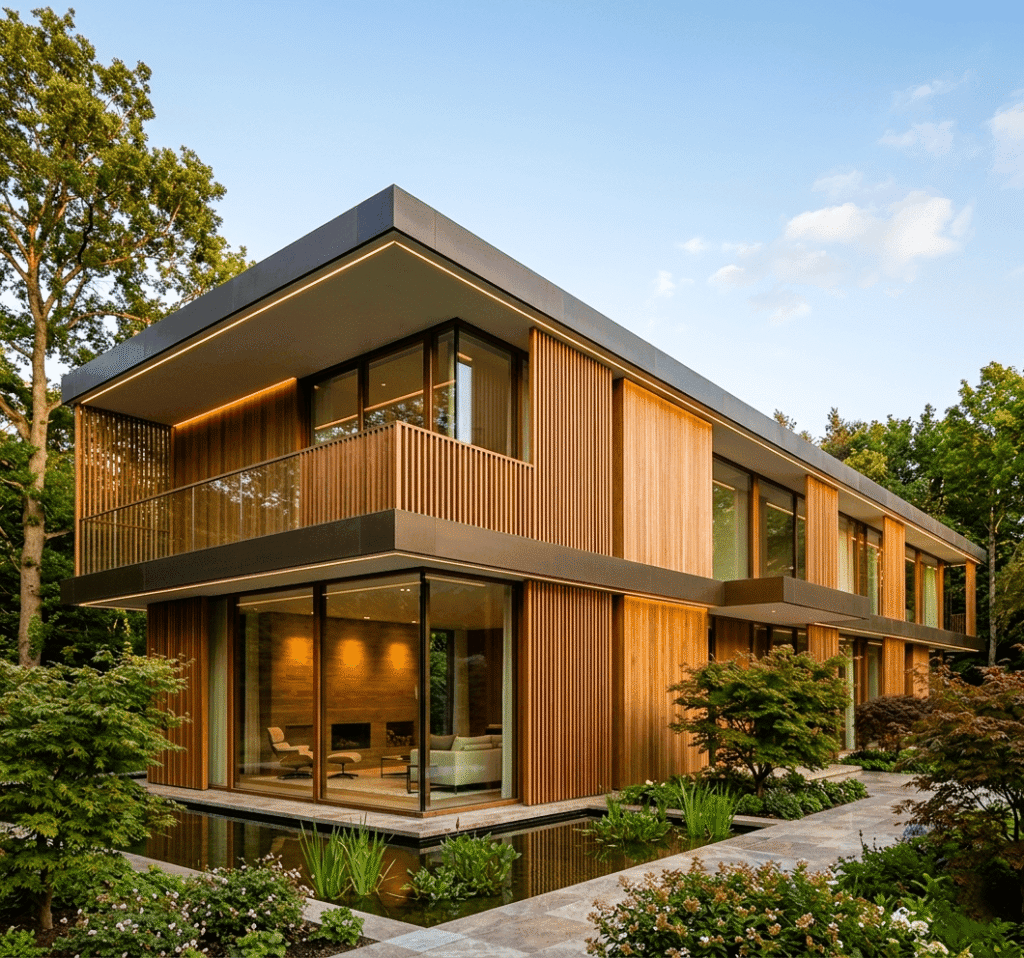
It allows designers to move beyond material limitation and instead focus on façade composition, rhythm, and proportion. Whether used in minimalist residential villas in Abu Dhabi or large-scale mixed-use developments in Dubai, fiber cement supports a wide range of finishes, textures, and panel configurations.
Its ability to emulate natural materials—while outperforming them in durability—positions it as a strategic material in modern façade design language.
This duality of expression and endurance is what makes it particularly relevant in the Middle East’s evolving architectural identity.
Fire Safety, Compliance, and GCC Façade Regulations
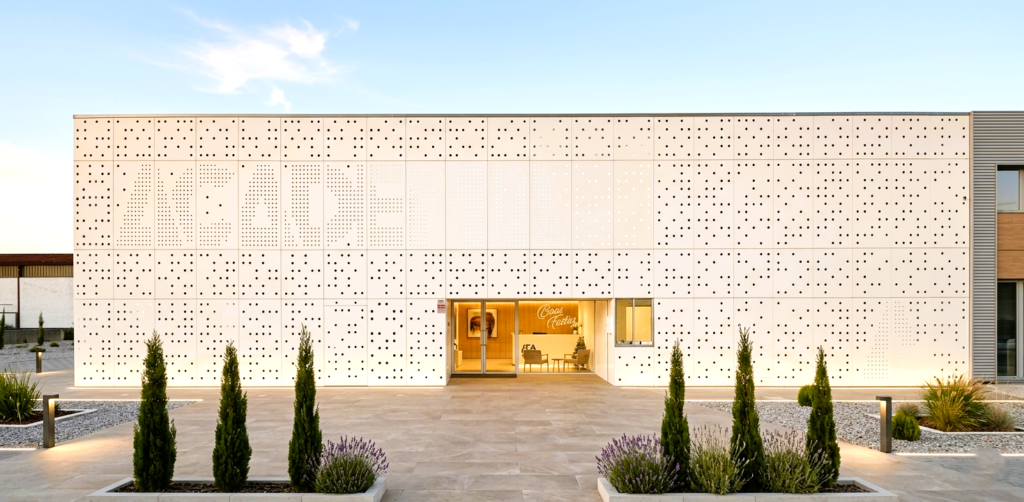
In the UAE and Saudi Arabia, façade systems are subject to increasingly stringent fire and safety regulations. Fiber cement cladding is inherently non-combustible, making it compliant with high fire-rating classifications required for mid- and high-rise developments.
This compliance is not just regulatory—it is design-enabling. Architects can integrate expressive façade geometries without compromising safety standards, particularly in dense urban environments like Downtown Dubai or Riyadh’s emerging business districts.
For projects requiring specification support, explore our fibre cement cladding solutions tailored for GCC regulatory frameworks.
The Shift Toward Sustainable Façade Systems in the Middle East
Sustainability is no longer a design preference in the GCC—it is a mandate. Fiber cement cladding supports this transition by contributing to energy-efficient building envelopes and reducing long-term material replacement cycles.
When integrated into ventilated façade systems, it improves thermal performance by allowing continuous airflow between the cladding and structural wall. This reduces cooling loads, a critical consideration in the UAE’s high-energy-demand climate.
As developers across Dubai and Abu Dhabi prioritize green building certifications, fiber cement continues to gain traction as a future-ready material choice.
Architectural Application Across GCC Projects
From luxury residential towers in Dubai Marina to institutional developments in Saudi Arabia, fiber cement cladding is increasingly visible across typologies.
Its adaptability makes it suitable for:
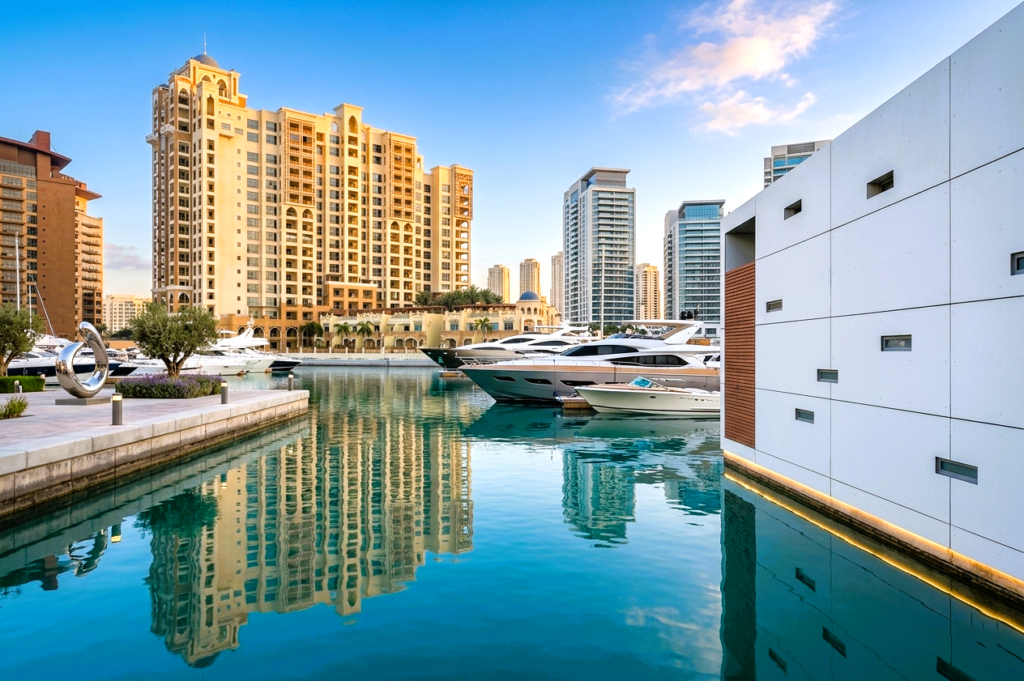
High-rise façades requiring durability and uniformity
Cultural and civic architecture demanding material depth
Commercial developments prioritizing low maintenance
Residential projects seeking refined, minimal aesthetics
You can explore real-world applications in our curated Obras project portfolio showcasing façade-led architectural solutions across the GCC.
Why Specifiers Are Moving Away From Traditional Cladding
The shift toward fiber cement cladding in the GCC is also a response to limitations in traditional materials. Aluminum composite panels, natural stone, and rendered systems each present constraints in either maintenance, thermal performance, or lifecycle cost.
Fiber cement bridges this gap by offering:
- Long-term dimensional stability
- Resistance to harsh UV exposure
- Reduced maintenance cycles
- High adaptability for modern façade systems
For façade consultants, this translates into fewer long-term performance risks and greater design confidence during specification stages.
Partnering with EQUITONE Specification Experts in the UAE
Successful façade execution in the GCC is defined not only by material selection, but by precise technical integration, detailing accuracy, and full compliance with regional building regulations.
At Obras International, in partnership with EQUITONE, we collaborate closely with architects, developers, and façade consultants across the UAE and wider GCC to ensure every façade system is engineered for long-term performance, architectural clarity, and regulatory precision. This partnership brings together advanced fibre cement façade solutions with deep specification expertise—supporting projects from early design stages through to final execution.
For technical consultation or project-specific support, connect with our team via the contact & specification support page to explore how EQUITONE façade systems can be integrated into your next development.
What is fiber cement cladding and why is it used in the GCC?
Fiber cement cladding is a high-performance façade material made from cement, cellulose fibers, and mineral fillers. In the GCC, it is widely used because it performs exceptionally well under extreme heat, UV exposure, and humidity, while maintaining dimensional stability and long-term durability. It is especially popular in the UAE and Saudi Arabia for ventilated façade systems and modern architectural envelopes.
Is fiber cement cladding suitable for the UAE climate?
Yes, fiber cement cladding is highly suitable for the UAE climate. It is resistant to thermal expansion, UV degradation, and moisture, making it ideal for Dubai, Abu Dhabi, and other Gulf cities. Its stability under high temperatures makes it one of the most reliable façade materials for long-term performance in desert environments.
Is fiber cement cladding fire-rated and compliant with GCC regulations?
Yes, most fiber cement cladding systems are non-combustible and comply with strict fire safety regulations in the UAE and GCC. It is commonly specified for mid- and high-rise buildings due to its ability to meet required fire performance classifications and support regulatory approval processes for façade systems.
How does fiber cement cladding improve building performance?
Fiber cement cladding improves building performance by enhancing thermal insulation when used in ventilated façade systems, reducing heat gain, and improving energy efficiency. It also provides long-term resistance to weathering, reducing maintenance costs and preserving architectural appearance over time.
What are the advantages of fiber cement cladding over traditional façade materials?
Compared to traditional materials such as aluminum composite panels, stone, or plaster systems, fiber cement cladding offers better durability, lower maintenance, improved fire safety performance, and greater design flexibility. It also performs more consistently in extreme GCC climate conditions.
Can fiber cement cladding be used in ventilated façade systems?
Yes, fiber cement cladding is commonly integrated into ventilated façade systems. This combination improves thermal performance by allowing air circulation between the cladding and structural wall, reducing heat transfer and increasing energy efficiency—particularly important in the UAE and wider GCC region.
Where is fiber cement cladding commonly used in the GCC?
Fiber cement cladding is widely used across residential towers, commercial buildings, hospitality developments, and institutional projects in the GCC. It is especially prevalent in Dubai, Abu Dhabi, and Saudi Arabia where modern façade aesthetics and high-performance building envelopes are required.
Where can I get technical support for fiber cement cladding in the GCC?
Technical support for fiber cement cladding in the GCC is available through façade specialists such as Obras International. Their specification team works directly with architects and developers to provide system detailing, compliance guidance, and project-specific façade solutions across the UAE and wider region.