
Ventilated Façade System GCC: What Architects Must Know First
The ventilated façade system GCC approach has become a defining standard for architecture across the UAE and wider Gulf region. In climates where extreme heat, humidity, and sand exposure challenge every building envelope, façade design must go beyond aesthetics.
Architects today are expected to deliver buildings that perform—thermally, structurally, and environmentally—while maintaining strong design identity. This is exactly where a ventilated façade system becomes essential.
From Dubai’s high-rise skyline to large-scale developments in Saudi Arabia and Qatar, the shift is clear: ventilated façade systems are now a baseline strategy, not a premium upgrade.
Why Ventilated Façades Are Now Standard in the GCC
A ventilated façade system introduces a continuous air cavity between the structural wall and the external cladding layer. This seemingly simple principle transforms the way buildings respond to climate.
Instead of trapping heat within the envelope, the system allows hot air to rise and escape naturally. This passive airflow reduces heat transfer, limits thermal bridging, and protects the structural wall from environmental stress.
In high-temperature regions like the UAE and Saudi Arabia, this translates directly into measurable performance gains—lower cooling loads, improved indoor comfort, and significantly extended façade lifespan.
Beyond performance, ventilated façades also support compliance with increasingly stringent GCC building regulations related to fire safety, energy efficiency, and sustainability benchmarks.
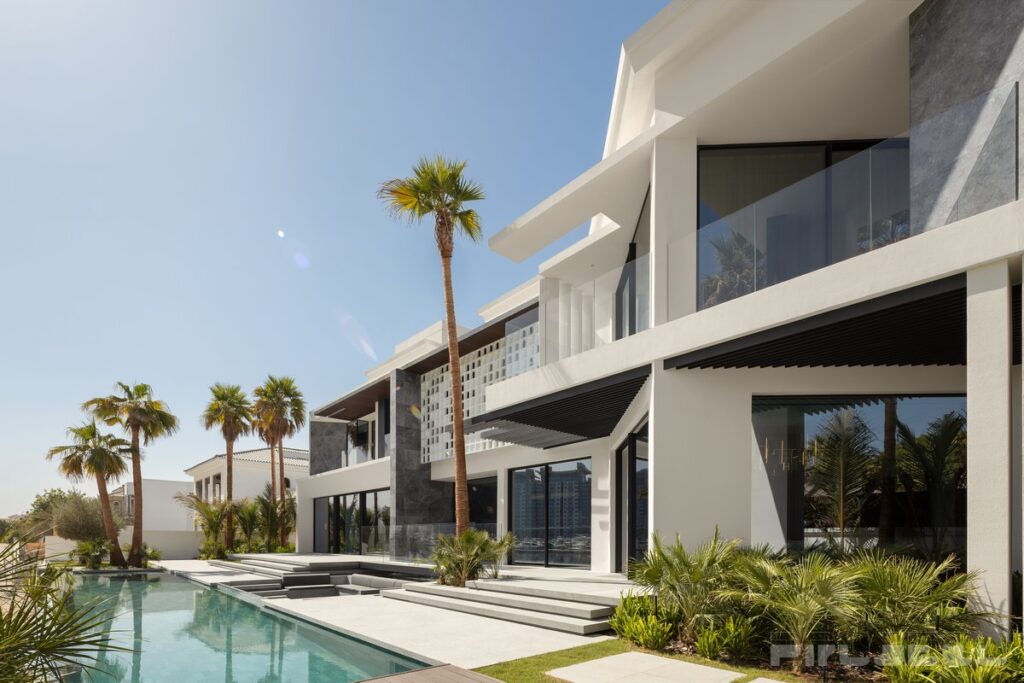
Understanding the Anatomy of a High-Performance Ventilated Façade
A well-engineered ventilated façade is not a single product—it is a system of precisely coordinated layers, each contributing to overall performance.
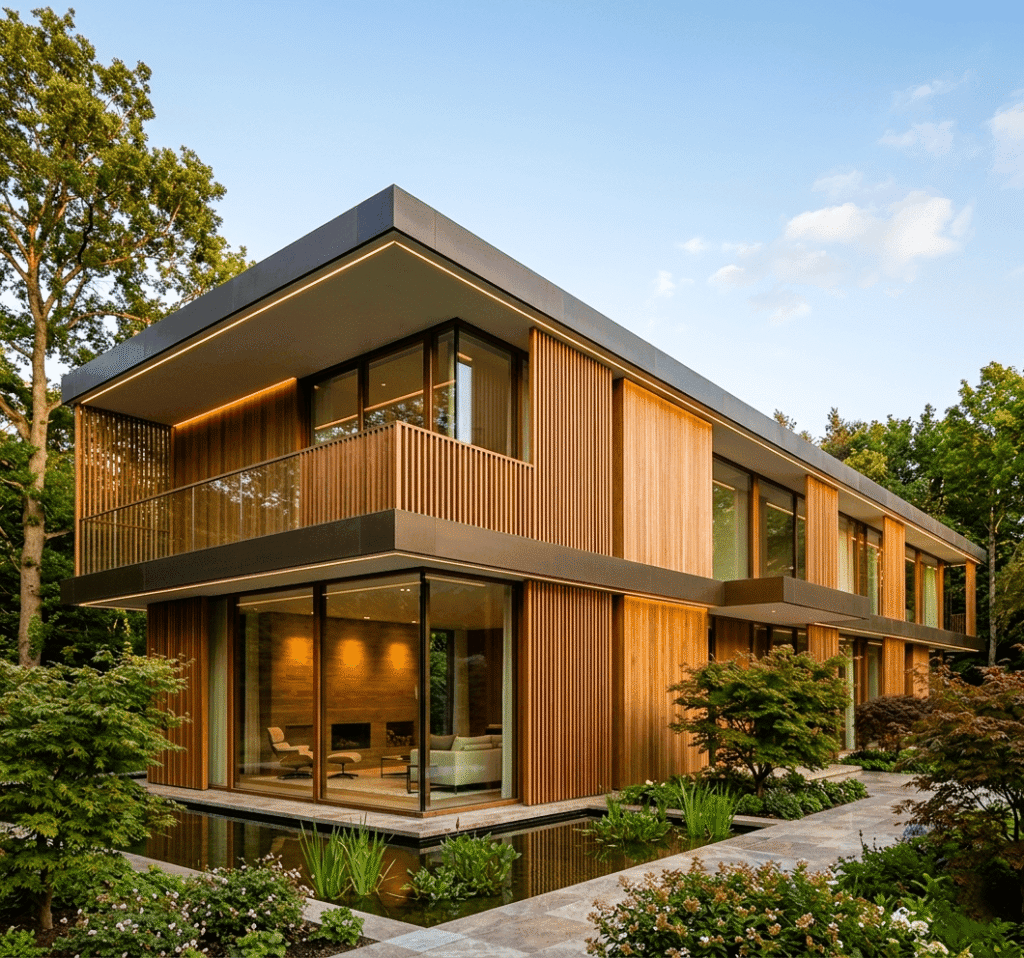
The external cladding layer forms the visible architectural identity of the building. In the GCC, architects are specifying a diverse palette of materials that balance aesthetics with durability. High-density fibre cement panels are widely used for their fire-rated properties and dimensional stability. Porcelain slabs, including large-format and XXL panels, are increasingly specified for contemporary façades requiring minimal joints and high resistance to weathering. Sintered and engineered stone systems bring the visual depth of natural materials while offering superior strength and reduced weight.
Natural wood-look high-pressure laminate panels provide warmth without the maintenance challenges of real timber, making them particularly suitable for hospitality and residential applications. Meanwhile, WPC systems and terracotta or ceramic profiles are often used to introduce texture, shading, and architectural rhythm.
Behind this outer layer lies the ventilation cavity—the core performance driver. This air gap continuously regulates temperature and moisture by allowing airflow to move vertically through the façade. In coastal cities like Dubai and Doha, where humidity can accelerate material degradation, this breathable layer is critical for long-term durability.
Supporting the system is the substructure and fixing framework. Engineered to withstand wind loads, thermal expansion, and structural movement, it ensures alignment, safety, and accessibility for maintenance. A poorly designed substructure can compromise even the highest-quality cladding, making early-stage detailing essential.
Completing the system are insulation layers and weather-resistant membranes, which enhance thermal efficiency and help meet regional energy codes while supporting broader sustainability goals.
Performance Advantages in the GCC Climate
The effectiveness of ventilated façade systems in the GCC is rooted in their ability to respond passively to environmental conditions.
Thermal performance is one of the most significant advantages. By reducing direct heat transfer to the building envelope, ventilated façades can lower cooling energy demand by up to 30%, depending on orientation and material selection. In a region where air conditioning accounts for a major portion of energy consumption, this is a critical factor in both operational cost and environmental impact.
Moisture management is equally important. Traditional cladding systems often trap condensation, leading to deterioration of insulation and structural components. A ventilated façade eliminates this risk by allowing continuous airflow, keeping the envelope dry and stable.
Fire safety is another defining consideration. With evolving regulations across the UAE and GCC, façade systems must meet strict civil defense requirements. Ventilated façade assemblies can be designed using non-combustible materials and certified fixing systems, ensuring compliance without restricting architectural creativity.
Perhaps most importantly for architects, these systems provide design flexibility without compromise. Multiple materials can be combined seamlessly, enabling layered façades, integrated shading systems, and dynamic surface articulation—all while maintaining performance integrity.
WPC systems and terracotta profiles are commonly used for secondary façade elements such as louvers, soffits, and shading devices. These materials enhance both performance and visual depth, contributing to a more responsive building envelope.
What Is the Best Façade System for GCC Climate?
The best façade system for GCC climates is a ventilated façade system because it reduces heat gain, controls moisture, improves energy efficiency, and meets fire safety regulations while maintaining long-term durability.
“This system allows the façade to “breathe,” improving performance through airflow and separation of materials.”
Unlike traditional cladding methods, a ventilated façade system works as an integrated envelope solution—enhancing durability, reducing energy demand, and increasing lifecycle value.
Why a Ventilated Façade System GCC Projects Use Performs Better
Thermal Performance and Energy Efficiency
A ventilated façade system GCC buildings depend on acts as a passive cooling layer. By allowing hot air to rise and escape, it significantly reduces heat transfer into the building.
This can lower cooling loads by up to 30%, making it one of the most effective façade strategies for desert climates.
Why Architects Across the GCC Partner with OBRAS International
For over two decades, OBRAS International has specialized exclusively in ventilated façade and cladding solutions tailored to GCC conditions.
Architects and consultants value OBRAS for:
- Deep material knowledge across global façade systems
- Early-stage technical support and detailing
- Fire-rated and certified system selection
- ISO-certified quality processes
- Long-term performance accountability
From specification to execution support, OBRAS acts as a technical façade partner, not just a supplier.
Common Mistakes When Specifying Ventilated Façade System GCC
One of the biggest challenges is underestimating the importance of system integration.
Without proper detailing, airflow design, and certified components, even high-quality materials can fail. Early coordination between architects, consultants, and façade specialists is essential for achieving long-term performance.
Why Ventilated Façade System GCC Projects Are Increasing Rapidly
The growth of the ventilated façade system GCC market is strongly aligned with sustainability targets and energy regulations.
Frameworks such as Estidama and Dubai Green Building Regulations emphasize energy efficiency and building envelope performance—making ventilated façades a preferred solution.
As these standards evolve, architects are prioritizing façade systems that deliver measurable environmental performance alongside design flexibility.
Designing Façades That Perform as Well as They Look
In today’s GCC built environment, façades are no longer decorative skins—they are high-performance systems that define energy efficiency, safety, and longevity.
A well-designed ventilated façade allows architects to push boundaries while staying grounded in performance. It enables buildings to respond intelligently to climate, reduce environmental impact, and maintain their architectural integrity over time.
The question is no longer whether to use a ventilated façade system—but how to design it correctly.
Explore the Next Step
If your next project demands a façade that delivers on performance, compliance, and design intent, the right strategy begins at the specification stage.
Discover how OBRAS can support your project with tailored ventilated façade solutions designed specifically for the GCC climate.
Explore our façade systems → Here
Book a technical consultation → Here
People Also Ask
What is the best façade system for hot climates like the GCC?
Ventilated façade systems are the most effective for hot climates due to their ability to reduce heat gain, control moisture, and improve energy efficiency through natural airflow.
Are ventilated façades suitable for high-rise buildings?
Yes. When engineered correctly, ventilated façades perform exceptionally well on high-rise buildings and are widely used across residential and commercial towers in the GCC.
Which façade materials are fire-rated in ventilated systems?
Common fire-rated options include high-density fiber cement panels, porcelain façades, sintered stone, engineered stone, and terracotta systems when installed as part of a certified assembly.
Do ventilated façades require more maintenance?
No. In fact, ventilated façades typically require less maintenance than traditional cladding systems due to reduced moisture exposure and easy panel replacement.
Can multiple façade materials be used in one ventilated system?
Yes. One of the key advantages is the ability to combine materials — such as porcelain, wood-look panels, stone, and louvers — within a single engineered system.