
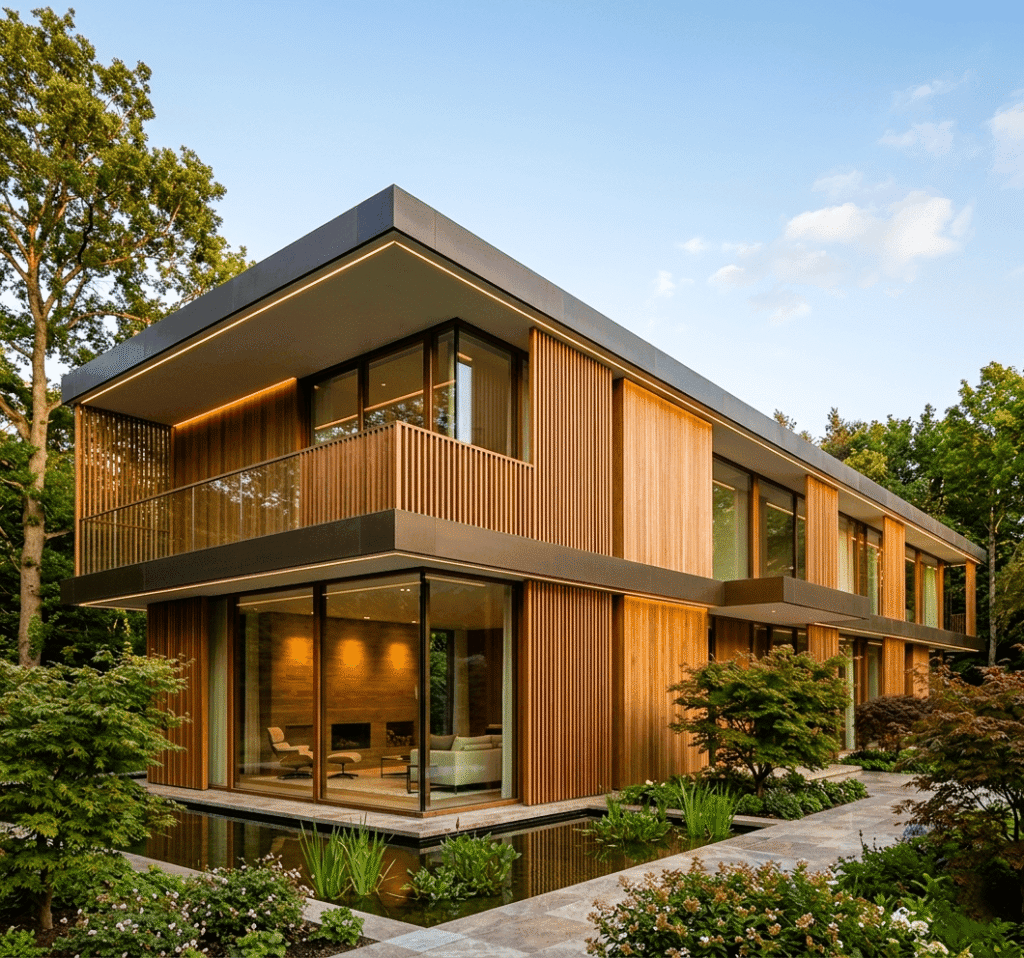
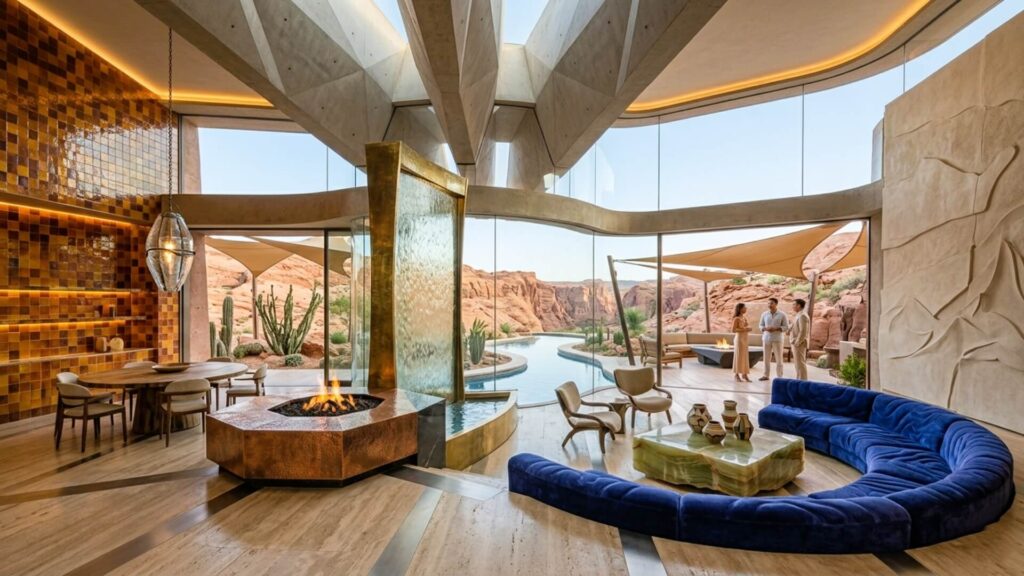
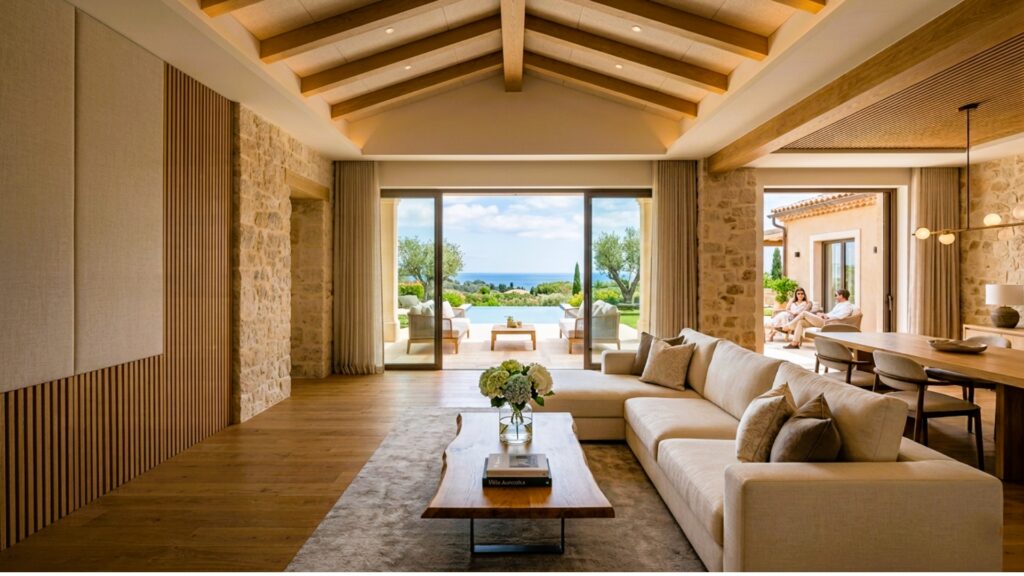
HPL Natural Wood Veneer Cladding GCC: A New Standard for Timber Façades
In the UAE and wider GCC, architecture is defined by ambition. Façades are no longer just building envelopes—they are statements of identity, performance, and intent. From Dubai’s skyline to the emerging urban districts of Riyadh and Doha, architects are constantly asked to design façades that feel warm, human, and timeless, while surviving some of the harshest climatic conditions on earth.
Wood naturally enters this conversation. It brings softness to glass-heavy skylines, warmth to minimalist compositions, and tactility to highly engineered environments. Yet in the Gulf, traditional timber often becomes a compromise. It fades under UV exposure, deforms under heat, and demands continuous maintenance cycles that rarely align with modern development logic.
This contradiction has pushed architects to search for a better answer—one that preserves the emotional quality of wood without inheriting its weaknesses.
That solution is HPL natural wood veneer cladding, a material that is quietly reshaping façade design across the GCC.
Rethinking Wood: What HPL Natural Wood Veneer Actually Is?
HPL wood veneer panels are not a synthetic imitation of timber. Instead, they are a hybrid system—engineered under high pressure using layered composites and finished with real wood veneer.
This distinction matters.
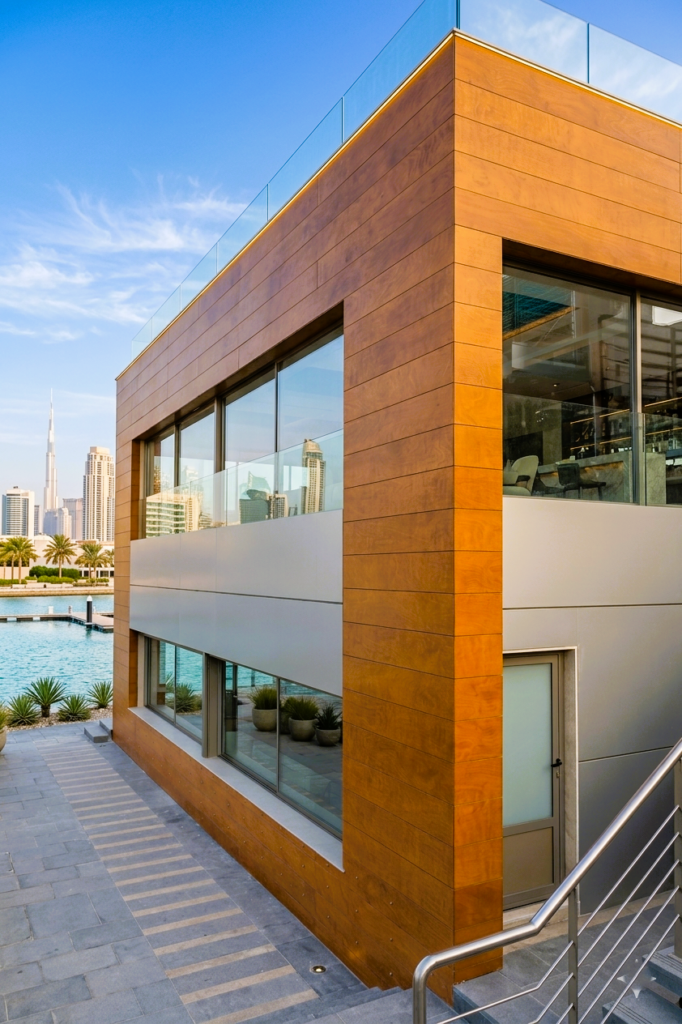
Unlike printed laminates or artificial finishes, HPL retains the authentic grain, texture, and irregular beauty of natural wood, but stabilizes it within a high-performance structural core. The result is a façade material that behaves like an engineered system while visually belonging to the natural world.
For architects in the UAE, this means wood is no longer limited to shaded interiors or protected environments. It can now perform as a primary exterior façade material, even under extreme exposure conditions.
Why Architects in the UAE and GCC Are Moving Toward HPL Wood Veneers
Across Dubai, Abu Dhabi, and Saudi Arabia’s rapidly evolving urban corridors, specification decisions are becoming increasingly performance-driven. Façade systems must now satisfy aesthetics, durability, fire compliance, and sustainability frameworks simultaneously.
HPL natural wood veneer cladding aligns with this shift in architectural practice.
Instead of deteriorating under sun and sand, it maintains visual stability over time. Instead of requiring seasonal maintenance cycles, it remains consistent with minimal intervention. And instead of limiting design expression, it expands it.
For architects, this is not just a material upgrade—it is a design liberation.
Through Obras International’s partnership with Parklex Prodema, these panels are now widely accessible across GCC projects, enabling architects to specify wood façades with confidence rather than compromise.
Design Freedom: How HPL Wood Veneer Expands Architectural Expression
One of the most compelling aspects of HPL wood veneer systems is not just their durability, but their adaptability in design language.
In contemporary UAE architecture, façades are rarely singular. They are layered, fragmented, and composed of multiple material identities. Wood plays a critical role in this composition—it softens geometry, introduces rhythm, and creates emotional contrast against glass and concrete.
Vertical applications are often used in residential villas across Dubai to emphasize height and clarity. Horizontal compositions are favored in hospitality projects in Oman and coastal developments in Abu Dhabi, where they echo landscape and horizon. In commercial architecture, wood veneer is increasingly used as a secondary skin—integrated into screens, soffits, and shaded façades that respond to solar exposure while maintaining visual identity.
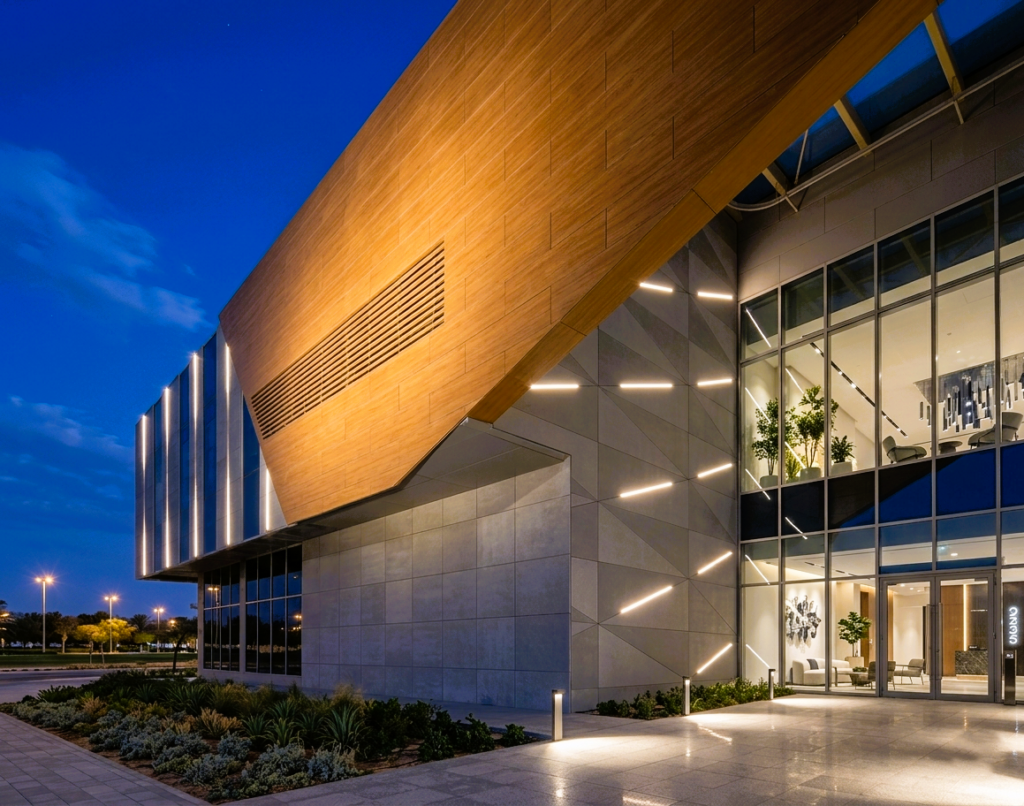
What makes HPL systems particularly powerful is their dimensional stability across all these configurations, allowing architects to push geometry without worrying about deformation or alignment failure.
Performance in the GCC Climate: Designed for Reality, Not Ideal Conditions
The Gulf is not a forgiving environment. It is a test case for every façade system.
Intense UV radiation, abrasive sand particles, high humidity in coastal zones, and extreme temperature fluctuations place continuous stress on exterior materials. Traditional timber responds poorly to these conditions, often requiring replacement or intensive maintenance within a short lifecycle.
HPL natural wood veneer cladding is engineered specifically for this reality.
Its surface treatment resists UV degradation, preserving color stability even under prolonged exposure. Its composite core prevents warping and structural distortion. Its density resists moisture penetration, making it suitable for both desert and coastal environments.
When integrated into ventilated façade systems, performance improves further. Continuous airflow behind panels reduces thermal stress, enhances energy efficiency, and extends the lifespan of the entire building envelope.
For architects working in the UAE, this transforms wood from a vulnerable material into a climate-resilient façade strategy.
From Aesthetic Choice to Specification Strategy
In earlier phases of Gulf architecture, wood was often treated as a decorative layer—used sparingly and cautiously. Today, with engineered veneer systems like HPL, it has become a strategic material decision.
Developers now expect façades to deliver long-term cost efficiency. Consultants require compliance with fire and sustainability codes. Architects demand freedom of expression without operational risk.
HPL wood veneer sits at the intersection of all three expectations.
It allows design teams to introduce warmth into corporate environments, emotional texture into hospitality spaces, and human scale into large developments—without compromising performance or lifecycle efficiency.
This is why it is increasingly being specified not as an alternative, but as a primary façade material in GCC architecture.
The Role of Obras International in Façade Execution
Material performance is only as strong as its specification and execution pathway.
Obras International plays a critical role in ensuring that HPL wood veneer systems are not only selected correctly, but also detailed and installed with precision across GCC projects.
Working directly with architects, façade consultants, and contractors, Obras supports early-stage material decisions, technical detailing, and system integration. This includes guidance on fixing systems, ventilated façade design, and compliance with regional regulations.
For architects, this collaboration removes uncertainty from the specification process and ensures that design intent is fully translated into built reality.
Related façade systems such as ventilated façade solutions and fibre cement cladding systems can also be integrated through Obras to create complete envelope strategies for complex projects.
Sustainability Without Aesthetic Trade-Off
Sustainability in the GCC is no longer a design preference—it is a regulatory and market expectation.
HPL wood veneer panels support this shift through responsible sourcing and long-term durability. With FSC® certification and compatibility with LEED and Estidama frameworks, they align with regional green building requirements while maintaining architectural freedom.
More importantly, sustainability here is not achieved through visual compromise. Architects are not forced to abandon warmth or material richness in favor of efficiency. Instead, they gain both.
Conclusion: Timber Reimagined for the GCC Skyline
The future of wood in GCC architecture is not traditional—it is engineered.
“HPL natural wood veneer cladding redefines how architects approach timber façades in extreme climates. It preserves what makes wood desirable—warmth, texture, and emotional depth—while eliminating what makes it difficult—instability, degradation, and maintenance dependency.”
For architects in the UAE and across the Gulf, this represents a fundamental shift in material logic.
Wood is no longer fragile. It is no longer limited. It is no longer a risk.
It is now a high-performance façade system designed for the realities of the region.
Specify with Confidence: Obras International
For architects, consultants, and developers working across the GCC, the right façade material is not just a design choice—it is a long-term performance decision.
With HPL natural wood veneer cladding from Parklex Prodema, delivered through Obras International, that decision becomes both confident and future-proof.
- Project-specific façade specifications
- Technical detailing and system integration
- Material samples and design support
Bring timber back into architecture—without compromise, without limitation, and without risk.