
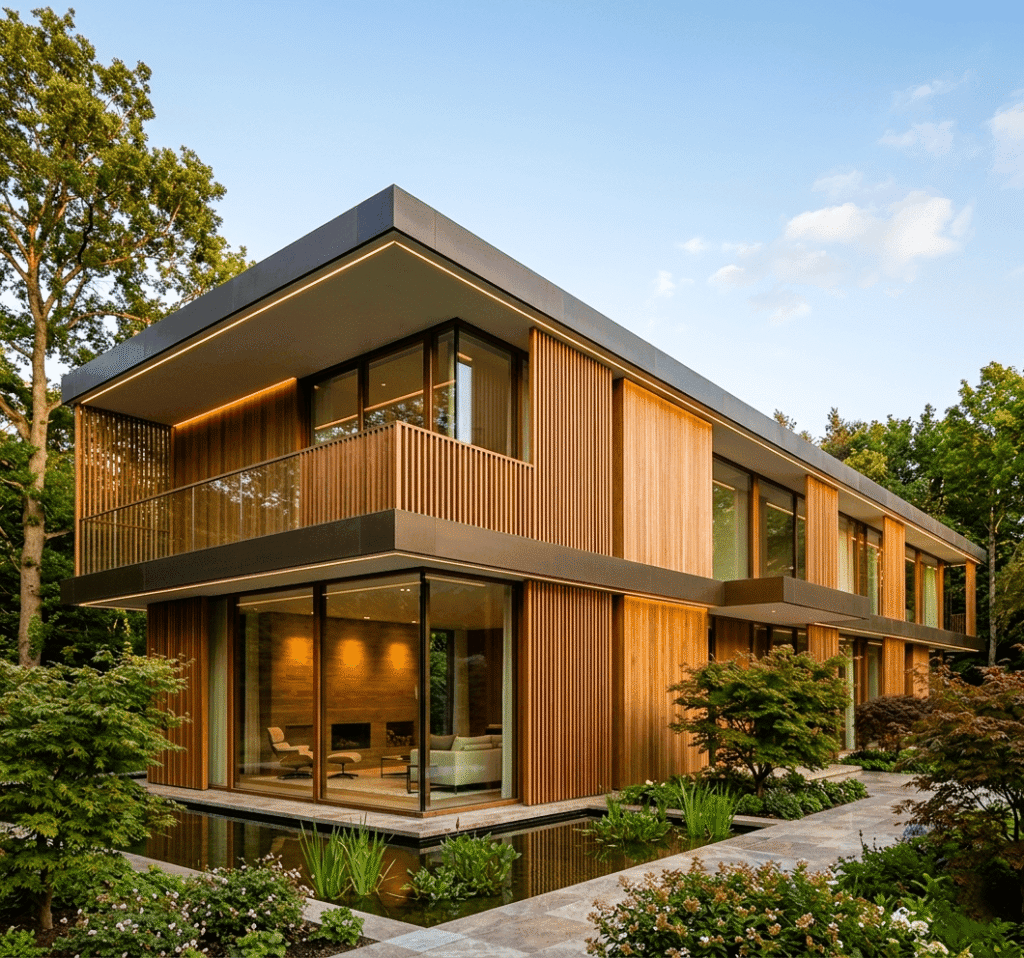
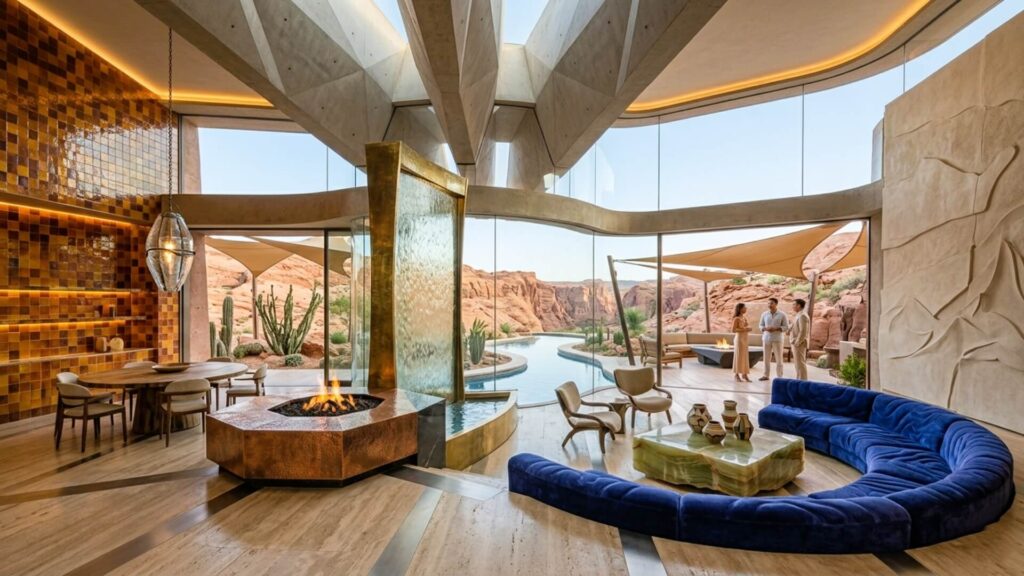
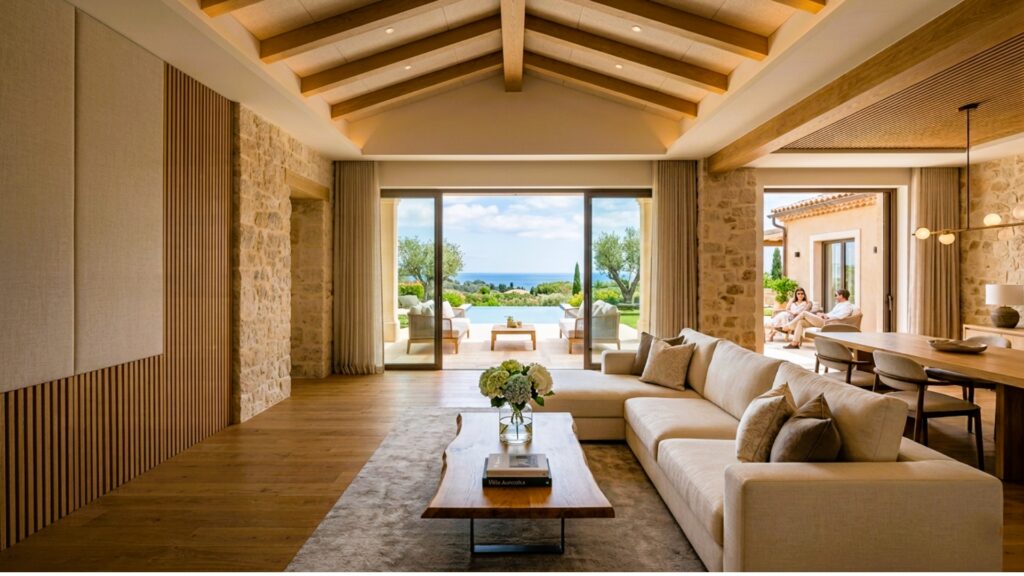
In the evolving language of luxury villa interiors across Dubai, Abu Dhabi, and the wider GCC, materiality has become a defining architectural tool rather than a finishing layer. Wood wall cladding UAE is no longer a stylistic preference —it is a performance-driven specification that merges natural tactility with engineered resilience.
For architects and façade consultants, the renewed interest in wood is not nostalgic. It is strategic. In a region shaped by extreme climate conditions and increasingly sophisticated clients, wood cladding offers a rare balance: warmth without fragility, texture without excess, and durability without compromise.
This shift explains why wood wall cladding UAE is rapidly becoming a core element in high-end residential design—and why specifying the right system in 2026 demands a deeper, more technical approach.
The Architectural Rise of Wood Wall Cladding UAE in Modern Villas
Across premium villas in Dubai and the UAE, interiors are moving away from flat, reflective finishes toward layered, tactile compositions. Wood introduces depth where paint cannot, and atmosphere where stone can feel too rigid.
Rather than acting as decoration, wood cladding is now used to define spatial identity. In contemporary villas, it anchors key moments:
Living rooms transition into immersive environments through full-height slatted feature walls.
Entrance foyers adopt fluted timber panels to establish scale and arrival.
Bedrooms shift toward softer, acoustically balanced environments with integrated wood backdrops.
This evolution reflects a broader architectural intent—spaces are no longer designed to be seen, but to be experienced.
The success of wood wall cladding UAE lies in its ability to soften minimalist architecture without diluting its clarity.
Performance First: Why Engineered Wood is Essential in the GCC
Specifying natural timber in the Middle East without modification is rarely viable. High UV exposure, continuous air-conditioning cycles, and humidity variation introduce long-term risks—warping, fading, and material fatigue.
This is where engineered systems redefine the conversation.
High-pressure laminate (HPL) wood panels—particularly solutions like Parklex Prodema—combine real wood veneer with advanced protective layers. The result is a surface that retains the visual authenticity of timber while resisting environmental stress.
Similarly, Wood Plastic Composite (WPC) panels offer a hybrid solution, blending wood fibers with polymers to achieve dimensional stability and resistance to moisture and pests.
For architects, the advantage is clear:
design intent remains intact long after handover.
In the context of wood wall cladding UAE, performance is not an upgrade—it is a prerequisite.
Wood Wall Cladding UAE Trends Shaping 2026 Villa Design
Vertical Rhythm and Fluted Geometry
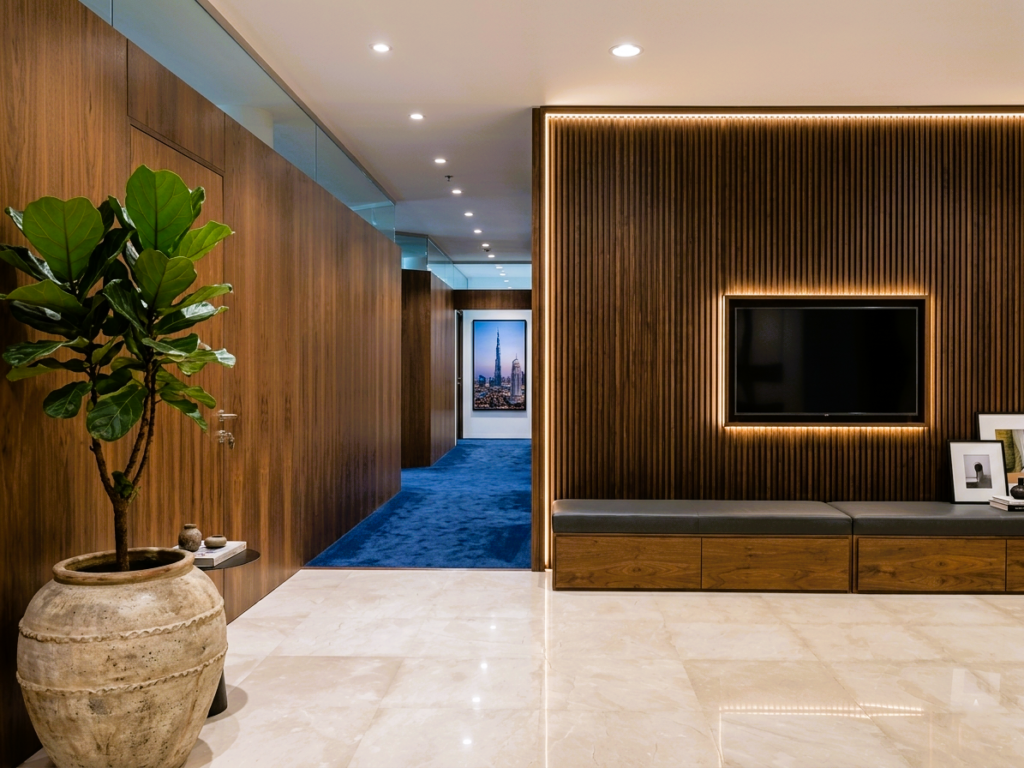
Vertical slats and fluted panels are redefining wall articulation in GCC villas. These systems introduce rhythm, guide visual flow, and subtly enhance acoustic performance.
More importantly, they interact with light—creating shadow depth that evolves throughout the day, an effect particularly valued in sun-drenched Middle Eastern interiors.
Feature Walls as Spatial Anchors
Rather than distributing materials evenly, architects are concentrating wood cladding into focal zones. A single wood-clad wall can transform a living space, especially when paired with marble, glass, or brushed metal.
This selective application elevates perceived luxury while maintaining restraint.
Indoor–Outdoor Continuity
Contemporary villas in Saudi Arabia, UAE, and across the GCC are increasingly designed as fluid environments. Wood cladding systems that extend from interior lounges to shaded terraces create seamless transitions.
Engineered HPL panels are particularly suited to this strategy, maintaining visual consistency across different exposure conditions.
Integrated Lighting and Smart Detailing
Wood cladding is now designed in coordination with lighting and technology. Recessed LED strips, concealed storage, and media integration are embedded directly into panel systems.
The result is not just a wall—but a fully integrated architectural element.
Technical Value Beyond Aesthetics
The growing adoption of wood wall cladding UAE is not driven by design alone. Its technical contribution to villa performance is equally significant.
Thermally, wood acts as a moderating layer, reducing heat gain and supporting interior comfort.
Acoustically, slatted and dense panel systems absorb sound, enhancing privacy in multi-zone villas.
Structurally, engineered panels offer long-term stability in environments defined by temperature fluctuation.
Additionally, many systems now align with sustainable building frameworks, offering FSC-certified materials and reduced reliance on solid timber.
For consultants, this positions wood cladding as a multi-functional specification rather than a decorative layer.
Connecting Design to Execution: The Role of Specialist Partners
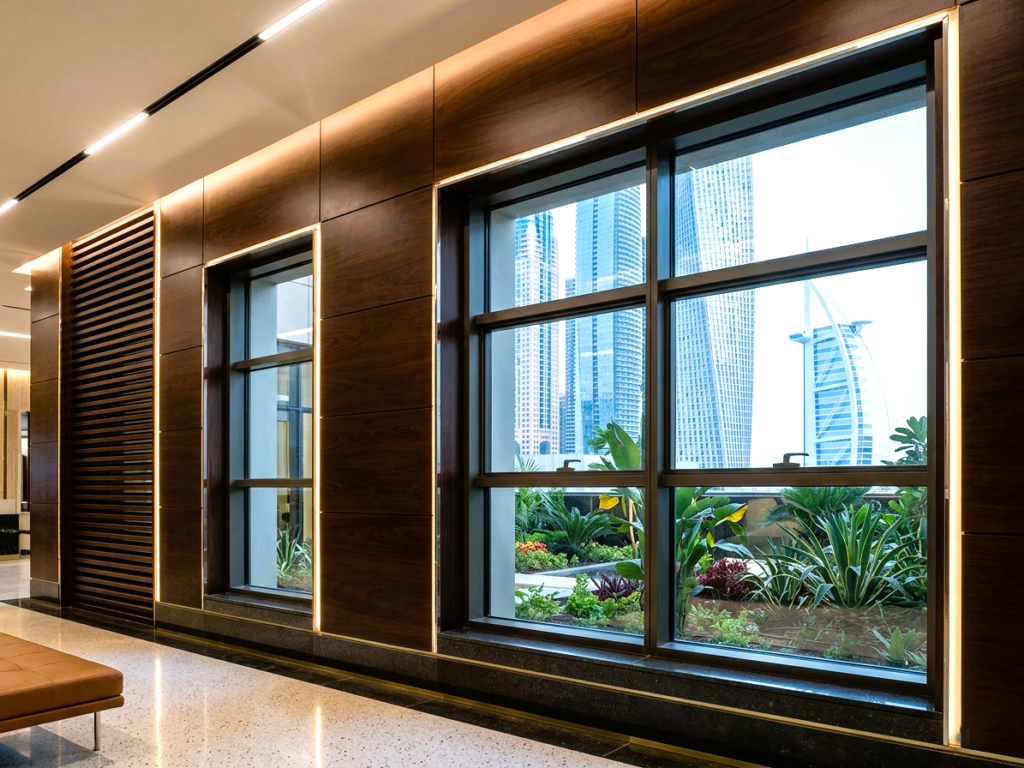
Beyond products, the value lies in specification support—ensuring that materials are not only visually aligned with the concept but also engineered for longevity in GCC conditions.
Through Obras project pages, architects can explore built examples across Dubai and Abu Dhabi, translating theory into built reality. For project-specific guidance, dedicated contact and specification support pages provide direct access to technical expertise.
Case-Led Design: How Wood Transforms GCC Villa Interiors
Recent villa projects across the UAE highlight how wood wall cladding UAE is being applied with precision.
In high-ceiling foyers, fluted panels introduce vertical emphasis, enhancing spatial drama.
In living rooms, integrated wood media walls combine acoustics, lighting, and storage into a unified system.
In master bedrooms, wood backdrops create warmth while improving sound insulation.
Perhaps most notably, projects that extend wood finishes into outdoor lounges achieve a level of continuity that defines contemporary Middle Eastern luxury.
These applications demonstrate that wood is not a trend—it is becoming an architectural standard.
The Future of Wood Wall Cladding UAE in Luxury Residential Design
As villa design in the GCC continues to evolve, materials will be judged not only by appearance but by intelligence—how they respond to climate, how they age, and how they integrate with technology.
Wood wall cladding UAE sits at the intersection of these demands. It delivers sensory richness while meeting the technical expectations of modern construction.
For architects designing in 2026 and beyond, the question is no longer whether to use wood—but how to specify it correctly.
For architects, developers, and façade consultants shaping the next generation of luxury villas in Dubai, Abu Dhabi, and across the GCC, selecting the right wood cladding system is critical.
Obras International offers a refined selection of engineered wood wall cladding solutions, backed by over two decades of regional expertise. From early-stage specification to on-site integration, the focus remains consistent: delivering materials that perform as beautifully as they appear.
What is the best wood wall cladding for UAE luxury villas?
The best u003ca href=u0022https://obrasintl.com/obras-interior/u0022 data-type=u0022linku0022 data-id=u0022https://obrasintl.com/obras-interior/u0022u003ewood wall cladding UAEu003c/au003e solutions are engineered systems such as HPL (high-pressure laminate) and WPC (wood plastic composite). These materials offer the natural appearance of wood while resisting heat, humidity, and UV exposure—making them ideal for Dubai and GCC climates.
Is wood wall cladding suitable for Dubai’s climate?
Yes, but only when using engineered materials. Natural wood can warp or fade under extreme conditions, while HPL and WPC panels are specifically designed to withstand the UAE’s heat, humidity, and constant HVAC cycles, ensuring long-term durability.
What are the advantages of wood wall cladding in villa interiors?
u003cstrongu003eWood wall cladding UAEu003c/strongu003e enhances interiors by adding warmth, texture, and acoustic comfort. It also improves thermal insulation, creates feature walls, and integrates seamlessly with lighting and modern architectural detailing.
How much maintenance does wood wall cladding require in the UAE?
Engineered wood cladding like HPL requires minimal maintenance—typically just periodic cleaning. Unlike natural timber, it does not need sealing, polishing, or frequent repairs, making it ideal for luxury villas in Dubai and across the GCC.
Can wood wall cladding be used for both interior and exterior applications?
Yes. Many u003cstrongu003ewood wall cladding UAEu003c/strongu003e systems, particularly HPL panels, are suitable for both interior and semi-exterior applications. They are commonly used to create seamless indoor-outdoor transitions in modern villas across the Middle East.