
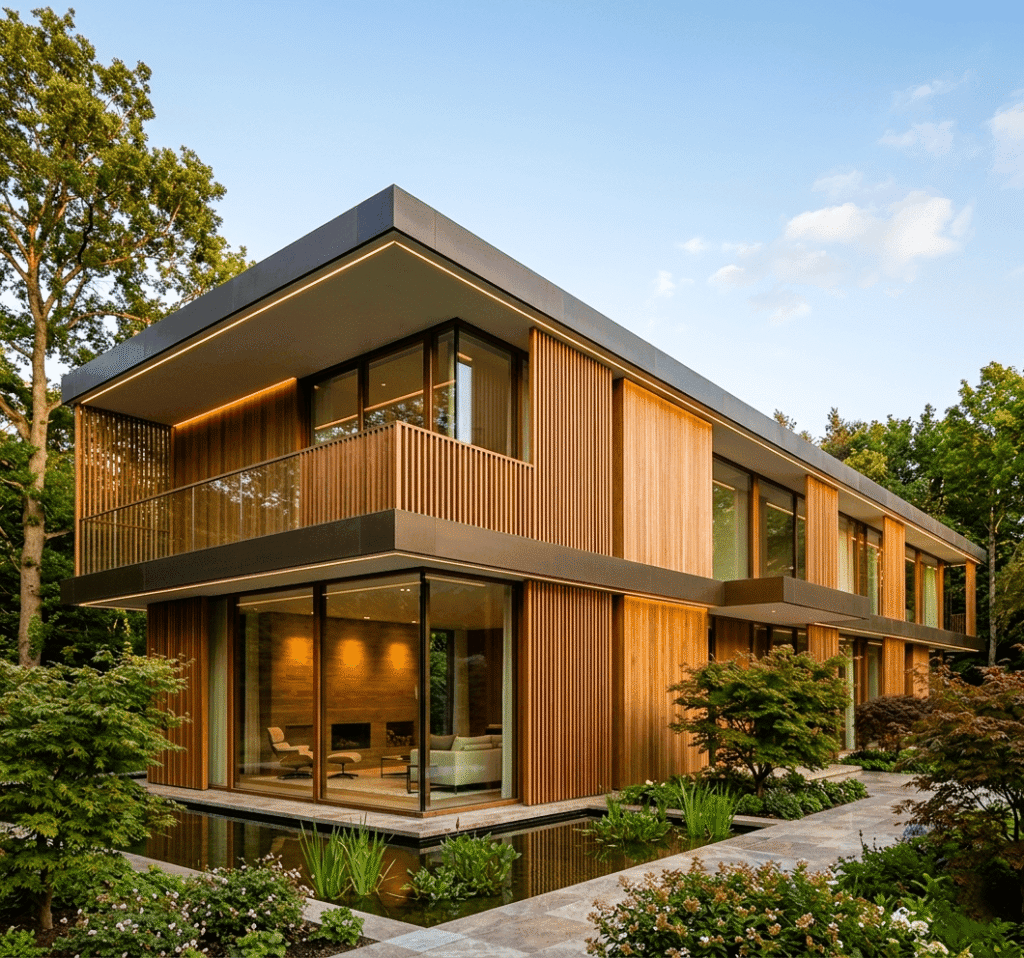
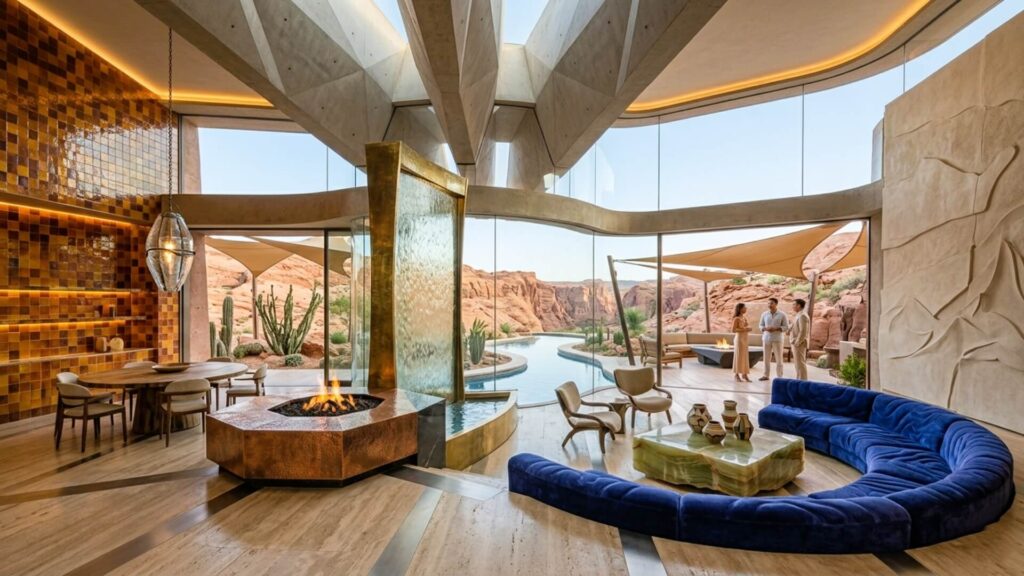
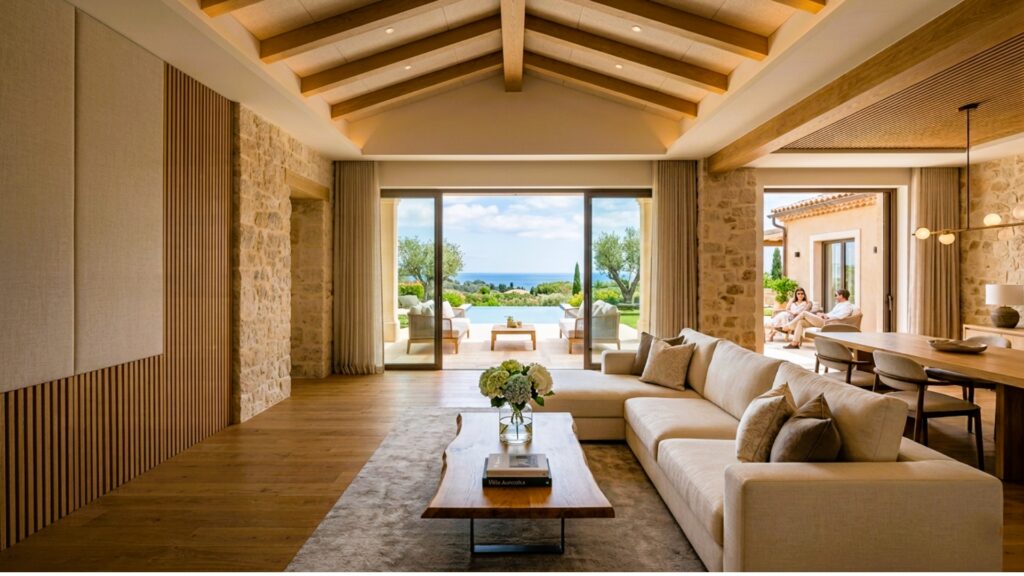
“For project teams evaluating ventilated façade systems for Dubai’s luxury hotels, the performance criteria have never been more demanding…”
As Dubai's hospitality construction pipeline accelerates toward a USD 650 billion project horizon, the specification of ventilated façade cladding has moved from technical preference to strategic imperative for architects, façade consultants, and developers delivering luxury hotel and resort environments.
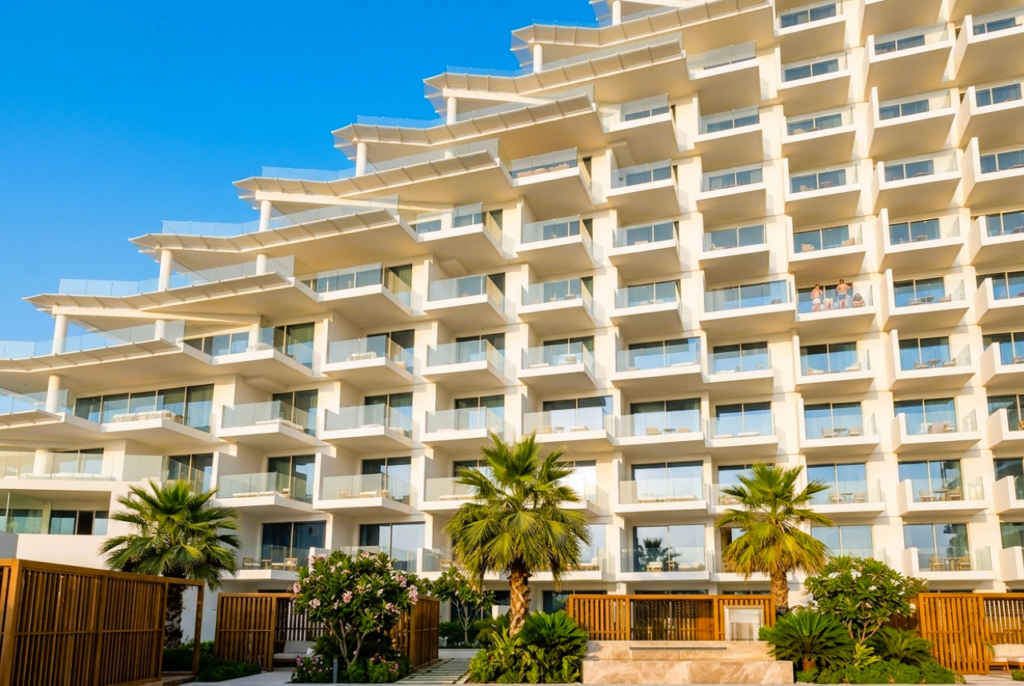
Dubai’s skyline has always been an architectural statement. But as the emirate pushes toward 25 million visitors annually and deploys over 10,100 new hotel rooms by end of 2025, the pressure on façade performance — to simultaneously deliver visual distinction, thermal resilience, acoustic comfort, and compliance with Dubai’s increasingly rigorous fire safety framework — has never been more acute.
For architects, façade engineers, and developers working in the UAE and GCC luxury hospitality sector, ventilated façade systems have emerged as the dominant specification approach. They address the full matrix of performance requirements inherent to high-occupancy, high-visibility buildings in an extreme climate: thermal decoupling, moisture management, fire containment, acoustic isolation, and long-term aesthetic integrity.
This article examines how ventilated façade systems work, why they are suited to luxury hotel buildings in Dubai, how they are governed by UAE fire and life safety regulation, and which material categories are driving specification decisions across the hospitality construction pipeline in 2025 and beyond.
Dubai’s Hotel Construction Boom: The Façade Specification Challenge
$4.4B
UAE façade market size in 2025, forecast to reach $7.45B by 2033 (6.8% CAGR)
10,100+
New hotel rooms entering the Dubai market by end of 2025
51%
Share of incremental contract awards captured by ventilated façade systems in 2025
Dubai’s hospitality sector is in a sustained expansion phase. Properties including Jumeirah Marsa Al Arab, Six Senses The Palm, Corinthia Dubai, and a new Gran Meliá beach resort represent just the visible surface of a pipeline that encompasses hundreds of hotel, resort, and serviced apartment projects across all seven emirates and across the broader GCC.
Each of these projects presents an identical façade specification challenge: the exterior envelope must meet the visual standard of a global luxury brand, withstand an environment characterised by ambient temperatures exceeding 45°C, high UV radiation, airborne particulates, and occasional salt-laden coastal exposure — while achieving full compliance with the UAE Fire and Life Safety Code of Practice as enforced by Dubai Civil Defence (DCD) and Abu Dhabi Civil Defence (ADCD).
Ventilated façades — assemblies where an outer cladding panel is fixed to a structural subframe with a deliberate air cavity between the panel and the building’s insulation layer — have become the professional consensus response to this challenge. Their adoption is not a trend driven by aesthetics alone; it is a technically grounded response to a convergence of performance requirements that no single-layer direct-fix system can meet.
How Ventilated Façade Systems Work in Dubai Luxury Hotels
Understanding why ventilated façades outperform alternative systems in the GCC context requires a clear understanding of their fundamental construction. A typical ventilated façade assembly comprises four principal layers:
1. The Structural Substrate
The primary wall — whether reinforced concrete, masonry, or a steel frame — carries structural loads. In high-rise hotel buildings, this is typically a reinforced concrete core with perimeter columns, or a composite steel frame. The ventilated façade is independent of this structure in terms of weather resistance; it acts as an over cladding system.
2. Continuous Insulation
A layer of continuous insulation — typically mineral wool, PIR board, or phenolic foam — is applied to the structural substrate. The choice of insulation type has fire-safety implications; under the UAE Fire and Life Safety Code, insulation behind cladding must achieve appropriate fire classification as part of the full-system assembly test.
3. The Ventilated Cavity
The defining feature of the system: an unobstructed air gap (typically 20–40mm, though larger cavities are employed in some specialist systems) between the insulation face and the rear face of the cladding panel. This cavity has three principal functions. First, it provides a drainage plane — any moisture that penetrates behind the panel through joints or fixings drains freely and does not become trapped against the insulation. Second, it creates a convective airflow channel: warm air rises through the cavity by natural buoyancy, drawing cooler air from the base, and continuously dissipating heat that has been conducted through the outer panel. Third, the cavity creates an acoustic break between the exterior environment and the occupied spaces behind — a critical consideration for hotels fronting on arterial roads, beach frontages, or adjacent to infrastructure.
4. The Cladding Panel and Fixing System
The outer panel is the aesthetic and protective face of the assembly. It is fixed to the substructure via a concealed or exposed bracket and rail system, allowing individual panels to be replaced without dismantling the full assembly — a significant lifecycle maintenance advantage. The choice of cladding material determines the aesthetic character, fire performance classification, acoustic mass, thermal inertia, and maintenance profile of the finished façade.
Fire Safety Compliance: What the UAE Regulations Require from Hotel Façades
A ventilated façade system consists of an outer cladding panel mounted on a structural subframe with an air cavity between the panel and the building’s insulation layer. The cavity allows natural convective airflow to dissipate heat, provides a drainage plane for moisture, and creates an acoustic decoupling zone between the exterior and interior. In the UAE’s extreme climate, this cavity can reduce external wall surface temperatures by up to 8°C, directly reducing air-conditioning load.
Fire safety compliance is non-negotiable for hotel façades in Dubai. The regulatory framework is anchored in the UAE Fire and Life Safety Code of Practice, the most recent consolidated version of which was issued in 2018 by the Directorate General of Civil Defence. For façade specifications, the key provisions govern the fire performance classification of external cladding materials, cavity fire barriers, and full-system assembly testing requirements.
These requirements have fundamentally shaped the material palette available to architects specifying hotel façades in Dubai. Products such as fibre cement boards (EQUITONE), sintered stone (TECHLAM), engineered ceramic cladding (exa|TECH, TONALITY, ARGOS), and natural stone composites (STONEO/ULMA) all achieve non-combustible or A2 fire classification and are therefore candidates for high-rise hotel specification. Natural wood veneers (PARKLEX PRODEMA) utilise a mineral-backed composite construction that achieves fire performance ratings compliant with European standards — a significant technical achievement that preserves the warmth and authenticity of real wood in a fire-safe envelope.
Architects and façade consultants should note that fire compliance extends beyond the panel material itself. The full assembly — including the substructure, fixing brackets, insulation, cavity barriers, and panel joints — must be evaluated as a system. Specifying individual components from different manufacturers without a tested assembly combination can create compliance gaps that will not pass DCD inspection.
Aesthetic Performance: Material Selection for the Luxury Hospitality Context
In luxury hotel and resort architecture, the façade is the first and most persistent communication of brand character. It is the element experienced by every guest at arrival, from every guest room window, and in every outdoor circulation space. The specification pressure is therefore dual: the material must perform, and it must compel.
“In Dubai’s luxury hotel sector, the façade is not cladding — it is identity. Architects are specifying materials that carry the sensory language of the brand: the warmth of wood, the permanence of stone, the precision of ceramic. The challenge is delivering that language at scale, in an extreme climate, for the long term.”
The materials that are defining the contemporary luxury hotel façade specification in Dubai and across the GCC fall into several distinct categories, each with its own aesthetic language and performance profile.
Acoustic Comfort: A Critical but Underspecified Performance Parameter
Acoustic performance is one of the most commercially significant yet frequently underspecified parameters in hotel construction. Guest satisfaction scores are directly correlated with noise levels in guest rooms and public areas; for five-star and ultra-luxury brands, acoustic failure is a brand-threatening liability.
In the Dubai context, hotels face layered acoustic challenges: road traffic noise on urban sites; airport noise corridors particularly in Deira, Al Garhoud, and areas proximate to Al Maktoum International Airport; mechanical plant noise from high-capacity HVAC systems; and cross-transmission between adjacent guestrooms.
Ventilated façade systems address the exterior acoustic challenge through two mechanisms. The mass of the outer cladding panel provides direct airborne sound attenuation — dense materials such as fibre cement (EQUITONE), ceramic (ARGOS, exa|TECH), and sintered stone (TECHLAM) achieve inherently high sound reduction index (Rw) values. The ventilated cavity itself introduces an additional acoustic break between the outer panel and the building’s structural wall, effectively increasing the overall Rw of the assembly beyond what the panel mass alone would deliver.
For interior acoustic environments — hotel corridors, spa reception areas, meeting room pre-function zones, and F&B spaces — DECUSTIK acoustic wood panels provide a specification solution that simultaneously addresses acoustic performance and interior aesthetic quality. DECUSTIK panels achieve Noise Reduction Coefficient (NRC) values suited to Class A acoustic environments, combining groove and perforation geometries with a real wood veneer or lacquered surface finish appropriate to luxury hospitality interiors.
Thermal Performance and Sustainability: Meeting Al Sa’fat and Estidama Requirements
The UAE’s mandatory green building frameworks — Al Sa’fat in Dubai and Estidama Pearl Building Rating System in Abu Dhabi — both incorporate thermal performance criteria for building envelopes that ventilated façade systems are well-positioned to address.
The thermal performance advantage of ventilated façades in the GCC derives from the combination of continuous insulation (which eliminates thermal bridging through the cavity construction), and the convective cavity ventilation that actively removes heat that has been conducted through the outer panel before it can reach the insulation layer. Market performance data indicates cavity ventilation can reduce external wall surface temperatures by up to 8°C under UAE summer conditions, translating to a direct reduction in cooling energy demand across the hotel’s HVAC system.
For luxury hotel projects targeting LEED Gold or LEED Platinum certification — increasingly a requirement for international brand standards — the whole-wall U-value achievable through a correctly designed ventilated façade assembly contributes meaningfully to the energy performance credits within the Energy and Atmosphere category. Material selection also plays a role in sustainability credentials: EQUITONE fibre cement is produced without organic binders; PARKLEX PRODEMA uses FSC-certified wood veneers; and the long service life of ceramic and sintered stone systems (in excess of 50 years) contributes to lifecycle assessment scores.
Durability in the Gulf Climate: Why Material Selection Matters
The UAE environment presents façade materials with a combination of degradation mechanisms that is among the most demanding in the world. Solar irradiance levels consistently exceed 1,000 W/m²; diurnal temperature cycles of 20–30°C create continuous thermal expansion and contraction stress in panel materials and their fixings; coastal sites introduce salt-laden air that accelerates corrosion in ferrous metalwork and attacks certain polymer-based surface coatings; and periodic shamal wind events carry fine particulate matter that creates surface abrasion and infiltrates cavity systems.
The materials that perform reliably in this environment share common characteristics: dimensional stability under thermal cycling, UV colour stability over multi-decade service lives, resistance to surface erosion from particulate abrasion, and zero water absorption (or sufficiently low absorption to prevent moisture-driven degradation).
Ceramic and sintered stone materials (exa|TECH, TONALITY, ARGOS, TECHLAM) are inherently resistant to all four degradation mechanisms — they are inorganic, dimensionally stable, UV-stable by nature of their mineral composition, and achieve near-zero water absorption. Fibre cement (EQUITONE) achieves excellent moisture resistance through its mineral matrix and is widely used in GCC coastal environments without surface degradation. Wood veneer composites (PARKLEX) use a factory-applied UV-stable lacquer system over a mineral substrate that provides resistance significantly beyond that of solid timber, with documented performance histories in Middle Eastern climates.
Market Outlook: Ventilated Façades in Dubai’s Hospitality Sector Through 2030
The trajectory of ventilated façade adoption in Dubai’s hospitality sector is structurally positive. Several converging forces will sustain and accelerate demand through 2030.
The UAE façade market, valued at USD 4.40 billion in 2025, is projected to reach USD 7.45 billion by 2033, growing at a 6.8% CAGR. Within this market, ventilated systems are the fastest-growing segment, having captured 51% of incremental contract awards in 2025 despite non-ventilated assemblies retaining a revenue lead in installed area. The regulatory environment continues to tighten: Dubai Civil Defence has progressively raised fire compliance enforcement standards, and the pressure on building owners with pre-2018 façades to retrofit compliant systems creates a replacement market alongside new construction demand.
The hospitality sector specifically is a high-value specification environment: the aesthetic ambition of luxury brand standards, the acoustic performance requirements of premium room categories, and the long-term brand value associated with material quality all favour the specification of premium ventilated façade systems over commodity alternatives.
Biophilic design narratives — the use of natural and nature-referencing materials in hotel architecture to create guest environments of warmth, calm, and authenticity — are also driving demand for wood veneer cladding (PARKLEX), engineered stone (STONEO/ULMA), and WPC systems (WOODN, EXTERPARK) in resort and wellness hotel contexts. This trend aligns closely with the UAE’s growing eco-tourism and wellness hospitality segment, which is anchored in locations including Ras Al Khaimah, Sharjah’s cultural districts, and Abu Dhabi’s Saadiyat Island.
Specification Guidance: Key Considerations for Architects and Façade Consultants
For architects and façade consultants beginning specification work on a luxury hotel or resort project in Dubai or the GCC, the following technical considerations should inform early design-stage decisions:
System Selection: Substructure and Cavity Design
The substructure — whether aluminium rail-and-bracket, stainless steel point-fixed, or bespoke fabricated — must accommodate the differential thermal movement of both the cladding panel and the primary structure. In Dubai’s temperature range, substructure design must allow for linear expansion of up to 3mm per metre over a 60°C temperature swing. Cavity dimensions should be confirmed against the ventilation calculation requirements of the relevant European Technical Assessment or ETAG guideline, adapted for GCC climate data.
Fire Assembly Compliance: Document Before Procuring
No cladding material should be specified until the full assembly — including the specific insulation product, cavity barrier specification, and substructure type — has been confirmed as a tested combination with available documentation for ESL and DCD submission. Engaging a fire safety consultant at RIBA Stage 2 or equivalent is advisable on high-rise hotel projects.
Acoustic Design Integration
Acoustic performance targets for hotel façades should be established in the acoustic brief at the earliest design stage, informed by the site-specific noise mapping. The Rw requirement for the full façade assembly — including glazing — should be specified, not just the opaque cladding panel in isolation. The ventilated cavity depth and cavity barrier specification both affect acoustic performance and should be optimised in coordination with the acoustic consultant.
Lifecycle Cost and Maintenance Planning
In a hotel operation, façade maintenance requires access management that can disrupt guest experience. Specify materials with low maintenance profiles: ceramic, sintered stone, and fibre cement require no periodic surface treatment. WPC and wood veneer systems have defined maintenance schedules that should be communicated to the hotel FM team at handover.
Frequently Asked Questions: Ventilated Façades for Dubai Hotels
What is a ventilated façade system and why is it used in Dubai luxury hotels?
A ventilated façade (also called a rainscreen or cavity wall system) consists of an outer cladding layer fixed to a substructure with a deliberate air gap between the cladding panel and the building's insulation layer. This cavity allows airflow that dissipates heat, reduces moisture accumulation, and lowers the thermal load on the building envelope. In Dubai's extreme climate — where ambient temperatures regularly exceed 45°C — ventilated façades are a critical specification tool for reducing cooling energy demand. For luxury hotels, the system also provides acoustic isolation, design flexibility through a wide choice of cladding materials, and a long-term maintenance advantage over direct-fix cladding systems. Performance testing demonstrates that cavity ventilation can reduce external wall surface temperatures by up to 8°C under Gulf conditions.
What cladding materials are approved for high-rise hotel façades under UAE fire safety regulations?
Under the UAE Fire and Life Safety Code of Practice (consolidated 2018 edition, enforced by Dubai Civil Defence), all external cladding materials on high-rise buildings must be non-combustible or achieve a minimum fire performance classification of A2-s1,d0 under European standard EN 13501-1, or an equivalent NFPA classification. Aluminium composite panels with polyethylene cores are prohibited on new buildings in the UAE since January 2017. Approved material categories for hotel façades include fibre cement panels (EQUITONE), sintered stone (TECHLAM), engineered ceramic cladding (exa|TECH, TONALITY, ARGOS), natural stone composites (STONEO/ULMA), and fire-rated wood veneer composites (PARKLEX). Critically, all materials must be tested as part of a full cladding assembly — not as individual panels — and registered with the Emirates Safety Laboratory (ESL) before submission to Dubai Civil Defence for product approval.
How do ventilated façades improve energy efficiency in GCC hotels?
Ventilated façades improve energy efficiency in GCC hotels through two primary mechanisms. First, a layer of continuous insulation applied to the structural wall eliminates thermal bridging that would otherwise create heat pathways through the building envelope — a critical factor in a climate where the temperature differential between inside and outside can exceed 25°C for extended periods. Second, the convective airflow through the cavity continuously removes heat that has been conducted through the outer cladding panel, preventing it from reaching the insulation layer and then the building interior. Research and performance monitoring data from Dubai Marina retrofit projects indicate payback periods of under seven years on ventilated façade upgrades, supported by Al Sa'fat and Estidama green building compliance benefits including potential government rebate schemes for envelopes exceeding Al Sa'fat Silver rating.
Which façade cladding materials are best for the acoustic comfort requirements of luxury hotels?
For exterior acoustic performance in hotel façades, the most effective materials are those with high mass per unit area, which directly determines airborne sound reduction (Rw). Fibre cement panels (EQUITONE), sintered stone (TECHLAM), and large-format ceramic cladding (ARGOS, exa|TECH) all provide inherently high Rw values. In a ventilated façade assembly, the cavity itself provides an additional acoustic break beyond what the panel mass alone would achieve. For hotel interior environments — corridors, spa areas, F&B spaces, and meeting facilities — DECUSTIK acoustic wood panels achieve NRC (Noise Reduction Coefficient) values appropriate for Class A acoustic design, combining absorption performance with the warm aesthetic appropriate to luxury hospitality interiors. An acoustic consultant should be engaged from RIBA Stage 1 to establish performance targets and confirm material specifications.
What are the main façade material trends in Dubai's hotel construction pipeline for 2025–2030?
Dubai's hotel construction pipeline — with over 10,100 new rooms entering the market by end of 2025 and a USD 650 billion city-wide project backlog — is driving strong demand for premium ventilated façade cladding. The defining specification trends for luxury hotel façades include: (1) natural material aesthetics with engineered performance, particularly natural wood veneers (PARKLEX), engineered stone (STONEO/ULMA), and sintered stone (TECHLAM) for landmark projects; (2) large-format panels minimising joint lines and delivering monolithic visual scale; (3) WPC cladding, louvre systems, and decking (WOODN, EXTERPARK, XYLTECH) for biophilic design in resort, wellness hotel, and outdoor hospitality contexts; (4) integrated multi-material ventilated façade systems combining ceramic, stone, and wood within a single substructure; and (5) fire-classification-documented fibre cement (EQUITONE) and ceramic systems for high-rise hotel towers requiring full DCD compliance evidence.