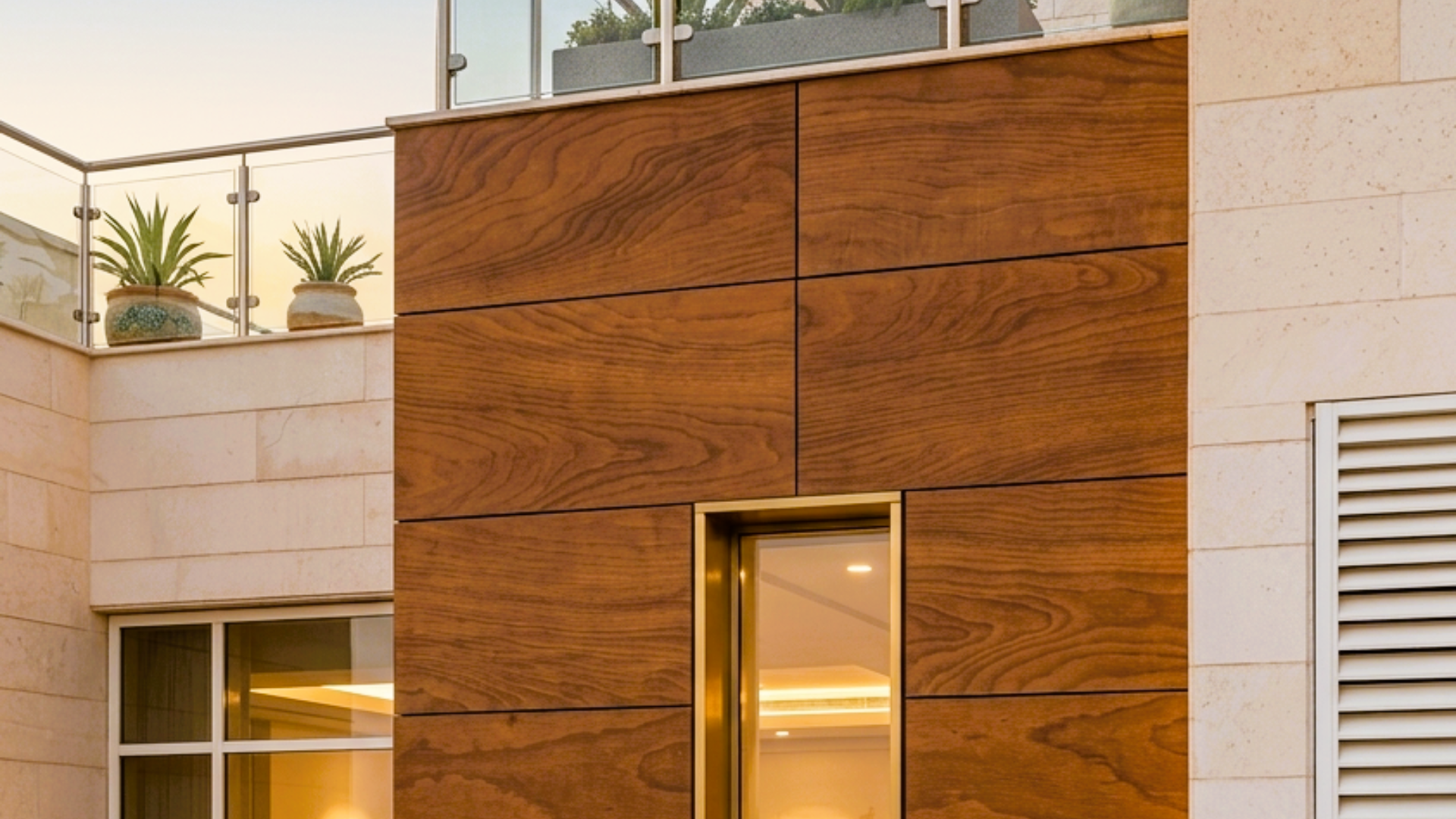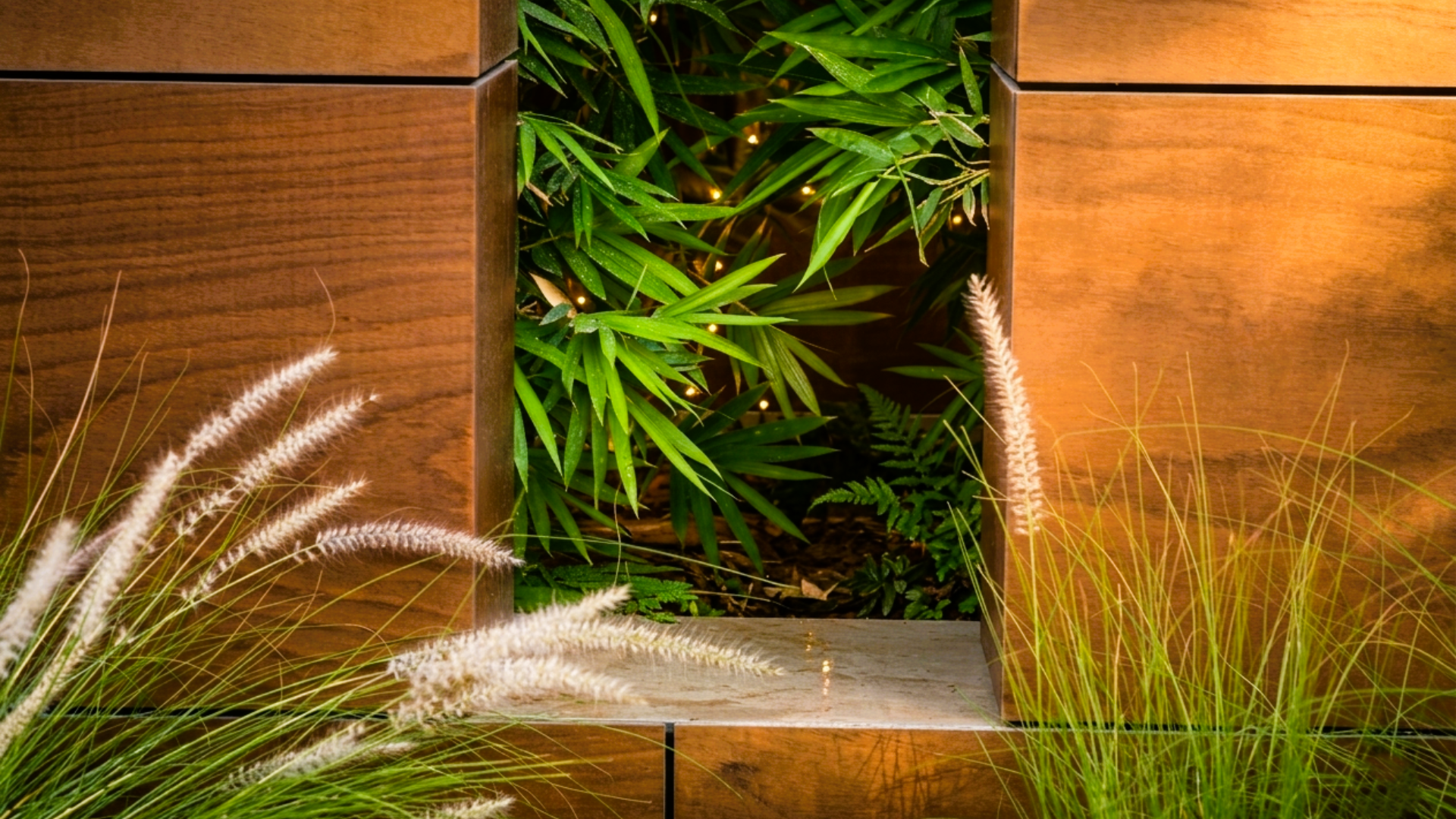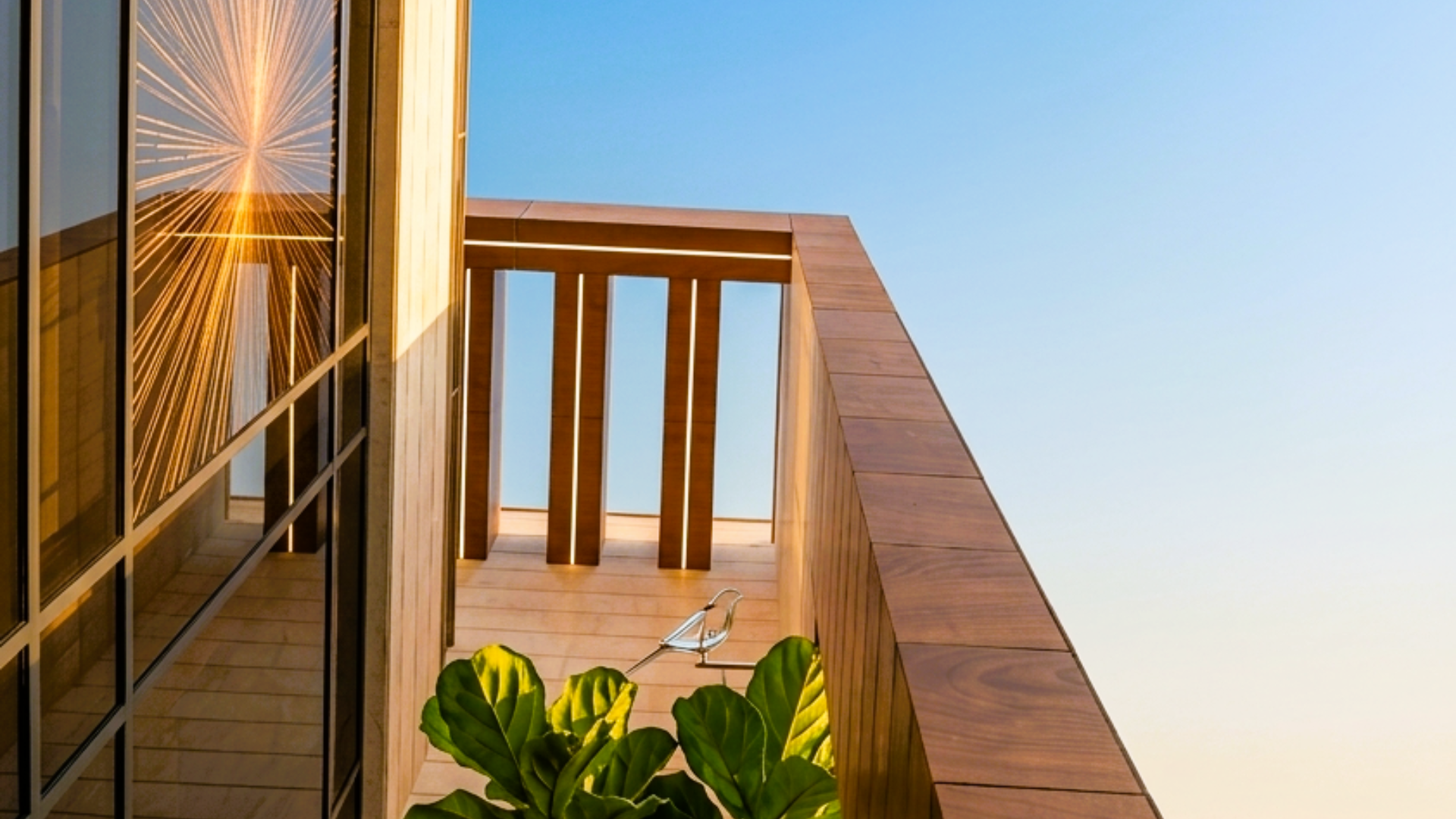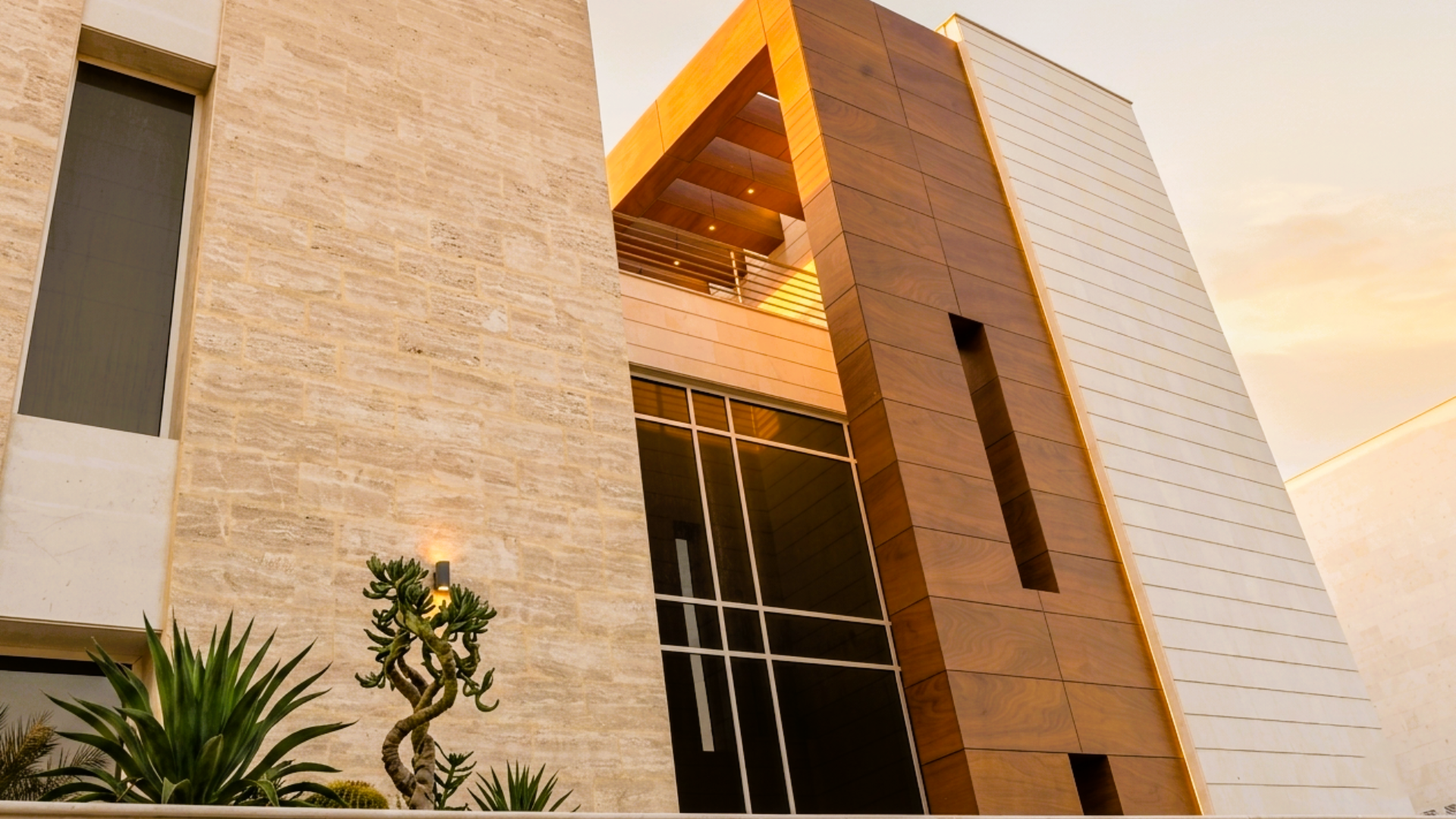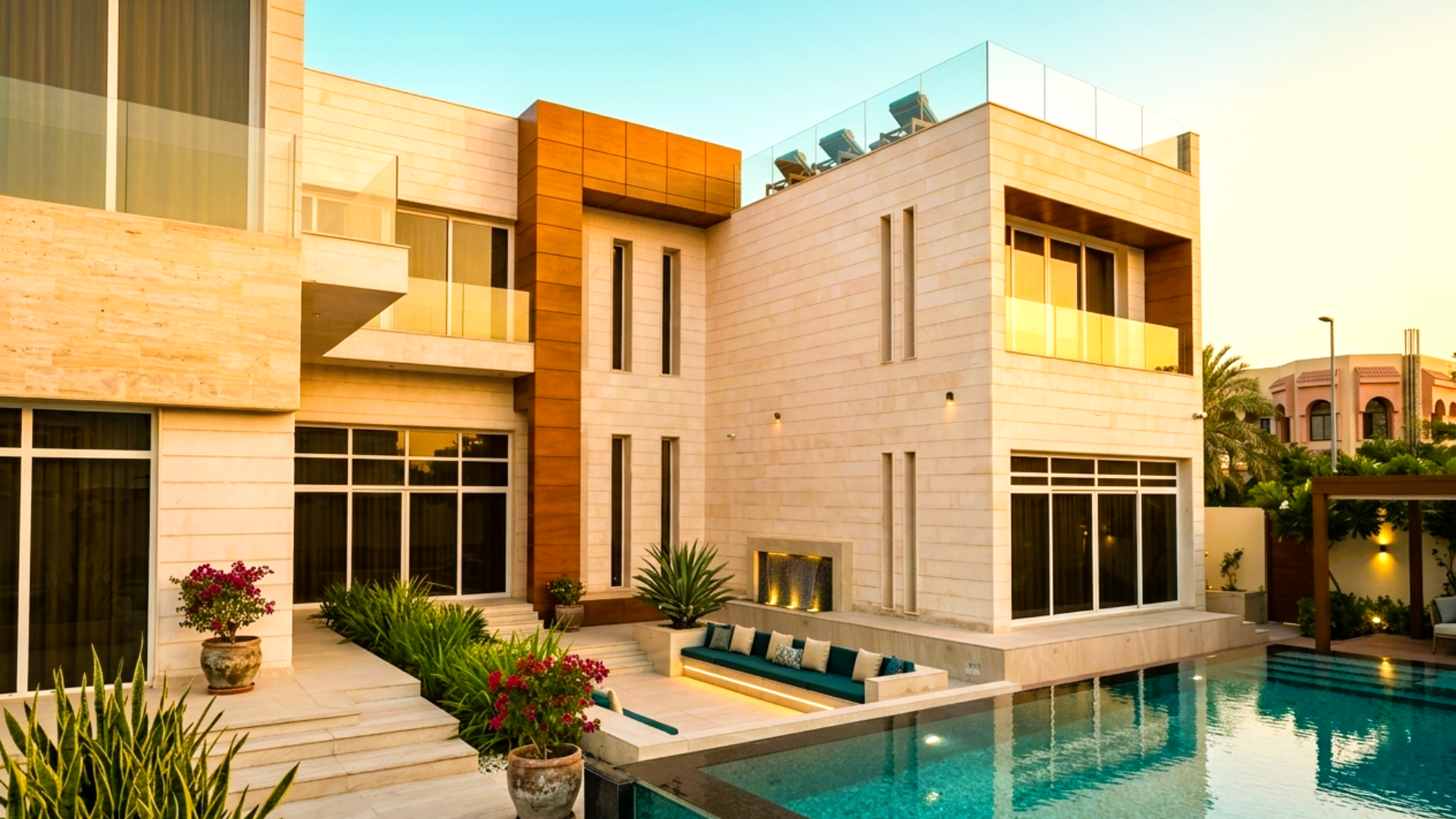
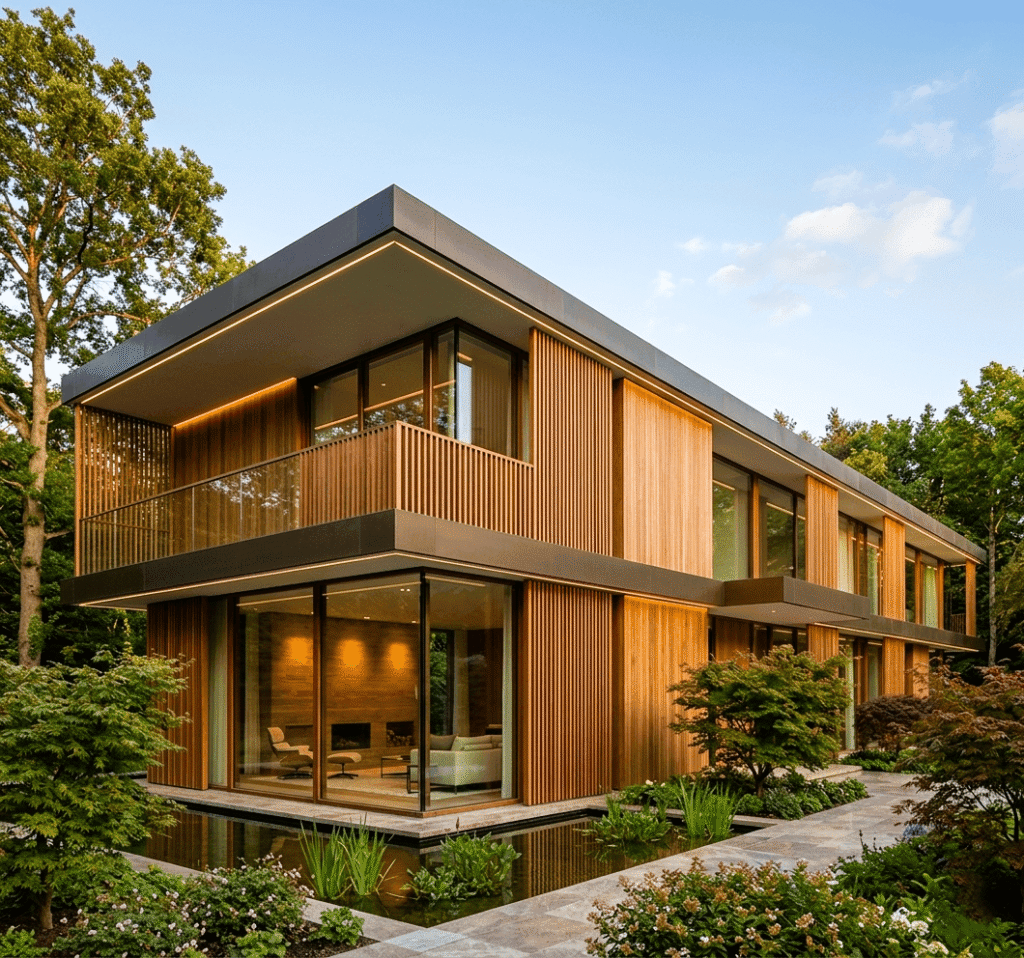
Hareb Villa represents a contemporary residential development that combines modern architectural expression with the warmth and authenticity of natural materials. Designed as a premium private residence, the project sought to create a distinctive façade identity while ensuring long-term performance under the demanding climatic conditions of the UAE.
The architectural vision emphasized clean geometric forms, balanced proportions, and a refined material palette capable of establishing a strong visual connection between the built environment and the surrounding landscape. To achieve these objectives, PARKLEX PRODEMA natural wood façade cladding was selected as a key element of the building envelope.
OBRAS International supplied and supported the implementation of the façade solution, contributing technical expertise in ventilated façade systems, material specification, façade engineering coordination, and installation methodologies. The use of natural wood cladding introduced warmth and texture to the architectural composition while maintaining the performance characteristics required for modern residential construction in the GCC region.
The project demonstrates how engineered wood façade systems can successfully combine architectural aesthetics, durability, sustainability, and technical performance within a high-end residential environment.
The architectural design of Hareb Villa focuses on contemporary minimalism, emphasizing simplicity, proportion, and material authenticity. Rather than relying on decorative elements, the design uses carefully selected façade materials to create visual depth and character.
The villa’s exterior composition incorporates horizontal and vertical volumes that are accentuated through contrasting materials. PARKLEX PRODEMA natural wood cladding serves as a defining architectural element, introducing a sense of warmth and human scale while softening the building’s modern geometry.
The design philosophy centered on several key objectives:
Natural wood was selected not only for its visual appeal but also for its ability to create a sophisticated façade language that evolves with changing daylight conditions. The rich grain patterns and authentic timber appearance provide architectural interest without compromising modern design principles.
The resulting façade establishes a strong architectural identity while maintaining elegance, simplicity, and long-term relevance.
Material selection played a critical role in achieving the project’s architectural and performance objectives.
Several factors influenced the specification of PARKLEX PRODEMA natural wood façade panels:
The project required the visual warmth of real timber while avoiding the maintenance challenges commonly associated with traditional wood façades. PARKLEX PRODEMA delivers the appearance of natural wood through genuine timber veneers while incorporating advanced manufacturing technologies that enhance durability.
The UAE climate presents significant challenges for exterior materials, including:
PARKLEX PRODEMA façade panels are specifically engineered to withstand these environmental conditions while maintaining long-term visual consistency.
Traditional timber façades often require periodic staining, sealing, or refinishing. The selected material minimizes maintenance requirements, making it suitable for luxury residential projects seeking long-term performance with reduced lifecycle costs.
The project’s material strategy prioritized environmentally responsible construction. The use of sustainably sourced wood components supports sustainable building objectives while providing a renewable façade material option.
Fire safety remains a critical consideration for all building envelope systems. The selected façade solution provides tested fire-performance characteristics suitable for modern building requirements and regional regulatory expectations.
PARKLEX PRODEMA is a high-performance natural wood façade system engineered specifically for exterior building envelope applications.
High-density composite wood façade panel incorporating natural wood veneers and thermosetting resins.
Typical façade panel thicknesses include:
Thickness selection depends on project-specific structural and performance requirements.
Large-format panels allow architects to create seamless contemporary façades with minimal visible joints.
Common dimensions include:
High-density compressed construction provides excellent dimensional stability and impact resistance.
Available fire-rated configurations can achieve classifications aligned with international façade safety requirements.
Available finishes include:
These finishes preserve the authentic texture and appearance of natural timber.
Engineered manufacturing processes significantly reduce water absorption compared with conventional timber products, improving durability and dimensional stability.
Integrated protective technologies provide exceptional resistance against:
This characteristic is particularly valuable in GCC environments where solar radiation levels remain consistently high throughout the year.
Maintenance is generally limited to:
No regular staining or repainting is typically required.
Key sustainability advantages include:
The Gulf region presents some of the world’s most demanding environmental conditions for façade materials.
Summer temperatures frequently exceed 45°C across many GCC locations. PARKLEX PRODEMA façade systems are designed to maintain dimensional stability and structural integrity under elevated temperatures.
The ventilated façade principle further improves thermal performance by reducing heat transfer into the building envelope.
Continuous exposure to intense sunlight can rapidly degrade conventional exterior materials. The protective surface technology incorporated within PARKLEX PRODEMA panels helps maintain aesthetic consistency and surface durability over time.
Seasonal humidity variations can cause movement and deterioration in traditional wood products. Engineered façade panels provide improved moisture resistance and dimensional stability.
Many GCC developments are located in coastal environments exposed to:
The façade system is suitable for such environments when properly detailed and installed.
Airborne sand and dust are common challenges throughout the UAE and wider GCC region. The durable external surface helps protect the façade against abrasion and weathering effects.
Modern ventilated façade systems incorporate engineered movement joints and support systems that accommodate thermal expansion and contraction, ensuring long-term façade stability.
The Hareb Villa façade was designed using ventilated façade principles that improve building envelope performance while enhancing material longevity.
The system creates a continuous air cavity between the cladding and the external wall structure.
Benefits include:
Depending on project requirements, panels may be installed using:
The selected methodology prioritizes structural integrity and aesthetic appearance.
Carefully engineered joints are essential for:
Consistent joint detailing contributes to both visual quality and long-term durability.
Particular attention was given to:
These details ensure the façade performs effectively throughout its service life.
Sustainability was an important consideration during material selection and façade design.
PARKLEX PRODEMA materials may support several LEED-related objectives through:
The façade system aligns with key sustainability principles associated with regional frameworks such as ESTIDAMA, particularly regarding resource efficiency and long-term durability.
The use of sustainable materials and high-performance façade systems may contribute toward BREEAM assessment objectives.
Many components of the façade assembly, including aluminium support systems, can be recycled at the end of their service life.
Wood-based façade materials generally offer favorable embodied carbon characteristics compared with many conventional façade materials.
The ventilated façade system contributes to improved thermal performance by reducing solar heat gain and enhancing building envelope efficiency, potentially lowering cooling energy demand.
Fire safety remains a critical aspect of contemporary façade design.
PARKLEX PRODEMA offers fire-performance options tested according to recognized international standards.
Fire-rated product variants may be classified according to the requirements of EN 13501-1, providing standardized performance evaluation.
Façade specification should always be coordinated with the latest requirements of the UAE Fire and Life Safety Code of Practice, ensuring compliance with project-specific regulatory obligations.
Where applicable, façade assemblies should be reviewed and approved in accordance with relevant Dubai Civil Defence requirements and project approval procedures.
A comprehensive façade fire strategy typically considers:
Proper engineering and installation ensure that the façade system contributes positively to overall building safety objectives.
Hareb Villa demonstrates how PARKLEX PRODEMA natural wood façade cladding can successfully combine architectural elegance with high-performance building envelope engineering. The project showcases the integration of natural aesthetics, sustainable design principles, and advanced façade technology within a contemporary UAE residential development.
Through careful material selection, ventilated façade engineering, and technically coordinated installation, the project achieves a façade solution capable of delivering long-term durability, environmental performance, and architectural distinction under demanding GCC climate conditions.
WhatsApp us