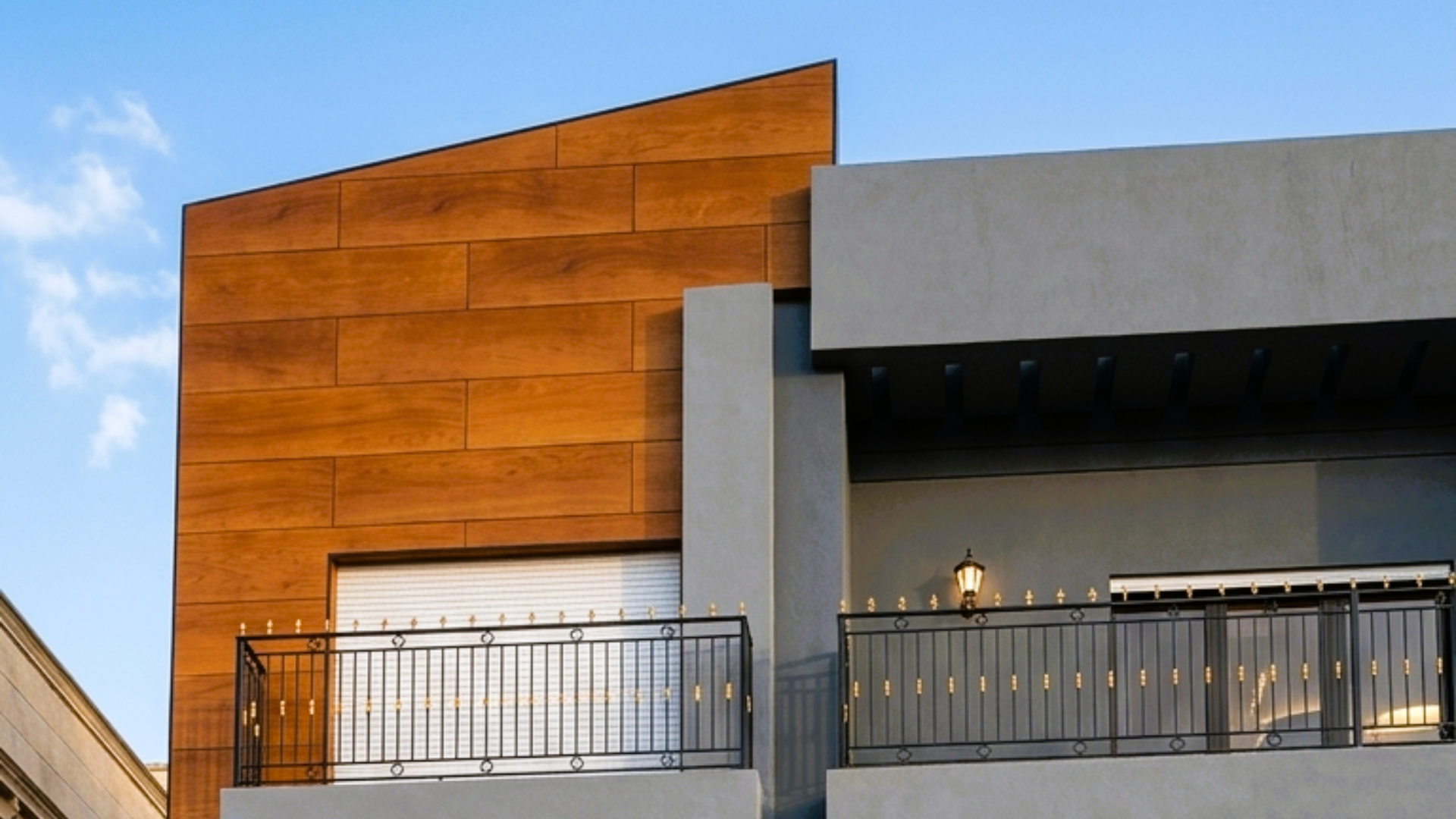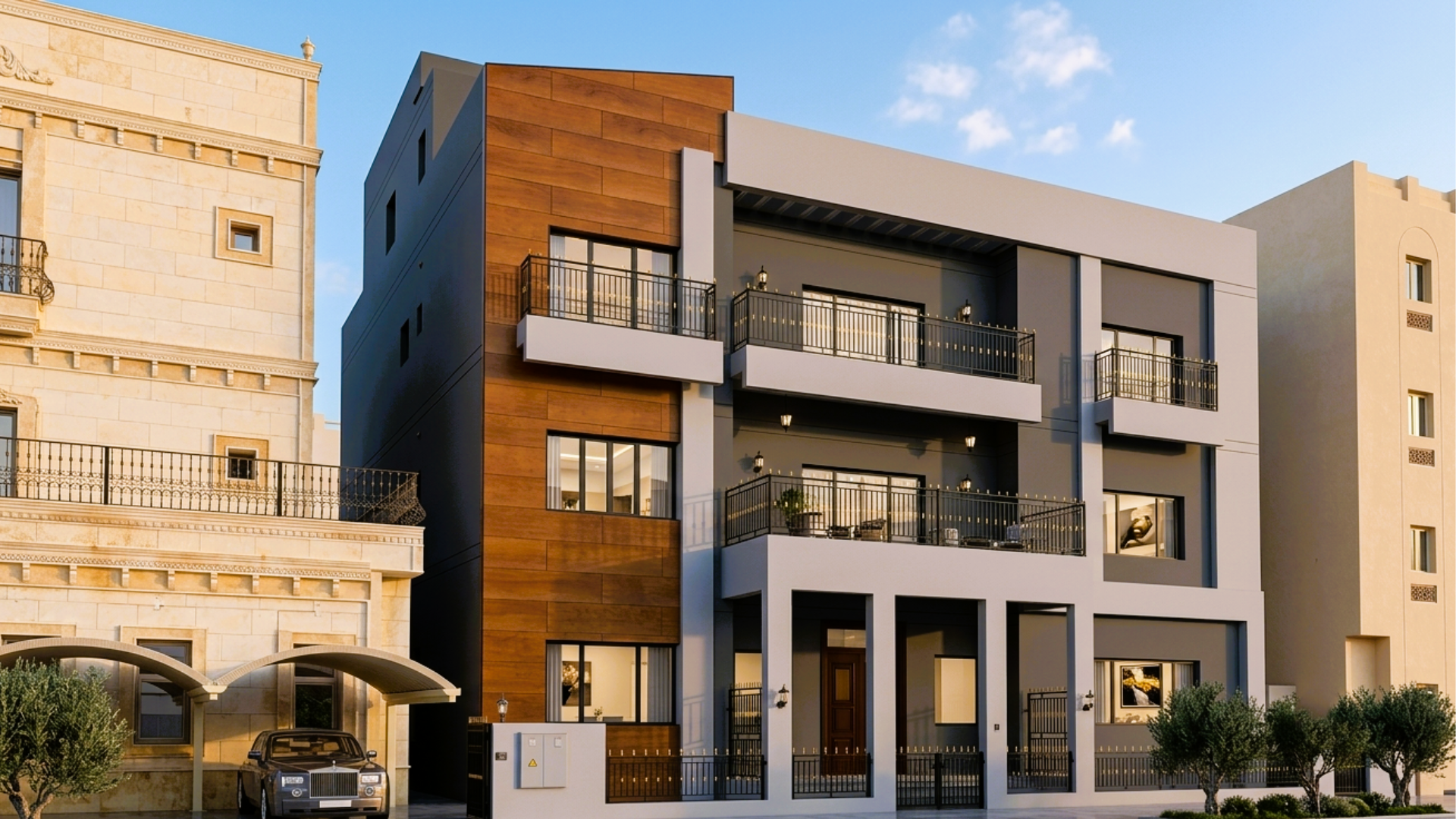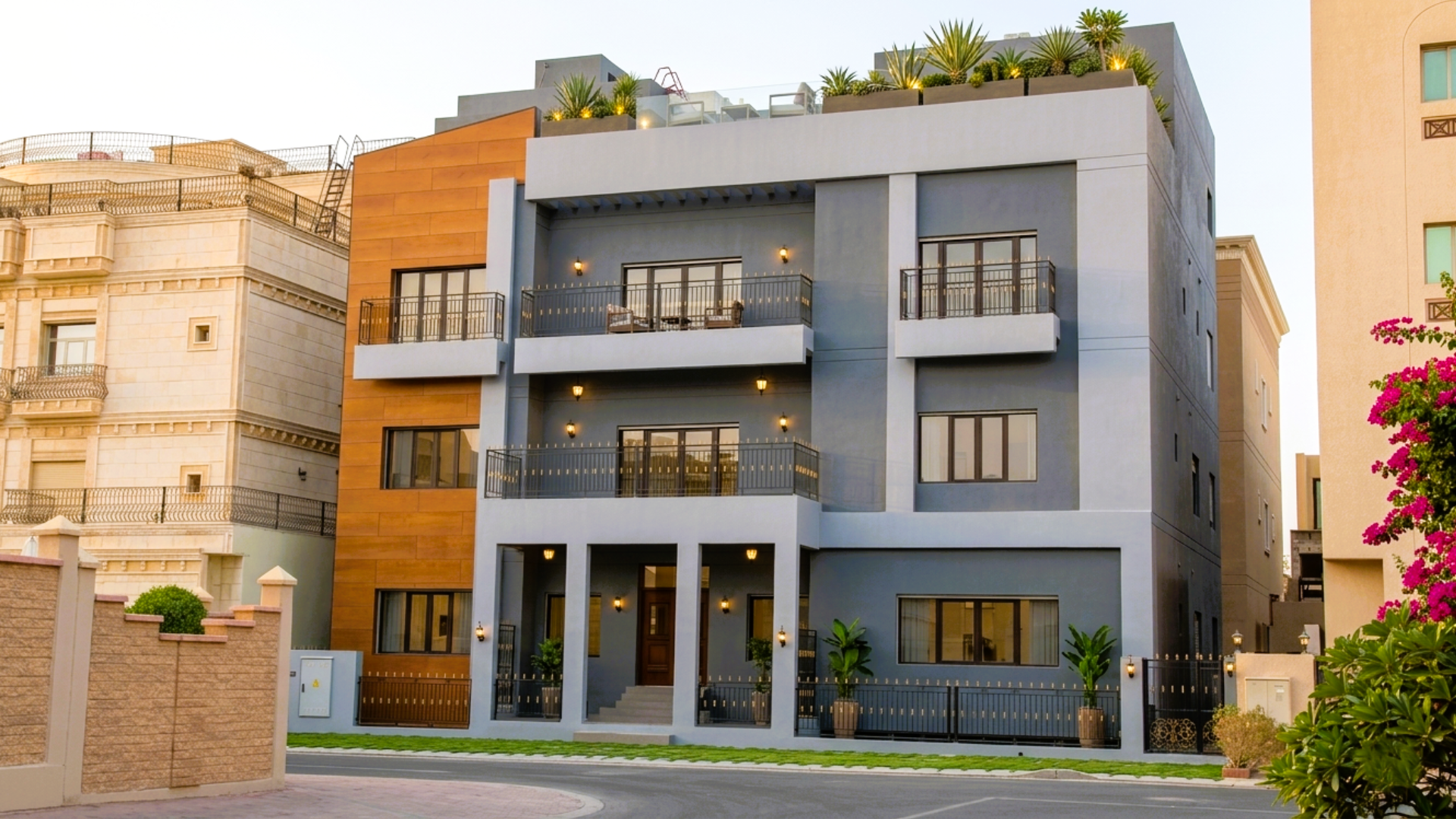
Private Villa Faiha is a contemporary residential development located in Dubai, UAE, designed to balance modern architectural expression with the warmth and character of natural materials. The villa reflects a growing trend within high-end residential architecture across the GCC, where designers seek façade solutions that combine premium aesthetics with long-term performance under demanding climatic conditions.
The architectural vision focused on creating a residence that conveys elegance, privacy, and a strong connection to natural materials while maintaining the clean geometry associated with contemporary Middle Eastern architecture. To achieve this objective, natural wood façade cladding from PARKLEX PRODEMA was selected as a key exterior design element.
The façade package was delivered with technical support and façade expertise from OBRAS International, ensuring that the selected material could be integrated into a high-performance building envelope suitable for Dubai’s environmental conditions.
The project demonstrates how engineered natural wood façade systems can successfully deliver architectural warmth while meeting modern requirements for durability, sustainability, fire safety, and low maintenance. Through careful detailing and ventilated façade design principles, the villa achieves both visual distinction and long-term façade performance.
The architectural language of Private Villa Faiha was developed around simplicity, material authenticity, and balanced proportions. Rather than relying on excessive ornamentation, the design emphasizes carefully selected materials and precise detailing to create visual interest.
The villa’s massing combines clean horizontal and vertical planes with strategically placed façade elements that enhance depth, shadow, and texture. Large openings maximize natural daylight while creating strong connections between indoor and outdoor spaces.
Natural wood was selected as a defining architectural feature because it introduces warmth and human scale to the building composition. The rich texture and organic appearance of the PARKLEX PRODEMA panels contrast effectively with contemporary materials such as glass, stone, and architectural metal components.
The façade design sought to achieve several key objectives:
The selected wood façade system enabled architects to achieve the desired visual impact without the maintenance challenges traditionally associated with natural timber installations in the GCC region.
By integrating engineered wood technology with modern façade engineering principles, the project successfully combines aesthetics and performance within a single building envelope solution.
Material selection played a critical role in achieving the architectural objectives of Private Villa Faiha.
Several factors influenced the decision to specify PARKLEX PRODEMA natural wood façade panels.
The design team required a façade material capable of delivering the visual warmth of real wood while maintaining a contemporary appearance. The natural wood finish provided authentic grain patterns and colour variation that cannot be replicated by artificial alternatives.
Dubai’s environmental conditions present significant challenges for exterior cladding systems, including:
The selected material offered proven durability under demanding climatic conditions.
Private residential projects increasingly demand façade materials that minimize long-term maintenance costs. Unlike conventional timber systems requiring regular treatment and refinishing, engineered wood façade panels offer significantly reduced maintenance requirements.
The project team prioritized environmentally responsible material choices. Natural wood sourced from certified forests contributes positively to sustainable construction objectives while supporting responsible resource management practices.
Modern façade design requires materials capable of meeting applicable fire performance standards. The selected system offers tested fire classifications suitable for specification within regional construction projects.
The façade needed to maintain its appearance and functionality over an extended service life. The engineered composition of the selected panels provides enhanced resistance to weathering, UV exposure, and environmental degradation.
PARKLEX PRODEMA natural wood façade systems combine genuine timber veneers with advanced engineering technology to create a durable exterior cladding solution.
High-density engineered natural wood façade panels designed specifically for exterior ventilated façade applications.
Large-format façade panels are available in multiple dimensions, enabling architects to create diverse façade patterns and joint configurations.
High-density composite construction engineered for structural stability and exterior durability.
Available in a wide range of:
Depending on system configuration, façade assemblies can achieve fire classifications suitable for international building standards and GCC project requirements.
The engineered panel composition provides excellent moisture resistance compared with traditional timber cladding systems.
Specialized exterior protection technologies help preserve colour stability and surface performance under prolonged solar exposure.
The dense panel construction provides enhanced resistance against everyday wear and mechanical impacts.
Typical maintenance requirements include:
Potential sustainability benefits include:
For architects and consultants, these characteristics provide confidence that the material can deliver both design intent and long-term operational performance.
One of the most important considerations for façade specification within the UAE and wider GCC region is climatic suitability.
Private Villa Faiha benefits from a façade system specifically suited to the environmental challenges experienced throughout Dubai.
Summer temperatures frequently exceed 45°C across many GCC locations. Façade materials must withstand continuous thermal loading without significant degradation.
The engineered wood façade system maintains dimensional stability while protecting the building envelope from direct solar gain.
Dubai experiences some of the highest annual solar radiation levels globally. Extended UV exposure can cause fading, cracking, and surface deterioration in inferior façade materials.
The protective surface technology incorporated within the panels helps preserve appearance and performance over time.
Seasonal humidity variations can impact conventional timber systems.
The engineered composition of the façade panels significantly reduces moisture-related movement while improving long-term stability.
Many GCC projects are located near marine environments where salt-laden air accelerates material deterioration.
The façade system offers improved resistance to environmental exposure compared with untreated natural timber alternatives.
Wind-driven sand presents a unique challenge for building envelopes throughout the Gulf region.
The durable exterior surface assists in resisting abrasion while maintaining façade integrity and appearance.
Modern ventilated façade systems are designed to accommodate thermal expansion and contraction.
Properly engineered support systems allow panels to move naturally while maintaining structural integrity and façade alignment.
These characteristics make the material particularly suitable for luxury residential projects seeking long-term façade reliability within demanding GCC environments.
The success of any façade project depends not only on material selection but also on the engineering principles used during installation.
Private Villa Faiha utilizes ventilated façade technology, a widely recognized approach for enhancing building envelope performance.
A ventilated façade incorporates a continuous air cavity between the cladding panels and the primary wall structure.
This cavity provides several benefits:
The façade panels are installed onto a precision-engineered support structure typically manufactured from:
The subframe transfers loads safely to the building structure while maintaining alignment and dimensional accuracy.
Panel fixing systems are designed to ensure:
Depending on project requirements, visible or concealed fixing systems may be employed.
Joint detailing forms a critical component of façade engineering.
Proper joint design supports:
The carefully coordinated joint layout at Private Villa Faiha contributes significantly to the architectural appearance of the building.
Façade engineering considerations included:
The result is a façade system that combines aesthetic quality with robust technical performance.
Sustainability continues to influence material selection across the UAE construction sector.
Natural wood façade systems offer several environmental advantages when incorporated into modern building envelopes.
The façade system may support various LEED credit categories including:
Projects pursuing sustainability objectives within the UAE can benefit from responsibly sourced façade materials and improved building envelope efficiency.
The material’s environmental profile can contribute toward sustainability assessment frameworks such as BREEAM.
Many façade system components can be separated and recycled at the end of their service life, supporting circular economy principles.
Natural wood products generally possess favourable embodied carbon characteristics when compared with many conventional construction materials.
Ventilated façade systems contribute to improved thermal regulation by reducing direct heat transfer through the building envelope.
Potential outcomes include:
For residential projects in Dubai, these benefits support both environmental performance and long-term operational value.
Fire safety remains a fundamental consideration in façade design throughout the UAE and GCC region.
The specification of façade materials must align with project-specific fire engineering requirements and applicable regulatory frameworks.
PARKLEX PRODEMA systems are available with tested fire performance classifications depending on panel specification and assembly configuration.
Façade materials are commonly assessed according to EN 13501-1 classification standards, providing a recognized framework for evaluating reaction-to-fire performance.
All façade systems specified within the UAE must comply with relevant provisions of the UAE Fire and Life Safety Code and project authority requirements.
Façade designs are typically reviewed in accordance with Dubai Civil Defence requirements and project-specific approvals.
Compliance extends beyond individual materials and includes:
For residential developments such as Private Villa Faiha, fire safety objectives are achieved through coordinated façade engineering, appropriate material selection, and adherence to applicable standards.
This integrated approach ensures that architectural ambition is balanced with occupant safety and regulatory compliance.
Private Villa Faiha demonstrates how engineered natural wood façade systems can successfully deliver contemporary architectural expression while meeting the technical demands of the UAE environment. Through the use of PARKLEX PRODEMA natural wood cladding, the project achieves a refined balance between aesthetics, durability, sustainability, and façade performance.
The combination of authentic wood appearance, ventilated façade technology, climatic resilience, and modern engineering principles provides a compelling solution for architects seeking natural materials without compromising long-term building envelope performance.
Supported by the façade expertise of OBRAS International, the project serves as a valuable example of how advanced wood façade technologies can be successfully integrated into premium residential developments throughout Dubai and the wider GCC region.
WhatsApp us