
The Complete Guide to Non-Combustible Façade Systems for Vision 2030 Projects, High-Rise Buildings, Government Facilities and Luxury Developments Across Saudi Arabia
Why Fibre Cement Cladding Has Become a Critical Specification Decision in Saudi Arabia
Saudi Arabia is undergoing one of the largest construction and urban transformation programmes in modern history. Driven by Vision 2030, the Kingdom is investing hundreds of billions of dollars into new cities, tourism destinations, transportation infrastructure, commercial districts, educational campuses, healthcare facilities, luxury residential communities, and iconic architectural landmarks.
From the futuristic skyline of NEOM to large-scale mixed-use developments in Riyadh, Jeddah, Dammam, and Al Khobar, the quality and performance of exterior building materials have become increasingly important. Architects, façade consultants, developers, and project managers are now expected to specify materials that not only meet aesthetic ambitions but also satisfy strict fire safety regulations, sustainability objectives, durability requirements, and long-term asset performance goals.
Among all available façade materials, fibre cement cladding has emerged as one of the most trusted and widely specified non-combustible exterior wall solutions in Saudi Arabia.
The growing demand for fibre cement panels is not accidental. Modern fibre cement façade systems provide architects with a rare combination of design flexibility, regulatory compliance, weather resistance, fire performance, and lifecycle value. As Saudi Building Code (SBC) requirements continue to evolve, particularly regarding fire safety and exterior wall assemblies, non-combustible cladding systems have become the preferred choice for many public and private sector developments.
This comprehensive guide explores everything project stakeholders need to know about specifying fibre cement cladding in Saudi Arabia. Whether you are designing a high-rise residential tower, a government building, a university campus, a healthcare facility, a luxury villa development, or a Vision 2030 mega-project, this article explains how fibre cement panels support SBC compliance while delivering exceptional architectural performance.
Market Intelligence Note
Vision 2030 targets 75% local content objectives. While façade panels are predominantly imported, system integration, installation, and technical specification services are increasingly locally delivered — making a KSA-based specification partner such as OBRAS International critical to project delivery.
What Is Fibre Cement Cladding?
Fibre cement cladding is a high-performance exterior façade material manufactured using a carefully engineered blend of Portland cement, cellulose fibres, mineral additives, and water. Through an advanced production process, these raw materials are compressed into durable panels that offer exceptional structural stability and long-term weather resistance.
Unlike traditional render systems, painted façades, aluminium composite panels, or high-pressure laminate boards, fibre cement panels achieve their performance characteristics through the material itself rather than relying solely on coatings or surface treatments.
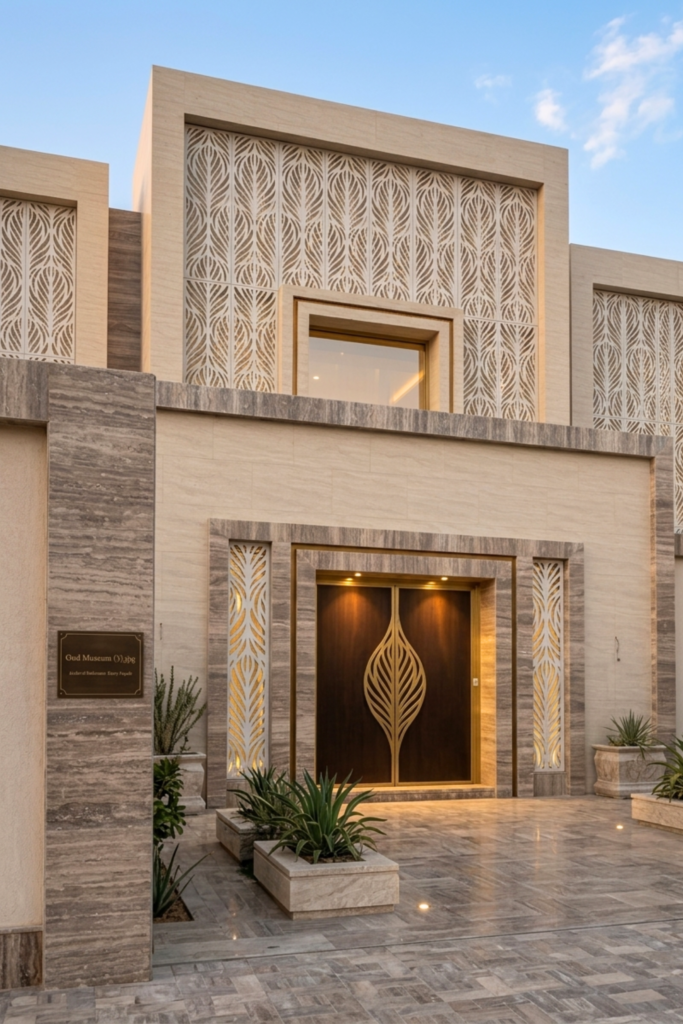
This distinction is particularly important when evaluating fire safety.
Because fibre cement is primarily composed of mineral-based ingredients, it is inherently non-combustible. The material does not ignite easily, does not contribute significantly to flame spread, and produces minimal smoke during fire exposure. This makes fibre cement one of the most reliable façade materials available for projects requiring enhanced fire protection.
Architects throughout Saudi Arabia increasingly specify fibre cement panels because they combine technical performance with contemporary aesthetics. Modern products such as EQUITONE provide a wide range of textures, finishes, colours, and panel formats, enabling designers to create distinctive building envelopes without compromising safety or durability.
The result is a façade system that satisfies both architectural creativity and regulatory compliance—two priorities that increasingly define modern construction across the Kingdom.
Why Fibre Cement Cladding Is Growing Across Saudi Arabia
The growth of fibre cement cladding in Saudi Arabia is directly linked to several major industry trends that are reshaping the construction sector.
The first is the unprecedented scale of development associated with Vision 2030.
Saudi Arabia’s construction market is no longer driven solely by traditional residential and commercial projects. Today, the Kingdom is building entire cities, tourism destinations, cultural districts, innovation hubs, healthcare campuses, educational institutions, transportation infrastructure, and smart urban communities.
Projects such as NEOM, The Line, Diriyah Gate, Qiddiya, Red Sea Global, New Murabba, and numerous government-led developments are creating demand for façade systems capable of meeting international performance standards while remaining compliant with Saudi regulations.
At the same time, developers and consultants have become increasingly focused on fire safety.
Global attention on façade fire performance has fundamentally changed the way cladding materials are evaluated. Project stakeholders now conduct much deeper reviews of combustibility classifications, flame spread characteristics, smoke generation, and assembly-level fire testing before approving façade materials.
This shift has accelerated the adoption of non-combustible cladding systems, particularly fibre cement.
A third factor is climate resilience.
Saudi Arabia presents some of the most demanding environmental conditions in the world. Buildings must withstand extreme temperatures, intense ultraviolet radiation, wind-driven sand, occasional heavy rainfall events, and coastal humidity in regions such as Jeddah and the Eastern Province.
Many conventional façade materials experience long-term degradation under these conditions. Fibre cement, however, is specifically valued for its dimensional stability, UV resistance, and durability in harsh climates.
For developers seeking long service life with minimal maintenance requirements, fibre cement offers a compelling lifecycle value proposition.
Understanding Saudi Building Code Requirements for Façade Systems
One of the most common questions architects ask during specification development is:
“What type of cladding is compliant with Saudi Building Code requirements?”
The answer depends on several project-specific factors, including building height, occupancy classification, construction type, and authority requirements.
However, understanding three key code documents provides the foundation for compliant façade design.
These are SBC 201, SBC 303, and SBC 801.
| SBC Code | Key Clause | Relevance to Cladding | Fibre Cement Status |
|---|---|---|---|
| SBC 201 | Section 705 – Exterior Walls | Fire-resistance rating of exterior wall assembly by construction type | Compliant |
| SBC 201 | Section 703 – Fire-Resistance Tests | Testing standards applicable to rated assembly components | ASTM E136 / EN 13501-1 |
| SBC 303 | Assembly Occupancy – Type I Construction | Non-combustible exterior materials required | A2-s1,d0 Compliant |
| SBC 801 | Exterior Wall Fire Spread | Flame spread index and smoke development of cladding materials | FSI <5 (ASTM E84) |
| SBC 801 | High-Rise Building Requirements | Enhanced non-combustibility for buildings over 4 storeys / 15m | Non-combustible per ASTM E136 |
SBC 201: The Foundation of Exterior Wall Compliance
SBC 201 serves as the primary building code governing general construction requirements throughout Saudi Arabia.
For façade consultants and architects, SBC 201 is particularly important because it establishes the rules governing exterior wall assemblies, fire-resistance ratings, occupancy classifications, and construction types.
The code categorises buildings into different construction types based on fire performance expectations.
Type I and Type II construction generally apply to high-rise buildings, government facilities, hospitals, educational institutions, major commercial developments, airports, and other large public structures.
These construction categories typically require the highest levels of fire resistance and non-combustibility.
As a result, combustible façade materials may not satisfy project requirements for many large-scale developments.
Fibre cement cladding provides a straightforward path toward compliance because the material itself is non-combustible and can be incorporated into tested exterior wall assemblies that satisfy fire safety objectives.
For architects specifying exterior wall systems in Saudi Arabia, understanding the relationship between construction type and cladding selection is essential from the earliest design stages.
SBC 303: Fire Safety Requirements for Assembly Occupancies
While SBC 201 establishes general building requirements, SBC 303 focuses specifically on Assembly Group occupancies.
This category includes buildings where large numbers of people gather, such as:
- Mosques
- Conference centres
- Convention facilities
- Sports arenas
- Theatres
- Exhibition halls
- Community centres
- Hospitality event venues
Because these buildings often accommodate hundreds or thousands of occupants simultaneously, fire safety requirements become significantly more demanding.
In many Assembly Group projects, exterior wall materials must demonstrate non-combustible performance and contribute minimally to fire spread.
This is one of the reasons fibre cement panels are increasingly specified for public buildings throughout Saudi Arabia.
Their A2 fire classification and non-combustible characteristics align closely with the fire safety expectations associated with Assembly Group occupancies.
For architects designing civic, cultural, educational, and hospitality projects, fibre cement offers a reliable route toward compliance while preserving design flexibility.
SBC 801: Fire Protection and Exterior Wall Performance
SBC 801 focuses on fire protection systems and life safety measures.
From a façade perspective, the code addresses issues such as:
- Flame spread
- Smoke development
- Fire propagation
- Exterior wall ignition
- Fire compartmentation
- Building occupant safety
The intent is clear: exterior wall systems should not contribute significantly to fire growth or allow uncontrolled fire spread between floors.
Non-combustible fibre cement cladding performs exceptionally well against these objectives because the material does not act as fuel during a fire event.
Combined with properly designed cavity barriers, fire stops, insulation systems, and ventilated façade assemblies, fibre cement panels support safer and more resilient building envelopes.
Why Fire Ratings Matter More Than Ever in Saudi Arabia
One of the most misunderstood areas of façade specification is fire classification.
Many project teams focus primarily on appearance, cost, or warranty periods while overlooking the technical significance of fire ratings.
In reality, fire performance should be one of the first criteria evaluated when selecting exterior cladding materials.
The consequences of specifying a non-compliant façade system can include project delays, authority rejections, insurance complications, redesign costs, and significant long-term liability exposure.
For this reason, Saudi developers increasingly prioritise materials with proven non-combustible classifications and internationally recognised fire test certifications.
Fibre cement panels are among the few façade materials capable of consistently achieving these requirements while remaining commercially viable across a wide range of project types.
What Does A2-s1,d0 Mean? Understanding Fire Ratings for Façade Materials in Saudi Arabia
When architects search for terms such as “A2 fire rated cladding Saudi Arabia,” “non-combustible façade panels for high-rise buildings,” or “SBC compliant exterior wall materials,” they are often confronted with a range of technical classifications that can be confusing without proper context.
Among these classifications, A2-s1,d0 has become one of the most important benchmarks for façade specification across the Kingdom.
The classification originates from the European EN 13501-1 standard, which evaluates how construction materials react when exposed to fire.
The designation can be broken into three separate performance categories.
The “A2” classification indicates that the material contributes very little to fire. While A1 materials are completely non-combustible, A2 materials are considered practically non-combustible and are widely accepted for high-performance façade applications worldwide.
The “s1” component refers to smoke production. Materials classified as s1 produce very limited smoke during the early stages of a fire event. This is particularly important because smoke inhalation remains one of the leading causes of fatalities in building fires.
The “d0” classification indicates that the material does not produce flaming droplets or particles when exposed to fire. Flaming droplets can accelerate fire spread and create additional hazards for building occupants and emergency responders.
Together, A2-s1,d0 represents one of the highest-performing classifications available for architectural cladding materials.
For Saudi Arabian projects, particularly high-rise residential towers, hospitals, universities, airports, government facilities, hospitality developments, and mixed-use commercial projects, A2-s1,d0 has increasingly become the preferred specification benchmark.
Many project authorities, consultants, insurance providers, and international design teams now regard A2-rated cladding as the minimum acceptable standard for reducing façade-related fire risk.
ASTM E136, ASTM E84 and NFPA 285: Fire Tests Every Architect Should Understand
While EN 13501-1 classifications are commonly referenced by international consultants, Saudi projects also rely heavily on ASTM and NFPA testing standards.
Understanding these standards helps architects make informed specification decisions.
ASTM E136 – Non-Combustibility Testing
ASTM E136 is one of the most important fire tests for façade materials.
This test determines whether a material can be classified as non-combustible under controlled laboratory conditions.
Materials that pass ASTM E136 demonstrate that they do not significantly contribute to fire growth when exposed to elevated temperatures.
For many Saudi projects, ASTM E136 compliance is a critical requirement when specifying exterior cladding systems for Type I and Type II construction.
Because fibre cement is fundamentally mineral-based, products such as EQUITONE achieve non-combustible classification without relying on combustible cores or additives.
ASTM E84 – Flame Spread and Smoke Development
ASTM E84 evaluates how quickly flames spread across the surface of a material and how much smoke is generated during fire exposure.
The two key measurements are:
Flame Spread Index (FSI)
and
Smoke Developed Index (SDI)
High-performance fibre cement panels typically achieve values below 5 for both categories.
These results are significantly better than many alternative façade materials and provide confidence when specifying buildings where life safety is a priority.
NFPA 285 – Assembly-Level Fire Testing
Perhaps the most misunderstood fire test in façade design is NFPA 285.
Unlike ASTM E136 or ASTM E84, which evaluate individual materials, NFPA 285 evaluates the complete exterior wall assembly.
This includes:
- Cladding panels
- Insulation
- Air barriers
- Subframes
- Fixings
- Structural wall systems
For many high-rise developments, NFPA 285 certification is required because it demonstrates how the entire façade system performs during a fire event.
Architects should always verify that the complete assembly—not simply the panel itself—has been tested and certified.
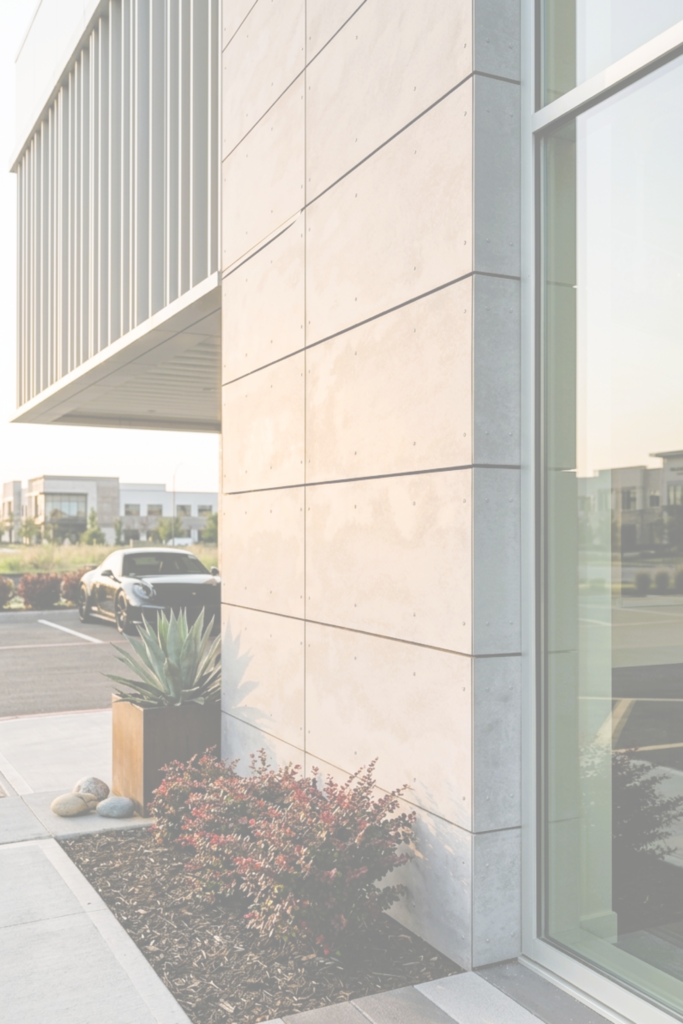
Why EQUITONE Has Become a Preferred Fibre Cement Façade Solution in Saudi Arabia
As demand for non-combustible façade systems continues to grow across Saudi Arabia, EQUITONE has emerged as one of the most frequently specified fibre cement panel brands among architects, consultants, and developers.
Manufactured by the global building materials leader Etex, EQUITONE combines decades of fibre cement innovation with a design-focused approach that appeals to contemporary architecture.
Unlike many façade materials that rely heavily on surface coatings, EQUITONE panels are manufactured using through-colour technology.
This means the colour and texture extend throughout the thickness of the panel.
For architects, this creates several advantages. Cut edges remain visually consistent with the panel surface.
The material retains its authentic appearance over time.
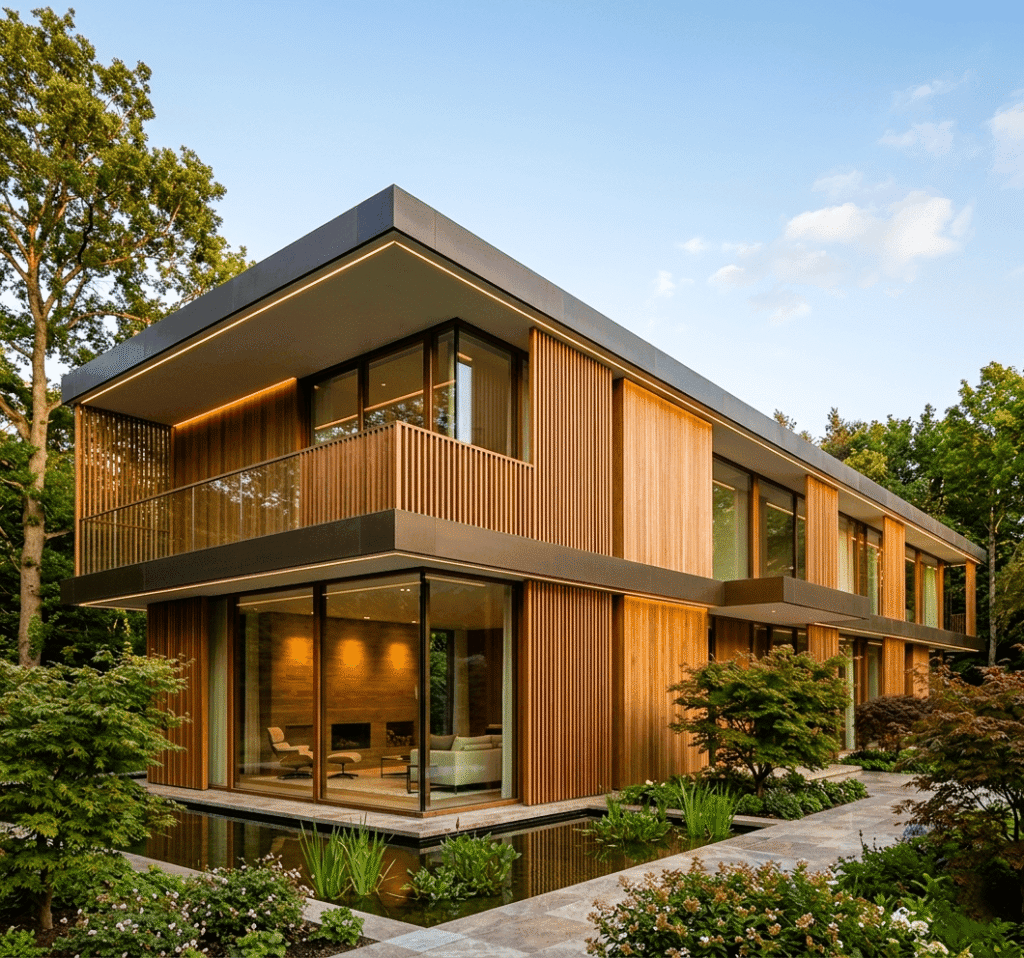
EQUITONE [tectiva]: Natural Architectural Expression
![EQUITONE [tectiva]](https://obrasintl.com/storage/2026/07/Blog-articles-images-1024x771.png)
EQUITONE [tectiva] is among the most specified fibre cement products in the GCC region.
Its lightly textured surface and naturally occurring colour variations create an authentic architectural appearance that works particularly well for educational facilities, government buildings, cultural institutions, and contemporary commercial developments.
Architects frequently choose Tectiva when they want to express material honesty and natural character.
EQUITONE [lunara]: Contemporary Fibre Cement Façade with Natural Character
![EQUITONE [lunara]](https://obrasintl.com/storage/2026/07/Blog-articles-images-2-1024x771.png)
LUNARA is a high-performance fibre cement façade panel that combines contemporary design with the natural aesthetic of textured materials. Engineered for durability, weather resistance, and low maintenance, it provides architects with a versatile cladding solution for modern building envelopes.
LUNARA enhances architectural façades with depth, character, and long-lasting visual appeal. Its robust fibre cement composition delivers reliable performance, making it an excellent choice for sustainable commercial and institutional projects across demanding environments.
EQUITONE [linea]: Dimensional Façade Design
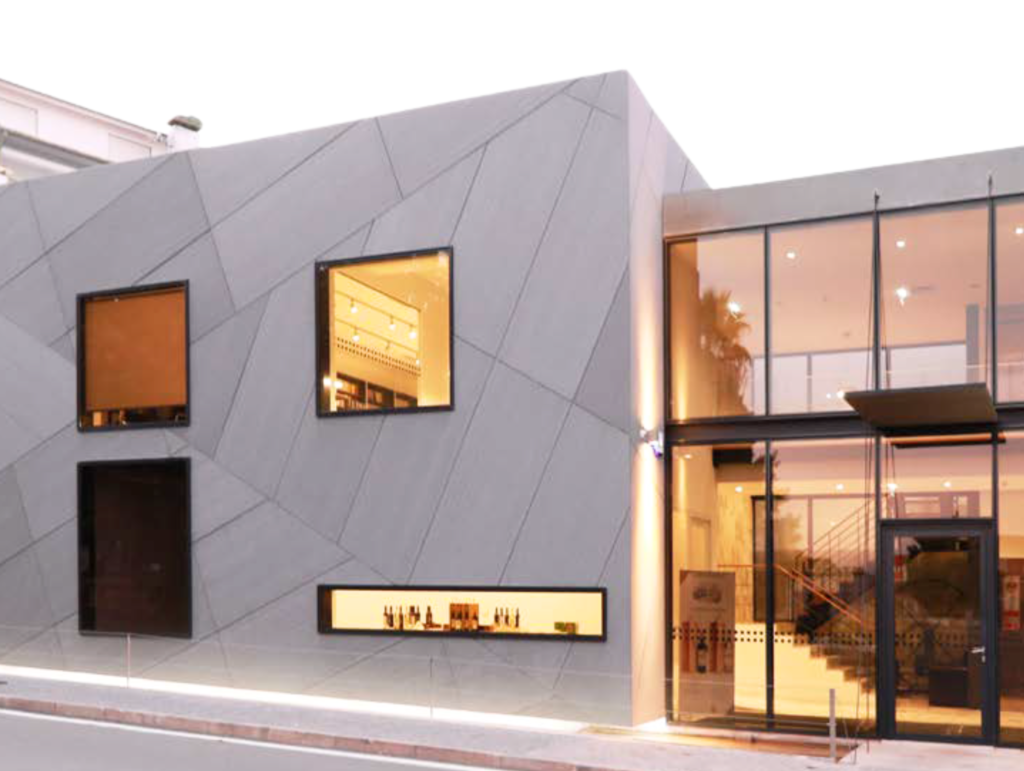
EQUITONE [linea] introduces depth and shadow through its distinctive linear profile.
This product is increasingly specified for premium residential developments, hotels, and luxury hospitality projects throughout Saudi Arabia.
The profile creates visual movement across the façade and enhances the building’s architectural identity.
EQUITONE [natura]: Architectural Fibre Cement Façade Panels
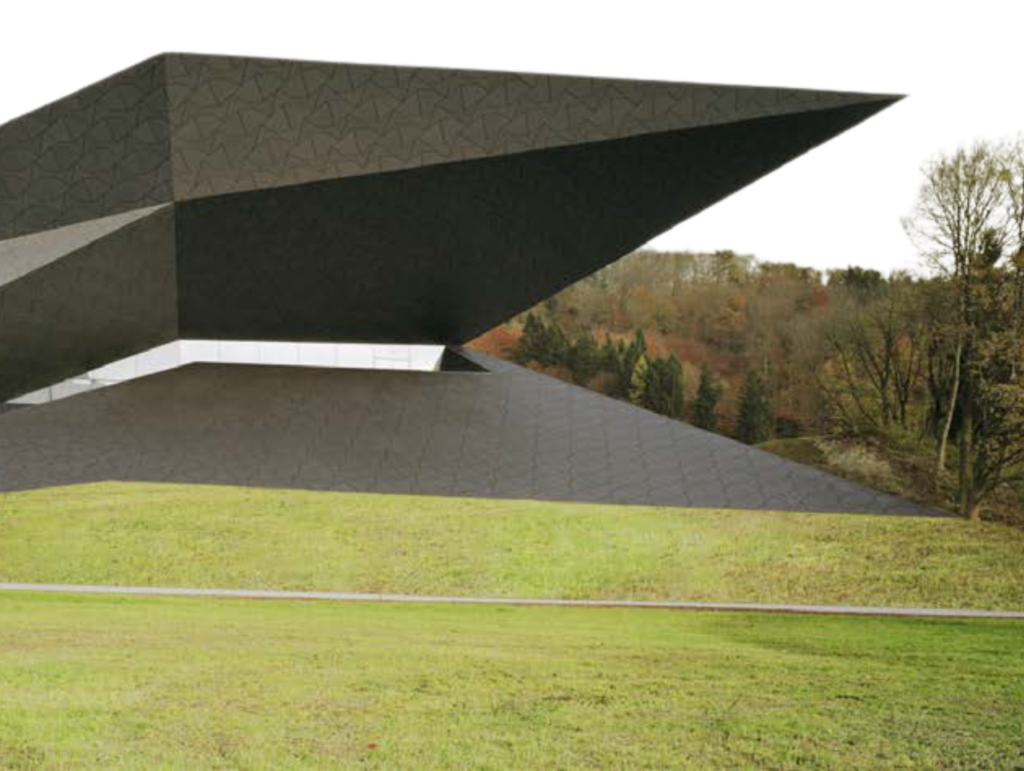
EQUITONE [natura] is a through-coloured fibre cement cladding panel that delivers a clean, contemporary façade aesthetic with visible natural fibre texture. Designed for ventilated façade systems, it offers exceptional durability, fire resistance, weather performance, and low maintenance.
Widely specified for commercial, educational, healthcare, and residential projects, EQUITONE [natura] enables architects to create timeless building envelopes with authentic material character and long-lasting visual appeal.
Why Ventilated Façade Systems Are Ideal for Saudi Arabia’s Climate
Saudi Arabia presents unique environmental challenges that directly influence façade performance.
Summer temperatures in Riyadh regularly exceed 45°C.
Coastal cities such as Jeddah experience high humidity levels.
Dust and sandstorms place additional stress on exterior building materials.
Under these conditions, a traditional sealed façade system may struggle to provide optimal long-term performance.
This is why ventilated rainscreen façades have become increasingly popular across the Kingdom.
A ventilated façade consists of:
- Exterior cladding panels
- Ventilated cavity
- Subframe structure
- Insulation layer
- Structural wall
The cavity creates a continuous airflow path behind the cladding.
As solar radiation heats the exterior surface, warm air rises through the cavity and is naturally replaced by cooler air.
This process helps reduce heat transfer into the building envelope.
For Saudi developments where cooling loads represent a significant portion of operational energy consumption, the resulting energy savings can be substantial.
Fibre Cement Cladding for Riyadh Projects
Riyadh’s climate is characterised by extreme temperatures, intense solar exposure, and significant thermal movement.
Façade materials must withstand repeated expansion and contraction cycles without cracking, warping, or losing performance.
Fibre cement panels perform exceptionally well under these conditions due to their dimensional stability and resistance to UV degradation.
For commercial towers, educational campuses, healthcare facilities, and government developments in Riyadh, ventilated fibre cement façades provide both regulatory compliance and long-term durability.
Fibre Cement Cladding for Jeddah and Coastal Developments
Coastal environments introduce additional challenges.
Salt-laden air accelerates corrosion.
Humidity levels remain significantly higher than inland regions.
Building materials must resist moisture-related deterioration while maintaining their appearance.
Fibre cement panels combined with properly specified aluminium subframes and stainless steel fixings create a highly durable solution for Jeddah, Yanbu, and Red Sea developments.
These systems help protect the building envelope while preserving architectural aesthetics over decades of service life.
Fibre Cement Cladding for NEOM, Vision 2030 Mega Projects and Future Saudi Cities
Saudi Arabia’s Vision 2030 programme is transforming the Kingdom into one of the world’s most dynamic construction markets. Developments such as NEOM, The Line, Red Sea Global, Diriyah Gate, Qiddiya, New Murabba, and numerous smart-city initiatives are redefining expectations for architecture, sustainability, fire safety, and building performance.
Unlike conventional construction projects, these developments operate under exceptionally demanding technical standards. International design consultants, engineering firms, project management teams, and government authorities often require materials that satisfy both Saudi Building Code requirements and internationally recognised performance standards.
This is one of the reasons fibre cement cladding has become increasingly attractive for Vision 2030 developments.
Products such as EQUITONE offer a unique combination of non-combustible fire performance, weather resistance, sustainability credentials, design flexibility, and long-term durability. Their ability to satisfy both ASTM and EN testing standards simplifies specification for international project teams working across multiple regulatory frameworks.
For architects involved in large-scale urban developments, fibre cement panels provide confidence that façade systems will meet performance expectations throughout the entire lifecycle of the building.
Whether the project involves a luxury hospitality resort on the Red Sea coast, a mixed-use urban district in Riyadh, a healthcare campus, an educational facility, or a high-rise residential tower, fibre cement supports the goals of safer, more sustainable, and future-ready construction.
Sustainable Façade Materials for Saudi Arabia’s Future
Sustainability is no longer a secondary consideration in façade specification.
Across Saudi Arabia, project owners, government authorities, investors, and developers are increasingly evaluating materials based on environmental impact, lifecycle performance, and long-term operational efficiency.
As Vision 2030 drives greater emphasis on sustainable development, architects are looking for façade materials that contribute to responsible construction practices without compromising technical performance.
Fibre cement is particularly well-positioned in this regard.
Because it is manufactured primarily from natural raw materials including cement, cellulose fibres, water, and mineral additives, fibre cement offers a significantly different environmental profile compared to many petroleum-based façade materials.
In addition to its material composition, fibre cement contributes to sustainability through durability.
Buildings designed with long-lasting façade systems require fewer repairs, fewer replacements, and lower resource consumption over time.
This reduces embodied carbon associated with maintenance and refurbishment activities throughout the building lifecycle.
Many fibre cement products also support recognised environmental certifications and sustainability frameworks.
For developers pursuing environmentally responsible construction strategies, fibre cement aligns with broader objectives related to resilience, durability, resource efficiency, and long-term asset value.
How Ventilated Fibre Cement Façades Improve Energy Efficiency
Energy performance is a critical concern throughout Saudi Arabia.
Cooling loads account for a significant percentage of total building energy consumption, particularly in regions experiencing prolonged periods of extreme heat.
The design of the building envelope directly influences operational energy demand.
Ventilated rainscreen systems offer measurable advantages by improving thermal performance and reducing heat transfer into occupied spaces.
The air cavity behind the cladding acts as a thermal buffer zone. As solar radiation heats the exterior panel surface, airflow within the cavity helps dissipate accumulated heat before it reaches the building structure.
This mechanism contributes to improved thermal comfort and reduced cooling demand.
For commercial buildings, educational campuses, healthcare facilities, hotels, and residential developments, these energy savings can accumulate significantly over the lifespan of the project.
As energy efficiency becomes increasingly important within the Kingdom’s sustainability agenda, ventilated fibre cement façade systems provide a practical solution that supports both environmental and operational objectives.
Lifecycle Cost Benefits of Fibre Cement Cladding
Initial construction cost represents only one component of a building’s financial performance.
Forward-thinking developers increasingly evaluate façade materials based on lifecycle value rather than solely upfront expenditure.
This approach considers maintenance requirements, repair costs, replacement cycles, operational performance, and long-term durability.
When assessed from a lifecycle perspective, fibre cement frequently outperforms alternative façade materials.
The material is resistant to ultraviolet degradation, moisture damage, corrosion, biological growth, and thermal stress.
As a result, maintenance requirements remain relatively low throughout the service life of the building.
Unlike painted façades that require periodic recoating, or materials that may fade, warp, or deteriorate under intense solar exposure, high-quality fibre cement panels maintain their appearance and performance for decades.
This long-term durability translates directly into reduced operational expenditure and improved return on investment.
For developers managing large property portfolios, these advantages can have a significant impact on total ownership costs..
Is fibre cement cladding approved for use in Saudi Arabia?
Yes. Fibre cement cladding is widely specified across Saudi Arabia for residential, commercial, healthcare, educational, hospitality, and government projects. When supported by appropriate testing and certification, it satisfies the fire performance requirements applicable to many building types under the Saudi Building Code.
What is the fire rating of fibre cement panels?
High-performance fibre cement panels such as EQUITONE achieve A2-s1,d0 classification under EN 13501-1 and are classified as non-combustible under ASTM E136.
Is fibre cement cladding suitable for high-rise buildings?
Yes. Fibre cement is commonly specified for high-rise developments because of its non-combustible properties, durability, and compatibility with tested façade assemblies.
Is fibre cement better than ACP cladding?
From a fire safety perspective, fibre cement offers significant advantages because its non-combustible performance is inherent to the material itself rather than dependent on core composition.
Is EQUITONE available in Saudi Arabia?
Yes. EQUITONE fibre cement façade systems are available throughout Saudi Arabia through OBRAS International, including technical specification support and project consultation services.
Why Architects and Developers Choose OBRAS International
Successful façade projects require more than quality materials.
They require technical expertise, specification support, compliance guidance, supply chain coordination, and practical experience.
OBRAS International works closely with architects, façade consultants, developers, contractors, and project management teams across Saudi Arabia and the GCC to support the successful delivery of high-performance ventilated façade systems.
From concept design through technical submittals, mock-ups, procurement, and installation support, OBRAS provides project-specific guidance tailored to the unique requirements of each development.
As an authorised EQUITONE product partner, OBRAS offers access to technical documentation, fire performance certifications, sample coordination, specification assistance, and façade consultancy services across the Kingdom.
Conclusion: The Future of Façade Design in Saudi Arabia
As Saudi Arabia continues its unprecedented construction transformation under Vision 2030, the importance of safe, durable, sustainable, and compliant façade systems will only increase.
Architects and developers face growing expectations to deliver buildings that perform effectively throughout their lifecycle while satisfying increasingly rigorous fire safety requirements.
Fibre cement cladding has emerged as one of the most trusted solutions for meeting these objectives.
Its combination of non-combustible performance, A2 fire classification, weather resistance, sustainability benefits, design flexibility, and compatibility with ventilated façade systems makes it particularly well suited to Saudi Arabia’s demanding construction environment.
Whether the project is a high-rise tower in Riyadh, a healthcare facility in Jeddah, a luxury hospitality destination on the Red Sea coast, a university campus, a government development, or a Vision 2030 mega-project, fibre cement provides a future-ready façade solution that aligns with both architectural ambition and regulatory compliance.
For project-specific guidance, technical documentation, EQUITONE samples, and façade specification support, contact the OBRAS International technical team and begin your next Saudi Arabian façade project with confidence.
Ready to Specify Fibre Cement Cladding for Your KSA Project?
OBRAS International provides a complete specification consultation service for EQUITONE fibre cement façade systems in Saudi Arabia
— from initial compliance review through to technical submittal package and supply –