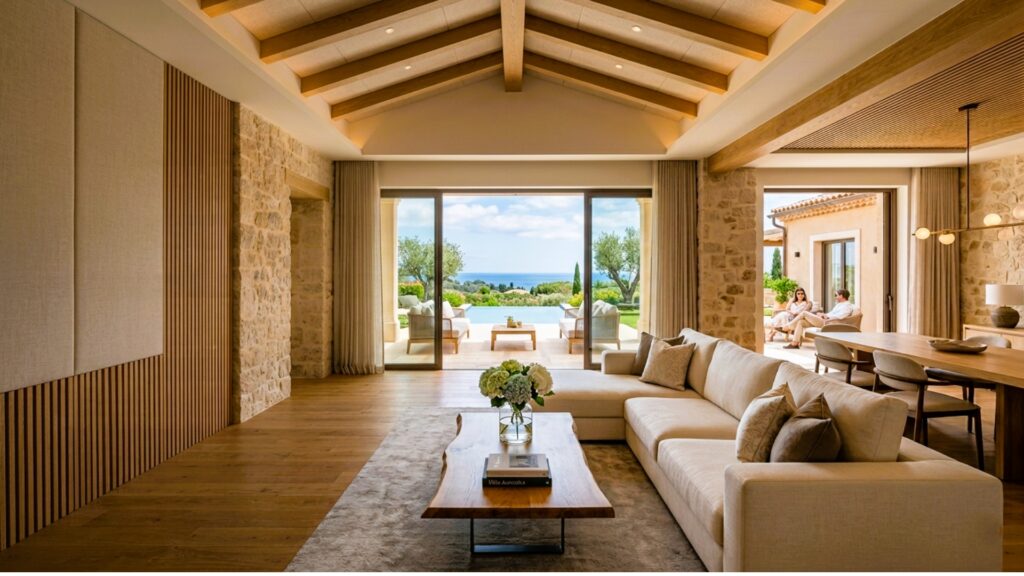
Sustainable facade, as the UAE and wider Gulf accelerate toward net-zero ambitions and post-oil diversification, the building envelope is no longer merely aesthetic—it is the critical performance layer that separates projects destined for certification from those facing costly retrofits.
The GCC construction market is undergoing a structural transformation unlike anything seen in its post-oil development history. Driven by UAE Vision 2031, Saudi Vision 2030’s NEOM, Bahrain’s Economic Recovery Plan, and a wave of government-mandated green building codes, developers and architects across the region are confronting a single, unavoidable reality: the façade is now a strategic asset, not a decorative finish.
For mega-projects—typologies that range from mixed-use hospitality towers in Downtown Dubai to sprawling cultural institutions on Saadiyat Island—the performance demands on the building envelope have multiplied exponentially. Thermal regulation in a climate where ambient temperatures regularly exceed 45°C, acoustic attenuation in densely built urban environments, solar shading to reduce HVAC loads, and long-term durability against sand abrasion and salt-laden coastal air: these requirements demand façade systems engineered to extraordinary standards.
This is the context in which the ventilated façade has emerged as the defining cladding solution for serious GCC construction in 2026 and beyond.
Why Ventilated Façades Have Become the GCC Standard
A ventilated façade—sometimes called a rainscreen cladding system or double-skin façade—comprises an outer cladding layer fixed to a substructure that maintains a deliberate air gap between the cladding panel and the building’s primary insulation layer. This air cavity creates a continuous chimney effect: warm air rises naturally, drawing in cooler air from below, significantly reducing the thermal load transmitted to the internal structure.
In European and North American climates, this effect is primarily valued for moisture management and preventing interstitial condensation. In the GCC, the physics are equally compelling but serve a different primary function: dramatic reduction in peak solar heat gain through the building skin. Independent studies conducted on Emirati high-rise projects have recorded wall surface temperature reductions of 12–18°C through ventilated facade systems compared to directly fixed cladding—translating to measurable reductions in cooling energy consumption of up to 30%.
Request a Technical Consultation
OBRAS International provides complimentary specification advisory to architects, developers, and contractors on all façade and cladding projects in the UAE & GCC.
The green building certification landscape reinforces this trajectory. Both the Dubai Green Building Regulations and the Abu Dhabi ESTIDAMA Pearl Rating System now assign significant credits to envelope performance. LEED v4 projects targeting Gold or Platinum in the Gulf routinely list ventilated façade specification as a prerequisite in their MEP energy modelling strategy. The business case no longer requires advocacy—it is embedded in regulatory and market expectation.
“The façade is not the last decision on a project—it should be the first. Every material choice made at the envelope level cascades through the building’s entire energy model, lifecycle cost projection, and maintenance schedule.”
Material Intelligence: The Eight Cladding Families Redefining GCC Architecture
Specification excellence in the ventilated façade space requires deep familiarity with the material landscape. Not every cladding product performs identically in the Gulf’s unique climate matrix—high UV intensity, significant thermal cycling between day and night, coastal salt exposure in projects from Jumeirah to Qatar’s Pearl Island, and a construction culture where premium aesthetics are non-negotiable. The following profiles represent the definitive cladding portfolio for sophisticated GCC specification, as represented by OBRAS International.
Natural Biophilic Materials
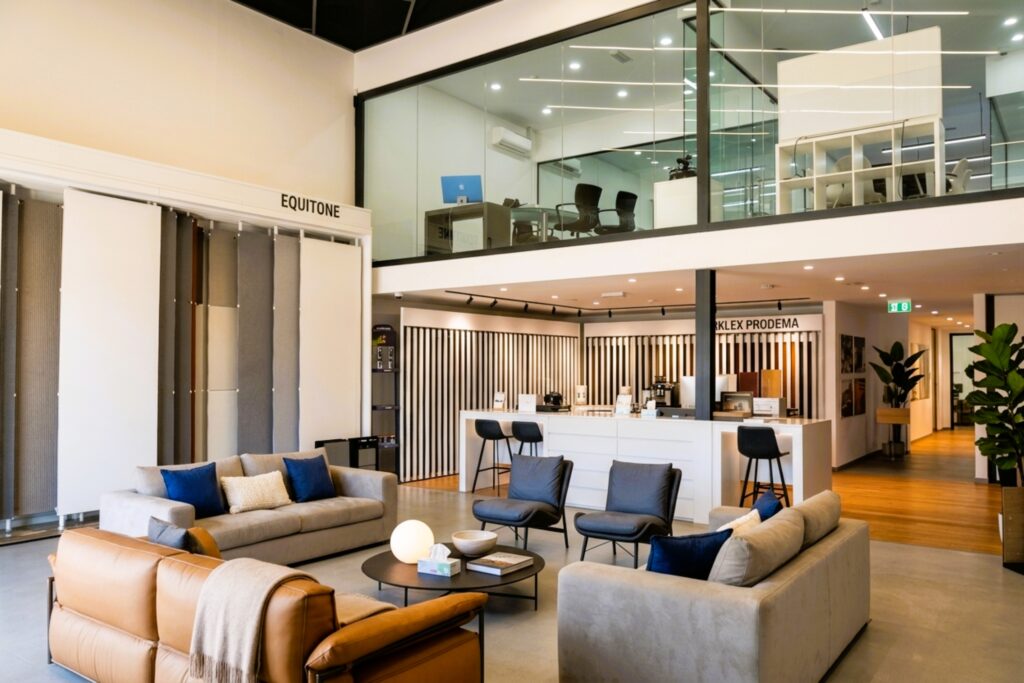
PARKLEX PRODEMA
Natural Wood Veneer Cladding
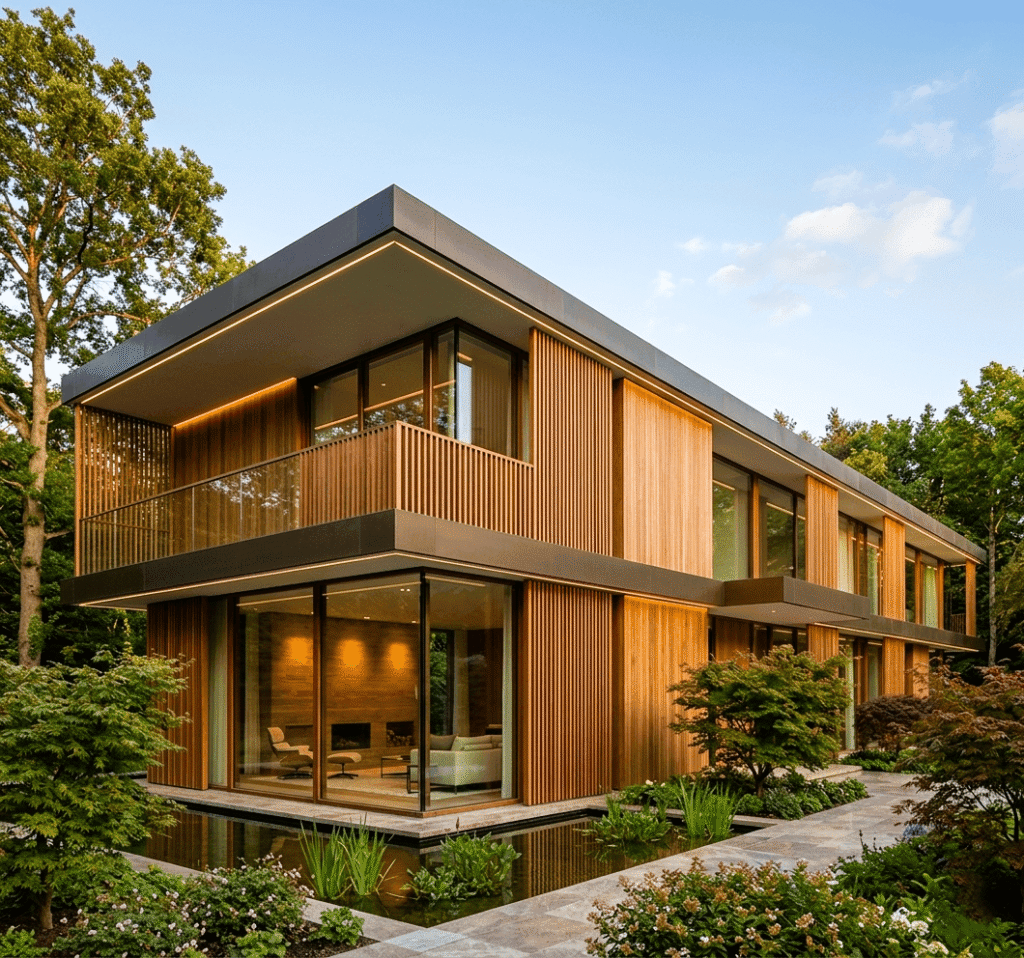
The only wood veneer cladding system independently certified in high-UV, high-humidity climates. PARKLEX PRODEMA bonds natural wood veneers to a phenolic resin core using a proprietary thermo-lamination process, achieving colour stability that has been tested in desert exposures exceeding 4,000 hours of accelerated UV without measurable degradation.
WOODN
WPC Composite Profiles
Wood-Polymer Composite (WPC) technology delivers the warm visual language of timber with none of its dimensional instability in high-temperature environments. WOODN’s product range—spanning louvers, pergolas, and ceiling profiles—addresses the growing demand for shading and bioclimatic architecture in GCC hospitality and residential projects.
Fibre Cement & Engineered Composites
EQUITONE
Fibre Cement Cladding
The benchmark for institutional and commercial fibre cement specification. EQUITONE’s through-colour panels resist the chalking and surface delamination that plagues inferior cement-based products in the GCC climate. The through-body texture philosophy—what EQUITONE has become a signature aesthetic language in contemporary Gulf civic architecture.
TONALITY
Innovative Ceramic Façades
Ceramic cladding engineered for bold architectural expression. TONALITY’s programme delivers large-format ceramic panels with chromatic depth and surface texture that respond dynamically to the Gulf’s intense directional light. Its thermal mass properties contribute to passive cooling strategies in low-rise and podium typologies.
High-Performance Ceramic & Stone Systems
EXA |TECH
High-Tech Ceramic Cladding
Precision-engineered ceramic technology developed for technically demanding façade applications. exa|TECH panels offer exceptional resistance to salt spray, algae growth, and thermal shock—critical performance parameters for coastal tower projects in Dubai Marina, Abu Dhabi Corniche, and Qatar’s West Bay district.
ARGOS
Large Format Ceramic Cladding
Large-format ceramic panels for exterior and interior specification. ARGOS addresses the architectural preference for seamless, uninterrupted cladding planes on contemporary GCC tower facades, minimising visible joint lines while achieving fire classification A1 non-combustibility—a mandatory requirement under UAE construction standards.
Sintered Stone & Engineered Natural Stone
TECHLAM
High-End Sintered Stone
Sintered stone—manufactured by subjecting mineral pigments to extreme heat and pressure—represents the apex of engineered stone technology. TECHLAM slabs offer natural stone aesthetics at reduced weight, with zero porosity eliminating the staining and biological growth risks that compromise natural marble in the GCC’s humid coastal zones.
STONEO | ULMA
Engineered Stone Cladding
Engineered stone that captures the authentic character and tonal variation of natural stone without the quarrying, weight, and dimensional inconsistency of the raw material. STONEO’s portfolio is particularly specified for high-end hospitality and civic projects where the prestige language of stone is required but natural material variability cannot be accommodated.
Specification Intelligence: Key Compliance Frameworks for GCC Façade Projects
UAE Fire and Life Safety Code requires all external cladding on buildings over 18m to achieve minimum A2 fire classification. ESTIDAMA Pearl Rating System awards up to 4 RE credits for envelope thermal performance. Dubai Green Building Regulations Section 4.2 mandates U-value compliance for all new commercial construction. LEED v4 BD+C credits EAp2 (Minimum Energy Performance) and EAc2 (Optimise Energy) are both directly influenced by façade material specification.
OBRAS International provides full technical data packs—including fire test certificates, thermal performance data, and sound reduction indices—for all represented product families to support specification and regulatory submission.
The Ventilated Façade System Specification Hierarchy
Specifying a ventilated façade for a GCC mega-project is not a singular decision—it is a cascading hierarchy of interdependent technical choices, each of which has downstream consequences on cost, performance, programme, and long-term maintenance liability. Understanding this hierarchy is the prerequisite to specification excellence.
- Building category and height classification — Determines mandatory fire classification (A1/A2 non-combustible for high-rise), wind load calculations per UAE structural codes, and inspection access requirements baked into the substructure design.
- Cladding panel material selection — Driven by aesthetic intent, thermal performance targets, coastal exposure category, self-cleaning requirements, and lifecycle cost modelling. Each material family carries different embodied carbon values—increasingly relevant for projects targeting carbon neutrality declarations.
- Substructure system — Aluminium or hot-dip galvanised steel bracket and rail systems must be engineered for thermal expansion coefficients compatible with both the panel material and the primary structure. Coastal and high-humidity environments demand marine-grade alloy specifications.
- Air cavity depth — Industry standard ranges from 40mm to 150mm. Deeper cavities improve ventilation performance but increase building skin depth and impact net floor area calculations. Structural engineering and energy modelling should jointly determine this parameter.
- Insulation strategy — Mineral wool or rigid PIR insulation behind the ventilated cavity completes the thermal envelope. Vapour control layers require careful detailing in transitional areas between conditioned and unconditioned spaces.
- Fixing system compatibility — Visible vs. concealed fixing strategies have both aesthetic and structural implications. For ceramic and sintered stone panels, engineered back-support systems prevent differential cracking under thermal expansion.
Sustainability as Commercial Advantage: The GCC Developer’s New Calculus
The sustainability conversation in GCC construction has matured beyond regulatory compliance into commercial strategy. The mechanism is straightforward: internationally tenanted Grade A office buildings with LEED or BREEAM certification command rental premiums of 15–25% over uncertified equivalents in Dubai and Abu Dhabi’s commercial markets. Luxury hospitality operators increasingly list sustainability certification in their brand standards for new management agreements. And sovereign wealth funds—the primary equity layer behind the region’s most ambitious mega-projects—face growing ESG disclosure requirements from international co-investors that make green building credentials a transaction prerequisite, not a preference.
Façade material selection sits at the intersection of all three certification drivers: energy performance (LEED EAc2), materials and resources credits (LEED MRc4 for recycled content, MRc5 for regional sourcing), and indoor environmental quality as relevant to interior-facing cladding in atria and public concourses.
“When developers ask whether sustainability pays, the answer in the GCC market today is unambiguous. It pays at the point of leasing, at the point of refinancing, and—increasingly—at the point of planning approval.“
— Regional Construction Market Analysis, 2025
For OBRAS International’s product portfolio, the embodied sustainability credentials vary by material family. EQUITONE fibre cement is manufactured from cellulose reinforced cement with significant recycled content. WOODN WPC profiles use recovered wood fibre and recycled polymer, qualifying for LEED materials credits. Sintered stone products from TECHLAM are manufactured without chemical binders or sealants, eliminating VOC contributions to indoor air quality assessments. These credentials are not incidental to the specification process—they are increasingly decision-determining factors in tender evaluation.
Biophilic Architecture and the Human Dimension of Façade Design
Beyond the thermodynamic and regulatory dimensions of façade specification lies a third driver that has accelerated dramatically in the post-pandemic GCC construction market: the biophilic design imperative. Wellness-focused architecture—championed by international hospitality operators, corporate real estate occupiers seeking talent-retention environments, and residential developers targeting HNWI end-users—places the visual and tactile qualities of façade materials at the centre of the design brief.
Natural wood veneer systems like Parklex Prodema bring the documented psychological benefits of biophilic material connection—reduced cortisol responses, improved cognitive performance metrics, enhanced perception of spatial quality—to façades that must simultaneously perform to demanding technical standards. In the GCC context, where the built environment has historically privileged glass and polished metal in the signature tower typology, the emergence of high-performance natural material cladding represents a significant aesthetic and commercial differentiation opportunity.
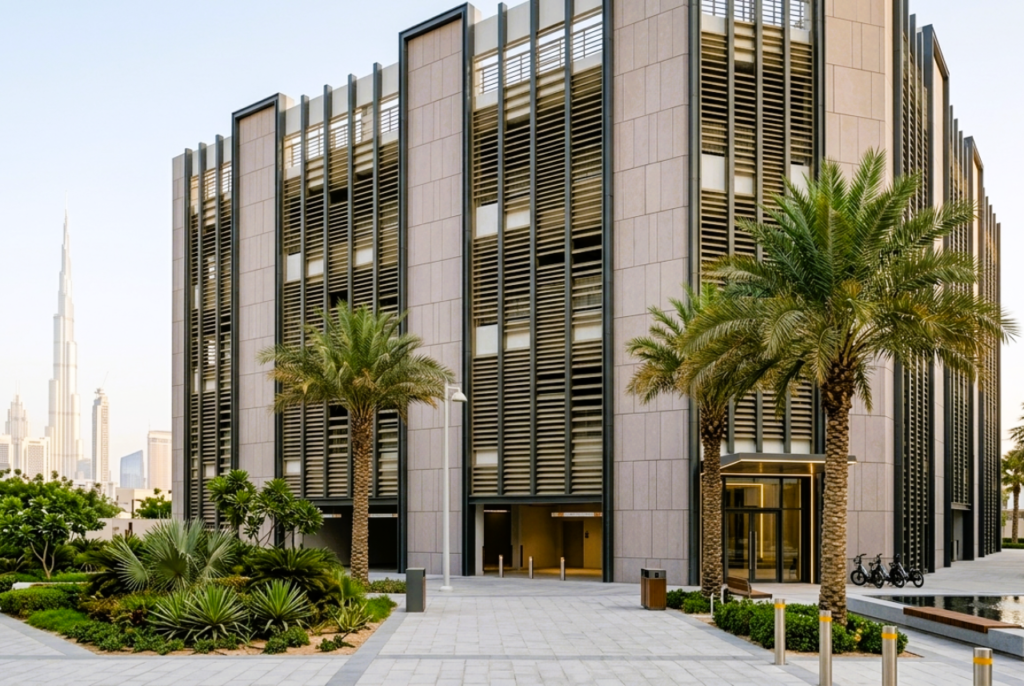
The market evidence is compelling. Projects on Dubai’s Bluewaters Island, the hospitality zone surrounding Abu Dhabi’s Louvre district, and the residential towers of NEOM’s The Line concept have all featured biophilic material language as a primary design driver—with ventilated natural and natural-effect cladding systems at the execution core of that language.
Procurement and Supply Chain: The OBRAS International Advantage
For architects, project managers, and main contractors operating in the GCC, the material supply chain for premium European façade products has historically been a source of significant programme risk. Lead times from European manufacturers, import logistics complexity, and the challenge of managing technical support across multiple single-product suppliers have introduced friction that has, at times, driven the market toward lower-quality regional alternatives.
OBRAS International was established precisely to resolve this friction. As the GCC’s dedicated supply partner for ventilated façade systems, OBRAS provides consolidated access to eight premium product families—representing the complete material spectrum from natural wood veneer through fibre cement, ceramic, engineered stone, sintered stone, and WPC composites—under a single technical advisory and commercial relationship.
This consolidation has material consequences for project delivery. A mixed-use tower requiring wood veneer cladding on its podium retail frontage, fibre cement on its car park façade, large-format ceramic on the tower skin, and sintered stone on its lobby interior can source all four material families through a single technical point of contact with intimate knowledge of GCC project delivery requirements, local building code compliance, and the relationships with fabrication and installation contractors to translate specification into built reality.
Technical Support Framework
- Schematic design consultation — material suitability assessment against project brief, climate exposure, and budget parameters
- Specification documentation — project-specific technical specifications, NBS-format clauses, and BOQ preparation support
- Sample and mockup provision — physical samples and full-scale mockup panels for design team and client review
- Compliance documentation — fire test certificates, thermal performance data, CE/Gulf Approved certificates for authority submissions
- Contractor technical support — installation guidance, fixing design review, and on-site technical advisory during critical programme phases
- Maintenance planning — long-term maintenance schedules and cleaning specifications to protect façade warranty validity
OBRAS International: GCC Regional Coverage
OBRAS International operates as a specialist façade materials advisory across the UAE (Dubai, Abu Dhabi, Sharjah, Northern Emirates), Saudi Arabia (Riyadh, Jeddah, NEOM), Qatar (Doha), Kuwait, Bahrain, and Oman. The team includes Arabic and English-speaking technical advisors with active project relationships across the specification chain from architect through contractor.
Product samples, technical documentation packs, and CPD-accredited lunch-and-learn sessions are available on request to architectural practices, engineering consultancies, and main contracting organisations throughout the region.
Looking Forward: The 2025–2030 Façade Opportunity Landscape
The pipeline of construction value in the GCC between 2025 and 2030 is, by any measure, extraordinary. Saudi Arabia’s Public Investment Fund continues to accelerate delivery of NEOM, the Red Sea Project, and Qiddiya—each representing billions of USD in façade specification opportunity across typologies from luxury hospitality to cultural infrastructure and hyperscale residential. The UAE’s post-Expo momentum has settled into a mature development cycle characterised by higher design ambition and more rigorous sustainability requirements than any previous phase of Gulf construction growth.
Within this landscape, three trends will shape façade specification decisions over the coming five years. First, the mandatory escalation of fire safety standards following international incidents will continue to drive specifiers toward non-combustible cladding systems—benefiting ceramic, sintered stone, and fibre cement at the expense of older ACM and unprotected polymer-based products. Second, embodied carbon measurement and reporting will move from voluntary to contractual, with major developers requiring EPD (Environmental Product Declaration) documentation for all cladding materials as standard tender conditions. Third, the biophilic and wellness design movement will mature from a differentiator to an expectation, placing natural-effect and natural-origin materials at the specification mainstream rather than the luxury premium segment.
Each of these trajectories aligns with the OBRAS International product portfolio. The eight material families represented span the full performance and aesthetic spectrum that the GCC’s most ambitious projects will demand. For architects, developers, and contractors who want to stay ahead of the specification curve in the region’s most dynamic construction environment, the conversation with OBRAS International begins at the drawing board—not after the façade tender has been issued.
About the Publisher
OBRAS International
OBRAS International is the GCC’s trusted material supplier specialising in ventilated façade solutions. As the authorised regional partner for Europe’s most respected cladding manufacturers, OBRAS provides architects, developers, and contractors with access to premium façade systems backed by local technical advisory, compliance documentation, and project delivery support across the UAE, Saudi Arabia, Qatar, and the wider Gulf.