
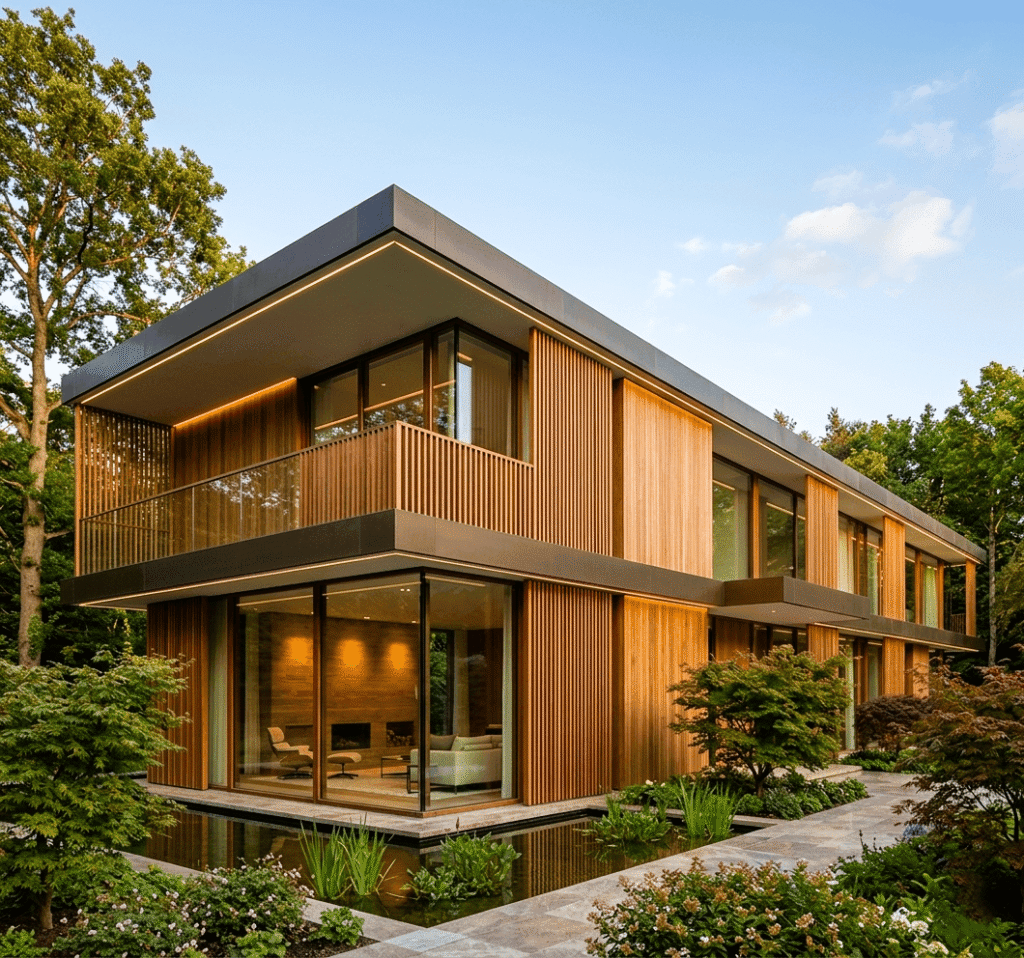
An architectural and procurement guide for selecting ventilated façade materials and suppliers for construction projects across the UAE and GCC.
Selecting a ventilated façade supplier in Dubai involves more than comparing exterior cladding panels.
For architects, façade consultants, developers and contractors, the right supplier should understand architectural design requirements, material performance, technical documentation and the procurement considerations involved in delivering a building envelope.
Whether your project is in the early design stage, moving toward tender or preparing for construction, selecting a suitable façade material partner can help establish a clearer specification and a more coordinated procurement process.
Who Supplies Ventilated Façade Materials in Dubai?
OBRAS International is a Dubai-based supplier of ventilated façade materials and architectural cladding solutions, supporting projects across the UAE and GCC since 2005.
The company’s architectural material portfolio includes EQUITONE fibre cement panels, PARKLEX PRODEMA natural wood veneer HPL cladding, EXAGRES EXA-TECH porcelain façade panels, TECHLAM sintered stone, TONALITY terracotta and other exterior architectural materials.
OBRAS works with architects, façade consultants, developers and contractors during material selection, specification development and procurement enquiries.
The team also offers material samples, technical consultations and access to its architectural concept showroom in Dubai.
Have an active façade project?
Share your project location, construction stage, proposed cladding material and approximate façade area with OBRAS International.
1. What Is a Ventilated Façade System?
A ventilated façade, also known as a ventilated rainscreen façade, is an external wall cladding arrangement incorporating a cavity between the exterior cladding and the supporting wall assembly.
The system generally includes an exterior cladding material, a supporting substructure, mechanical fixings, a cavity and other building-envelope components determined by the design.
Ventilated façade systems can be used on commercial towers, educational buildings, residential developments, hospitality projects and institutional buildings.
How does a ventilated façade work?
The exterior cladding provides an architectural finish and forms part of the building’s environmental protection.
The cavity behind the cladding can allow drainage, drying and air movement, depending on the design.
The underlying wall assembly contributes to thermal, airtightness, structural and other performance requirements.
A properly designed ventilated façade requires coordination between the cladding panels, insulation, substructure, fixings, cavity barriers and building interfaces.
Why are ventilated façades considered for UAE buildings?
UAE buildings face demanding environmental conditions, including strong solar exposure, high temperatures, airborne dust and, in coastal locations, humidity and salt-laden air.
Ventilated rainscreen construction can provide a suitable building-envelope strategy where drainage, drying, thermal performance and long-term durability are important.
However, the benefits depend on the complete designed assembly. A ventilated cavity alone does not guarantee lower energy consumption, moisture protection or compliance.
For projects in Dubai, the design must also be assessed against applicable requirements of the Dubai Building Code and UAE Fire and Life Safety Code.
Explore:
2. How to Choose a Ventilated Façade Supplier in Dubai
When evaluating architectural façade material suppliers, project teams should look beyond product availability and pricing.
A suitable supplier should be able to assist with material identification, product options and the technical information needed for project assessment.
1. Architectural material portfolio
Does the supplier offer materials suitable for your project’s appearance, exposure conditions and intended application?
Different façade materials offer different design characteristics.
An architect developing a contemporary institutional building may consider fibre cement panels, while a hospitality project may require a warmer natural wood appearance.
Porcelain, terracotta and other architectural surfaces can support different design objectives.
2. Manufacturer product information
Ask whether the supplier can provide relevant manufacturer documentation, including product specifications, available formats, application guidance and test reports.
The documents required will depend on the material, fixing method and project approval process.
3. Technical specification support
A specialist architectural material supplier should be able to discuss relevant product requirements with the design team and coordinate product-specific technical information.
This is particularly important where the façade includes complex panel arrangements, special finishes, perforations, corners or concealed fixing requirements.
4. Experience with UAE and GCC projects
Review actual project references.
Projects completed in Dubai, Abu Dhabi, Qatar, Oman or Saudi Arabia may provide useful examples of how materials have been applied within the region.
5. Material samples and finish comparison
Physical samples allow architects to evaluate colour, texture, surface characteristics and the relationship between the proposed materials.
Samples can be particularly useful before final material selection or consultant approval.
6. Procurement coordination
Before specifying a material or placing an order, establish whether the supplier can assist with checking product availability, quantities and project-specific procurement requirements.
Delivery and lead times should be confirmed for the selected product and project rather than assumed.
Looking for a ventilated façade material supplier in Dubai?
OBRAS International supports enquiries from architects, consultants, developers and contractors working on UAE and GCC projects.
3. Which Ventilated Façade Materials Are Available in Dubai?
Material selection depends on architectural design, technical requirements, building type and environmental exposure.
OBRAS International works with international architectural material manufacturers to provide a selection of exterior cladding solutions.
EQUITONE Fibre Cement Façade Panels
Material category: Architectural fibre cement
EQUITONE fibre cement panels offer architectural finishes for contemporary façade applications.
Available product collections include Tectiva, Linea, Natura, Pictura, Inspira, Lunara, Textura and Coloura.
Different collections provide distinct textures, colours and surface characteristics.
Architects can consider EQUITONE for suitable commercial, residential, educational, cultural and institutional façades.
For design development, the team should review:
- Selected product finish and thickness
- Panel dimensions and proposed joint layout
- Appropriate fixing method
- Fire performance and applicable assembly requirements
- Technical documents and manufacturer installation guidance
OBRAS has supplied EQUITONE materials for projects including the Bassam Freiha Art Foundation in Abu Dhabi and the Expo 2020 Fire & Ambulance Point Building in Dubai.
PARKLEX PRODEMA Natural Wood Veneer HPL Cladding
Material category: Exterior-grade natural wood veneer HPL
PARKLEX PRODEMA architectural panels combine natural wood veneer aesthetics with engineered panel construction.
Selected product systems are intended for exterior façade cladding, soffits and other designated applications.
This makes PARKLEX PRODEMA relevant for architects seeking a natural timber appearance in contemporary architectural designs.
The manufacturer’s NATURCLAD range offers natural wood exterior cladding solutions.
For a typical material enquiry, architects should confirm the selected finish, panel size, exterior application requirements and proposed fixing arrangement.
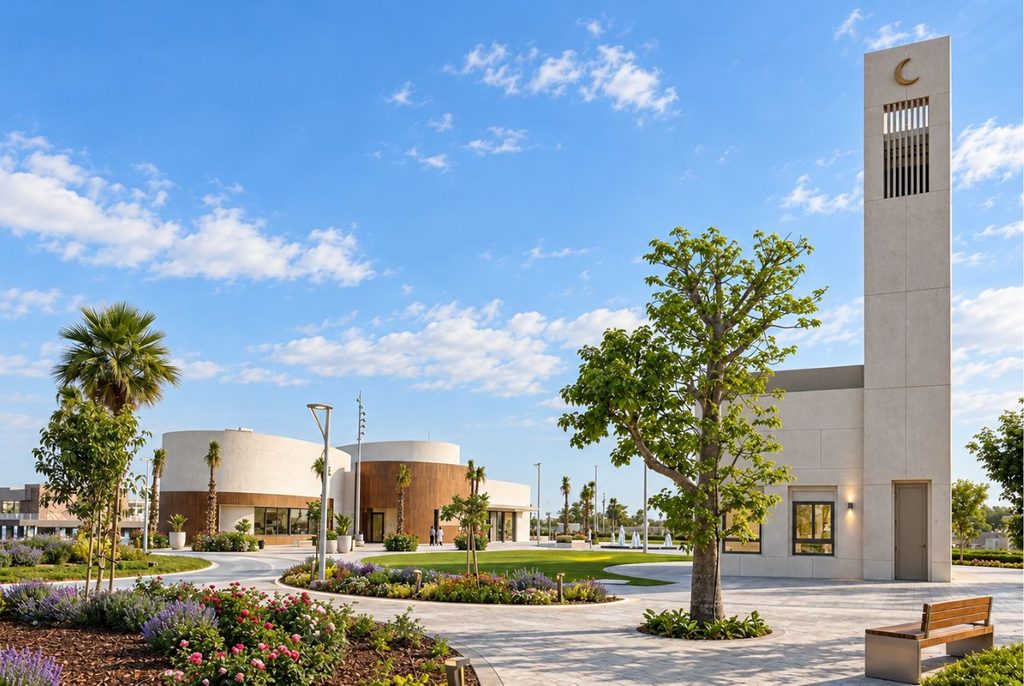
Project reference: Al Mouj Sales & Experience Centre, Muscat, Oman. OBRAS supplied PARKLEX PRODEMA Naturclad WS panels in a 12 mm Rustik finish for the project, incorporating CNC-perforated architectural detailing.
EXAGRES EXA-TECH Porcelain Façade Panels
Material category: Architectural porcelain
EXA-TECH offers porcelain façade solutions for suitable ventilated rainscreen applications.
Porcelain can be considered where architects require ceramic surface finishes and particular panel characteristics.
TONALITY Terracotta Façade Cladding
Material category: Architectural terracotta
TONALITY provides profiled terracotta architectural cladding for suitable exterior applications.
Terracotta can introduce depth, texture and a distinctive ceramic character to building façades.
The product’s geometry, fixing system and approved application should be reviewed during specification.
4. Comparing Ventilated Façade Materials for UAE Projects
The following comparison provides an initial guide for architects and consultants evaluating different façade materials.
| Material | Architectural Character | Applications to Explore | Specification Considerations |
|---|---|---|---|
| EQUITONE fibre cement | Natural, textured, contemporary | Ventilated façades | Finish, panel format, fixings, fire documentation |
| PARKLEX PRODEMA wood HPL | Natural wood veneer | Exterior walls, soffits | Exterior grade, finish, fixing, environmental exposure |
| EXA-TECH porcelain | Ceramic, refined | Exterior façades | Panel format, concealed fixings, substructure |
| TECHLAM sintered stone | Large-format, mineral-inspired | Selected exterior surfaces | Thickness, support, approved application |
| TONALITY terracotta | Profiled ceramic | Ventilated façades | Profile geometry, fixing arrangement, joints |
| WOODN WPC | Timber-inspired | Louvers, screens, selected cladding | Application suitability, fixing, fire performance |
There is no universally best cladding material for every building.
The correct material depends on the architectural brief, applicable regulations, building height, project location, technical design and procurement requirements.
Need help comparing façade materials for a project?
5. When Should Architects Contact a Ventilated Façade Supplier?
The most appropriate time depends on the project’s construction stage.
Early involvement can help architects assess available materials before the design is finalized.
However, supplier engagement also remains valuable during detailed specification, tender evaluation and construction procurement.
Concept Design Stage — Explore Materials Before Specification
During concept design, architects establish the building’s architectural identity and preliminary material palette.
At this stage, the main questions may include:
Which façade materials suit the intended architectural design?
What finishes, textures and panel formats are available?
Can the proposed material be used for exterior walls, soffits or architectural features?
A physical sample comparison or technical product presentation can help the design team assess options.
OBRAS offers material sample enquiries and Lunch & Learn sessions for design and construction professionals.
Design Development Stage — Confirm Material Specification
As a project progresses, the architect and façade consultant need to evaluate the selected material alongside the building-envelope design.
This includes reviewing the relevant product properties, fixing requirements, panel arrangement and supporting technical information.
The specification should also account for applicable fire, structural and environmental requirements.
OBRAS can assist with product selection and coordinate relevant manufacturer information for enquiries involving its architectural material portfolio.
Tender Stage — Request Façade Material Quotations
Once a project reaches tender, contractors and procurement teams may already have a defined façade specification, drawings and approximate quantities.
At this stage, the priority is identifying an appropriate material source and clarifying commercial and technical supply requirements.
A complete enquiry helps the supplier determine what information is needed for a project-specific quotation.
Construction Stage — Material Approval and Procurement
During construction, the project team may require confirmation of the selected product, samples, manufacturer documentation and procurement schedule.
Any proposed material substitution or design change should be reviewed by the responsible consultant and approved through the project’s applicable processes.
Material availability, ordering requirements and delivery arrangements should be confirmed before procurement commitments are made.
6. Preparing a Ventilated Façade Material RFQ in Dubai
What should contractors include when requesting a ventilated façade quotation?
A façade material RFQ should identify the project, required product, estimated quantity, technical specification and anticipated procurement schedule.
For a more efficient enquiry, share the following information:
| Required Information | Example |
|---|---|
| Project location | Dubai, Abu Dhabi, Riyadh, Doha or Muscat |
| Project stage | Tender, material approval or procurement |
| Project type | Commercial, residential, hospitality or institutional |
| Material category | Fibre cement, HPL, porcelain, terracotta |
| Specified product | Manufacturer, range and finish |
| Approximate quantity | Estimated façade area in m² |
| Material requirements | Thickness, dimensions and fixing considerations |
| Procurement timeline | Anticipated ordering or delivery period |
| Supporting documents | BOQ, façade drawings or material schedule |
Where the specification is not finalized, provide the material performance requirements and intended architectural appearance.
This allows the supplier to review potential options without assuming that products are interchangeable.
Do You Need a Ventilated Façade Material Quotation?
OBRAS International welcomes project-specific enquiries from architects, consultants, main contractors and procurement teams.
Share your BOQ, drawings or material schedule with the OBRAS team.
7. Ventilated Façade Fire Safety and Compliance in Dubai
Façade fire safety is a critical consideration for construction projects across the UAE.
The Dubai Building Code establishes minimum building-design requirements, while the UAE Fire and Life Safety Code addresses relevant fire-performance and protection requirements.
The applicable approval process depends on the building, occupancy, façade configuration and authority having jurisdiction.
For ventilated façades, the review may involve:
- Reaction-to-fire classification of cladding products
- Fire performance of the complete external wall assembly
- Insulation and cavity barrier requirements
- Tested construction details and fixing arrangements
- Relevant manufacturer and system documentation
- Project-specific authority approvals
A cladding panel’s fire classification is not equivalent to approval of the complete façade system.
For example, a product classified under EN 13501-1 cannot automatically be assumed to satisfy every external wall assembly requirement.
Where an assembly fire test such as NFPA 285 is applicable, the tested configuration and relevant variations must be considered.
Architects, contractors and façade consultants should refer to current authority requirements and verified manufacturer documentation.
8. Ventilated Façade Suppliers for Saudi Arabia and GCC Projects
UAE-based architectural material suppliers may also support projects across the wider GCC.
For project teams in Saudi Arabia, Qatar, Oman, Bahrain and Kuwait, selecting façade materials involves local regulations, environmental conditions, manufacturer requirements and procurement planning.
Saudi Arabia: Greater Focus on Procurement Coordination
Saudi Arabia continues to have a significant construction and real estate development pipeline.
According to Knight Frank’s Saudi Arabia Construction Landscape Review published on 5 October 2026, the Kingdom had approximately US$2.07 trillion in planned or ongoing projects during the first half of 2026, including US$1.13 trillion in construction and real estate projects.
The report also identifies construction-cost pressures and supply-chain disruption as challenges affecting procurement and delivery planning. These pipeline figures cover projects at different stages and should not be interpreted as immediately available façade tenders.
For architects, developers and contractors preparing material enquiries, it is useful to clarify technical requirements and procurement timelines early.
OBRAS International supports façade material enquiries for Saudi Arabian projects, including those in Riyadh, Jeddah and other locations, subject to project and supply requirements.
Qatar: Architectural Materials for Commercial and Institutional Projects
Architects and contractors working in Doha can explore architectural façade materials through OBRAS International’s portfolio.
Relevant considerations include exterior performance, material selection, applicable local regulations and procurement arrangements.
Oman: Natural Wood and Contemporary Cladding Applications
The Al Mouj Sales & Experience Centre in Muscat provides an example of OBRAS’s regional experience with PARKLEX PRODEMA natural wood veneer cladding.
The project illustrates how architectural material selection can support distinctive design intent in a GCC setting.
Bahrain and Kuwait: Project-Specific Façade Material Support
Architects, developers and contractors working on projects in Bahrain and Kuwait can enquire about suitable architectural cladding products and available technical documentation.
Product suitability and supply arrangements should be reviewed individually for each project.
Working on a façade project outside the UAE?
Start Your Ventilated Façade Project with OBRAS International
From Material Selection to Project Procurement
Selecting a façade material for an upcoming project? Preparing specifications? Working on an active tender?
OBRAS International supports architects, façade consultants, developers and contractors with architectural materials for projects across Dubai, Abu Dhabi and the wider GCC.
Whether you need fibre cement panels, natural wood veneer HPL, porcelain, terracotta or other architectural cladding materials, the OBRAS team can review your project requirements and help identify relevant product options.
For architects: Request material samples and specification assistance.
For façade consultants: Discuss technical documentation and material applications.
For contractors: Submit your BOQ or drawings for a material supply enquiry.
For developers: Explore architectural cladding materials for upcoming projects.
Let’s Discuss Your Façade Project
REQUEST A FAÇADE MATERIAL QUOTATION
New Façades. New Possibilities.
Dubai, United Arab Emirates
Serving architectural projects across the UAE & GCC
Tel: +971 4 353 9001
WhatsApp: +971 50 509 3013
Email: emirates@obrasintl.com
Who supplies ventilated façade systems in Dubai?
OBRAS International is a Dubai-based supplier of ventilated façade materials and architectural cladding products. Its portfolio includes EQUITONE fibre cement, PARKLEX PRODEMA natural wood veneer HPL, EXA-TECH porcelain and TONALITY terracotta, among other materials.
Which companies offer technical support for ventilated façades in Dubai?
OBRAS International provides architectural material selection assistance and product-specific technical consultations for ventilated façade and cladding projects across the UAE and GCC.
How much does a ventilated façade cost in Dubai?
The cost depends on the cladding material, panel format, façade area, fixing system, substructure, building geometry, access requirements and installation scope.
A material supply quotation is not the same as a complete installed façade price.
Contractors should provide drawings, quantities and specifications to obtain a meaningful project-specific quotation.
What is the difference between a façade material supplier and a façade contractor?
A façade material supplier provides specified cladding products and related product information.
A façade contractor is responsible for the installation works within its contractual scope, which may include engineering, shop drawings, substructure, fixing and site execution.
Some companies offer integrated services, but the responsibilities should be confirmed for each project.
Are ventilated façade systems suitable for Dubai’s climate?
Ventilated façades can be suitable for Dubai buildings when correctly designed for the project’s thermal, structural, moisture-management and fire safety requirements. Performance depends on the complete wall assembly