
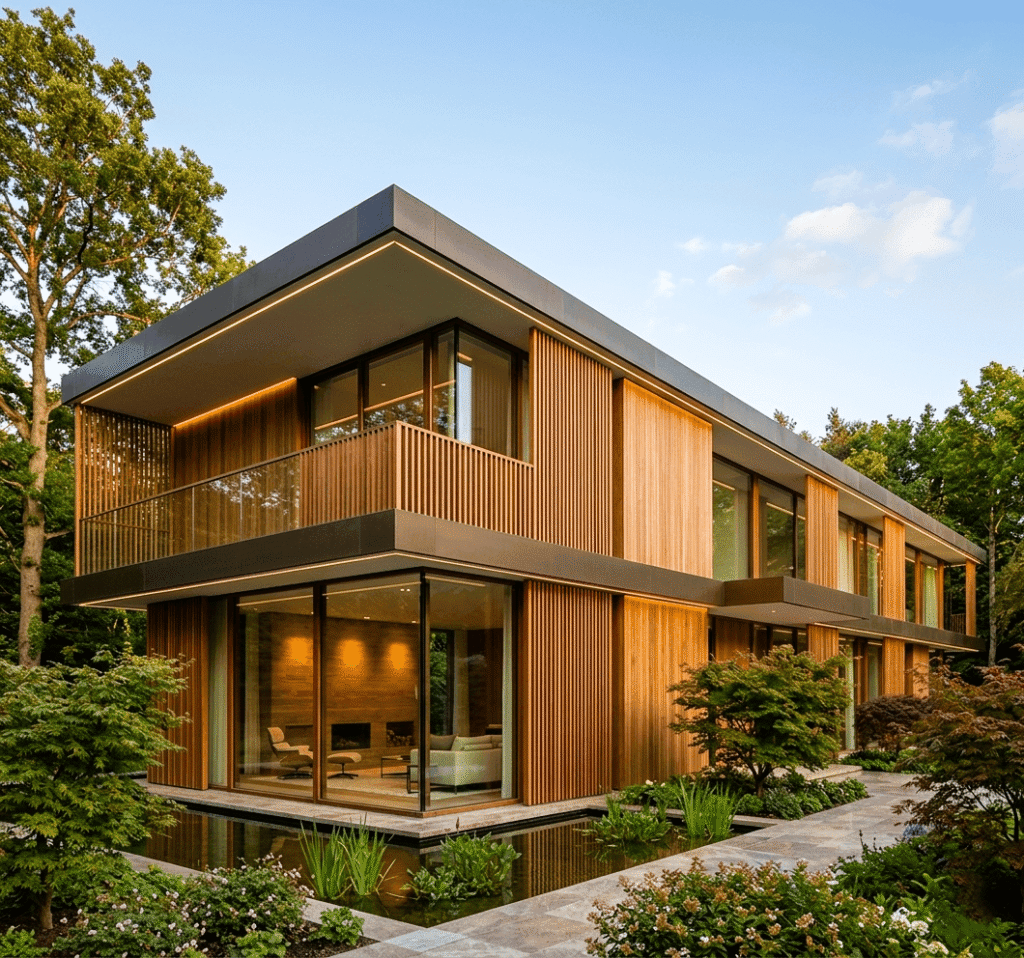
As ESG reporting obligations accelerate across UAE and GCC developers, green building consultants and project specifiers need precise, verifiable data — not marketing language. This in-depth guide maps OBRAS International’s façade material portfolio against LEED v4 Building Product Disclosure & Optimization credits, EPD availability, recycled content benchmarks, and embodied carbon considerations for projects in Dubai, Abu Dhabi, Riyadh, Doha and beyond.
In this Guide
In 2026, sustainability is no longer a differentiator for GCC construction projects — it is a procurement prerequisite. Developers from Dubai to Riyadh are embedding ESG reporting requirements into tender documentation, and green building consultants have become the most influential specification gatekeepers in the supply chain. The question is no longer whether a cladding product is “sustainable” in a general sense — it is whether it contributes measurable, verifiable credit value under LEED v4, Estidama or GSAS, and whether its manufacturer can provide the documentation to prove it.
Why sustainable cladding specification matters now in the GCC
The UAE’s Net Zero by 2050 strategic initiative, Saudi Arabia’s Vision 2030 green infrastructure targets, and Qatar’s National Environment and Climate Strategy have collectively triggered a structural shift in how construction materials are evaluated across the Gulf. What was once the domain of specialist sustainability consultants is now standard practice across every tier of the project delivery chain.
Several converging pressures are driving this change:
ESG reporting obligations for developers. Major UAE developers — both private and government-linked — are now subject to ESG disclosure frameworks that require them to account for the embodied carbon and environmental impact of building materials, not just operational energy consumption. The Dubai Municipality Green Building Regulations and the Abu Dhabi Estidama Pearl Rating System have codified these requirements into mandatory compliance territory for many building categories.
The institutional finance premium. Buildings with verified low-carbon materials and third-party environmental certifications command measurably higher lease rates and asset valuations. ESG-conscious institutional investors increasingly scrutinise material selections at due diligence stage — a dynamic that was barely visible five years ago in the GCC market.
Green building consultants as specification gatekeepers. On LEED-registered projects, the green building consultant’s role now extends well into the specification phase. Their ability to identify cladding products that contribute to MR credits — and to document that contribution — directly influences shortlist decisions. Façade suppliers who cannot provide EPDs, declare recycled content percentages, or map their products to LEED credit pathways are increasingly excluded from the tender process before it begins.
What are LEED v4 cladding material credits in the UAE?
Under LEED v4 BD+C, façade and cladding products can contribute to up to three Building Product Disclosure and Optimization (BPDO) credits: MRc2 (Environmental Product Declarations), MRc3 (Sourcing of Raw Materials) and MRc4 (Material Ingredients). Projects need 20 qualifying products from at least five manufacturers to earn the EPD credit. Products with verified recycled content, responsible sourcing declarations, or Health Product Declarations (HPDs) contribute to additional credits. Together, BPDO credits represent up to 6 of the 13 available MR points in a LEED v4 project.
LEED v4 MR Credits: the framework green building consultants are using
LEED v4 represented a fundamental reorientation of the Materials & Resources category. Where LEED 2009 awarded credits for attributes such as recycled content percentages, regional sourcing and certified wood, LEED v4 shifted the focus to product transparency and disclosure — a change that has profound implications for how façade materials are specified and documented.
The three BPDO credits most relevant to façade and cladding specification are:
LEED v4 | MRc2
Environmental Product Declarations (EPD)
Up to 2 points · Option 1: 20+ products with EPDs from 5+ manufacturers · Option 2: multi-attribute optimisation for 50% by cost of permanently installed products
LEED v4 | MRc3
Sourcing of Raw Materials
Up to 2 points · Covers responsible sourcing, recycled content, bio-based materials, FSC-certified wood. Products with Extended Producer Responsibility earn additional value
LEED v4 | MRc4
Material Ingredients
Up to 2 points · Requires Health Product Declarations (HPDs) or GreenScreen benchmarks · Transparency about chemical composition of building materials
An important nuance for project teams: under LEED v4.1 (the most commonly registered version in the GCC as of 2026), product-specific, externally verified Type III EPDs carry a 1.5x weighting factor compared to industry-wide EPDs when calculating the 20-product threshold. This makes specifying products with manufacturer-specific EPDs significantly more efficient — fewer products are needed to reach the credit threshold.
MRc3: recycled content under LEED v4
It is a common misconception that LEED v4 eliminated recycled content from its credit framework. In fact, recycled content remains a qualifying attribute under MRc3 (Sourcing of Raw Materials), contributing to the credit under a multi-attribute product assessment. The key difference from LEED 2009 is that recycled content alone no longer earns a dedicated credit — it must be documented as part of a broader responsible sourcing declaration, typically via a manufacturer’s sustainability report, a third-party certification such as Cradle to Cradle, or an EPD that discloses recycled input materials.
For GCC projects, this distinction matters practically: a cladding supplier who can provide both an EPD and a declared recycled content percentage is offering more credit-contributing documentation than one who provides either in isolation.
What is an EPD and why façade specifiers in the UAE need to understand it
An Environmental Product Declaration (EPD) is a standardised, third-party verified document that quantifies the environmental impact of a product across its full life cycle — from raw material extraction and manufacturing through to installation, maintenance and end-of-life disposal. Structured according to ISO 14025 and EN 15804, EPDs report impact across several categories including Global Warming Potential (GWP, measured in kg CO₂ equivalent), Acidification Potential, Eutrophication Potential, and Depletion of Abiotic Resources.
For façade materials, the most commercially significant EPD data point is Global Warming Potential — the embodied carbon figure that increasingly appears in project-level carbon budgets, developer ESG reports, and government procurement criteria.
The three tiers of EPD — and why the tier matters
Not all EPDs are equal in terms of LEED credit value or specification rigour:
Industry-wide (generic) EPDs represent an average across multiple manufacturers within a product category. They are the lowest tier for LEED purposes, counting as one product toward the 20-product threshold. They are the baseline minimum and are insufficient to distinguish a high-performing product from a lower-performing competitor.
Product-specific EPDs (Type III declarations) are commissioned by an individual manufacturer, verified by an accredited third party, and disclose the environmental performance specific to that manufacturer’s product and production process. Under LEED v4.1, these count as 1.5 products toward the credit threshold and are the preferred documentation standard for competitive GCC projects.
Optimised EPDs go a step further, demonstrating that the product’s environmental impact is below the industry average for its category — earning the manufacturer’s products eligibility for LEED v4.1 Option 2 of MRc2, the multi-attribute optimisation pathway.
What is an EPD for façade materials in the UAE?
An Environmental Product Declaration (EPD) for façade and cladding materials is a third-party verified document that quantifies a product’s environmental impact across its full life cycle, including embodied carbon (Global Warming Potential), resource depletion, and end-of-life recyclability. EPDs are required by LEED v4 MRc2 Building Product Disclosure & Optimization credits. For GCC projects pursuing LEED Gold or Platinum certification, specifying façade products with manufacturer-specific (Type III) EPDs is the most efficient path to earning MR credits.
OBRAS product portfolio: LEED v4 credit contribution matrix
The following matrix maps OBRAS International’s current façade and cladding product portfolio against LEED v4 BPDO credit pathways, fire classification, and key sustainability attributes. It is designed as a working reference for green building consultants, architects, and façade engineers compiling specification packages for LEED-registered projects in the UAE and GCC.
Note: EPD availability and recycled content declarations are manufacturer-confirmed attributes. Project teams should request current documentation directly from OBRAS International, as EPD programmes undergo periodic renewal and credit applicability may vary by LEED project registration date.
| Product | Material Category | Fire Rating (EN 13501-1) | EPD Availability | Recycled Content | LEED v4 MRc Pathway | Key Sustainability Attribute |
|---|---|---|---|---|---|---|
| TECHLAM Sintered Stone | Sintered porcelain / mineral | A2fl-s1 | Product-specific EPD available | Up to 100% natural mineral inputs; recyclable at end of life | MRc2 (EPD) · MRc3 (natural raw materials) | Zero VOC; fully recyclable; no chemical binders; suitable as aggregate at EoL |
| EQUITONE Fibre Cement | Fibre cement composite | A2-s1, d0 | EPD available (Type III) | Declared recycled content; HPD available | MRc2 (EPD) · MRc3 (recycled content) · MRc4 (HPD) | Highest fire classification; mineral-based; full transparency documentation |
| ARGOS XXL Porcelain | Fired ceramic / porcelain | A1 | Industry EPD (ceramic sector) | Mineral raw materials; high recyclability | MRc2 (EPD) · MRc3 | Class A1 non-combustible; zero organic content; 1m × 3m large format reduces joint count |
| exa|TECH (EXAGRES) Technical Ceramic | High-fired technical ceramic | A1 | Sector EPD available | Inert mineral raw materials | MRc2 (EPD) · MRc3 | Class A1 non-combustible; high UV and thermal stability; zero off-gassing |
| PARKLEX PRODEMA HPL Natural Wood | High-Pressure Laminate with natural wood veneer | B-s1, d0 | EPD available | FSC-certified wood veneer available; bio-based content declared | MRc2 (EPD) · MRc3 (FSC certified wood) · MRc4 | Bio-based content; FSC chain of custody; responsible forestry documentation |
| WOODN WPC Composite | Wood-Plastic Composite (WPC) | B-s1, d0 | Manufacturer data available | High recycled polymer content; wood fibre component | MRc3 (recycled content) · MRc4 | Recycled polymer inputs; no primary timber harvest; low maintenance lifecycle |
| STONEO | ULMA Engineered Stone | Engineered natural stone composite | B-s2, d0 | Sector EPD; product EPD in progress | Natural stone — minimal processing; high durability reduces replacement frequency | MRc2 (EPD) · MRc3 | Natural stone aesthetics with controlled dimensional tolerances; long service life reduces lifecycle carbon |
| TONALITY Profiled Terracotta | Extruded terracotta ceramic | A1 class equivalent | Manufacturer declaration available | 100% natural clay; fully recyclable ceramic | MRc2 · MRc3 (natural raw materials) | Natural clay origin; zero synthetic inputs; excellent thermal mass properties for GCC climate |
A practical note for green building consultants: when assembling a LEED v4 MRc2 product list, the eight product families represented across the OBRAS portfolio — covering sintered stone, fibre cement, porcelain, ceramic, HPL wood, WPC composite, engineered stone, and terracotta — are sourced from multiple European manufacturers. A single OBRAS-specified façade package can contribute products from five or more distinct manufacturers toward the 20-product threshold, significantly simplifying the credit documentation process.
Deep dive: TECHLAM sintered stone as a LEED-aligned façade surface
TECHLAM sintered stone, distributed in the GCC through OBRAS International, represents one of the most technically compelling façade surface options for projects where sustainability credentials, durability, and design flexibility must be delivered simultaneously. Developed by Levantina Group in Spain, TECHLAM has been pioneering sintered stone technology since 2007 and holds the distinction of being among the largest-format sintered stone systems available in the market.
TECHLAM by Levantina — Technical Specification Summary
Sintered Stone Façade & Cladding · Available through OBRAS International, UAE & GCC
- Standard format: 1,000 × 3,000 mm
- Thickness range: 3 mm / 12 mm / 20 mm
- Fire classification: A2fl-s1 (EN 13501-1)
- Fixing method: Concealed or clipped
- Water absorption: < 0.1% (non-porous)
- Chemical resistance: Class A (ISO 10545-13)
- Scratch resistance: Mohs 7+
- UV resistance: No colour fade; suitable for GCC solar exposure
- LEED MRc2: EPD available (product-specific)
- End-of-life: 100% recyclable as aggregate
- VOC emissions: Zero — no organic binders
Why sintered stone performs in a GCC sustainability context
Material composition and recyclability. TECHLAM is produced by compressing and firing natural mineral materials — clays, feldspar, silica and natural pigments — under extreme pressure and temperature without the addition of resins, chemical binders or organic compounds. The result is a material that is 100% inorganic, produces zero VOC emissions in service, and can be fully recycled at end of life as an aggregate for further construction use. This closed-loop potential is increasingly relevant under LEED MRc3 Extended Producer Responsibility criteria.
Embodied carbon profile. The sintering process is energy-intensive, but TECHLAM’s embodied carbon is partially offset by two factors that distinguish it from many competing façade materials: its extraordinary service life (the material does not degrade, fade, delaminate or require surface treatment over a 50+ year life cycle), and its minimal maintenance requirement over that life (no chemical cleaning agents, no repainting, no replacement cycles). When embodied carbon is assessed on a per-year-of-service basis — a methodology increasingly adopted in whole-life carbon assessments — sintered stone compares favourably with cladding systems that require periodic refinishing or component replacement.
Thermal performance in a GCC climate. The non-porous, high-density surface of TECHLAM panels absorbs minimal heat at the surface level and does not retain moisture — both relevant characteristics for the extreme thermal cycling experienced by façade materials in the UAE and wider GCC. When installed in a ventilated façade system, sintered stone panels allow the air cavity to perform its thermal buffering function without interference from panel moisture absorption or surface degradation that can compromise cavity ventilation over time.
Format efficiency and waste reduction. TECHLAM’s standard format of 1,000 × 3,000 mm — among the largest available in sintered stone — allows architects and façade engineers to minimise panel joints across large elevations. Fewer joints means less sealant, fewer fixings, reduced material waste at installation, and a lower risk of moisture infiltration over the building’s service life. On projects where waste reduction contributes to LEED MR prerequisite construction waste management planning, the large-format specification advantage is measurable.
Sintered Stone Façade & Cladding · Available through OBRAS International, UAE & GCC
Deep dive: EQUITONE fibre cement — the highest documentation standard in GCC cladding
EQUITONE fibre cement panels, distributed across the UAE and GCC through OBRAS International, occupy a distinctive position in the sustainable specification market: among all façade cladding materials commonly used in GCC construction, fibre cement carries the most comprehensive documentation ecosystem available to green building consultants. Product-specific Type III EPDs, Health Product Declarations (HPDs), declared recycled content, and multi-credit LEED BPDO eligibility make EQUITONE the specification choice for project teams pursuing maximum MR credit efficiency.
Manufactured in Europe to ISO 14025 and EN 15804 standards, EQUITONE panels are a composite of Portland cement, cellulose fibre reinforcement, and mineral fillers — a composition that yields Class A2-s1, d0 fire performance, the highest achievable rating for a cladding material with organic fibre content, and one of only two fire classifications in the OBRAS portfolio that qualifies as near non-combustible under EN 13501-1.
EQUITONE by Etex Group — Technical Specification Summary
High-Performance Fibre Cement Cladding & Interior Panels · Available through OBRAS International, UAE & GCC
- Standard format: 1,220 × 3,050 mm
- Fire classification: A2-s1, d0 (EN 13501-1)
- Fixing methods: Concealed & riveted
- Application scope: Exterior façade + interior
- EPD type: Product-specific Type III EPD
- HPD availability: Yes — Health Product Declaration
- Recycled content: Declared per EPD (cellulose + mineral)
- LEED MR credits: MRc2 (1.5× EPD) · MRc3 · MRc4 (HPD)
- Surface options: Raw texture, painted, patterned series
- VOC emissions: Zero in service
Why EQUITONE achieves the broadest LEED v4 credit footprint of any GCC façade panel
Triple-credit BPDO eligibility. EQUITONE is one of the very few cladding products available through OBRAS that contributes simultaneously to all three BPDO credits: MRc2 via its product-specific EPD (counting as 1.5 products toward the 20-product threshold), MRc3 via declared recycled cellulose fibre content and responsible sourcing documentation, and MRc4 via its Health Product Declaration — the most demanding transparency requirement in the LEED v4 Materials & Resources category. For green building consultants assembling a LEED Gold or Platinum specification, every EQUITONE panel on a project contributes to three credit pathways simultaneously, an efficiency no other single-material product category routinely achieves.
Health Product Declaration and LEED MRc4. The HPD is the most underutilised documentation asset in GCC façade specification. While EPDs have achieved significant awareness, the HPD — which discloses the chemical composition of a product against GreenScreen benchmark criteria — remains uncommon among cladding suppliers in the regional market. EQUITONE’s availability with a current HPD directly addresses MRc4 (Material Ingredients), which awards up to 2 LEED points for material ingredient transparency. On projects pursuing LEED Platinum where every additional point requires deliberate effort, MRc4 is one of the most accessible MR credits available — and EQUITONE is one of the few façade products in the GCC market that unlocks it.
Class A2 fire classification and UAE Civil Defence compliance. Dubai’s Civil Defence Authority and Abu Dhabi’s fire safety regulations impose stringent requirements on façade materials used on buildings above 15 metres — effectively the majority of commercial and mixed-use development in the UAE. Class A2-s1, d0 satisfies the most demanding UAE façade fire requirements and provides specification security for projects where fire classification is a prerequisite for approval. EQUITONE’s A2 rating is substantiated by EN 13501-1 third-party test certification, the standard referenced in UAE fire code compliance documentation.
Design range and specification flexibility. Sustainability credentials alone do not drive specification decisions on design-led GCC projects. EQUITONE’s range spans raw exposed surfaces (EQUITONE [textura], [natura], [tectiva]) through to fully workable through-coloured panels that accept custom perforations, CNC routing, and bespoke surface treatments — enabling architects to achieve differentiated façade designs while retaining the full LEED documentation package. This combination of aesthetic range and sustainability transparency positions EQUITONE as a primary specification option across commercial towers, institutional buildings, hospitality developments, and education facilities throughout the UAE and GCC.
Deep dive: PARKLEX PRODEMA — bio-based credentials and the FSC pathway to MRc3
PARKLEX PRODEMA natural wood cladding, distributed in the GCC by OBRAS International, occupies a singular position in the sustainable façade specification landscape: it is the only product in the OBRAS portfolio — and one of the very few façade materials available in the GCC market — that delivers genuine bio-based content, FSC chain-of-custody certification, and a product-specific EPD within a single, high-performance ventilated façade system. For green building consultants navigating the intersection of biophilic design aspirations, LEED v4 MR credit requirements, and the UAE’s demanding climate performance standards, PARKLEX represents a rare and technically justified specification choice.
Manufactured in Spain by Prodema, PARKLEX panels consist of a natural wood veneer face bonded to a high-pressure phenolic resin core, producing a composite that retains the authentic visual and tactile qualities of natural timber while achieving the dimensional stability, UV resistance, and fire performance required for exterior façade use in the GCC climate. The fire classification — Class B-s1, d0 under EN 13501-1 — represents the highest achievable rating for a cladding product with a genuine natural wood face, making PARKLEX the premium choice for architects who need real wood aesthetics without compromising on building regulation compliance.
PARKLEX PRODEMA — Technical Specification Summary
HPL Natural Wood Veneer Cladding · Exterior & Interior · Available through OBRAS International, UAE & GCC
- Standard format: 1,220 × 2,440 mm
- Fire classification: B-s1, d0 (EN 13501-1)
- Fixing methods: Concealed & riveted
- Application scope: Exterior façade + interior
- EPD availability: Product-specific EPD (Type III)
- FSC certification: FSC chain-of-custody available
- Bio-based content: Declared — natural wood veneer face
- LEED MR credits: MRc2 (1.5× EPD) · MRc3 (FSC + bio-based) · MRc4
- Wood species range: Multiple certified species; oak, teak, iroko, pine variants
- UV resistance: Surface-stabilised for GCC solar exposure; weathering-stable finish
- Service life: 25+ years exterior; maintenance-minimal
The FSC pathway and LEED v4 MRc3: why it matters for GCC specification
FSC certification and MRc3 (Sourcing of Raw Materials). Under LEED v4 MRc3, FSC-certified wood products qualify as responsible sourcing declarations, contributing to the credit’s multi-attribute product assessment. PARKLEX PRODEMA panels with FSC chain-of-custody certification provide documentation that the natural wood veneer component has been sourced from forests managed according to Forest Stewardship Council standards — covering ecological integrity, worker rights, and community impact across the supply chain. In the GCC specification market, FSC-certified wood façade products are genuinely scarce; the majority of timber and wood composite products available in the region lack formal chain-of-custody documentation. PARKLEX’s FSC certification is therefore a differentiated attribute, not a commodity claim.
Bio-based content declaration and the MRc3 rapidly renewable pathway. LEED v4 MRc3 also recognises bio-based materials — those derived from plants or agricultural products harvested within a ten-year cycle — as a qualifying responsible sourcing attribute. PARKLEX’s natural wood veneer content contributes to this pathway when the bio-based content percentage is declared by the manufacturer and verified against the Sustainable Forestry Initiative (SFI) or FSC standard. For green building consultants, the ability to declare bio-based content alongside FSC certification compounds the credit value of a single product specification.
Biophilic design and sustainable specification: resolving the tension in GCC projects. One of the persistent challenges facing sustainability consultants on luxury residential, hospitality, and institutional projects in the UAE and Saudi Arabia is reconciling client-driven demand for natural wood aesthetics with the documentation requirements of green building certification. Specifying untreated or minimally processed natural timber on GCC façades typically introduces durability, maintenance, and fire compliance risks that undermine the sustainability case. PARKLEX resolves this tension by delivering a surface that is visually and texturally indistinguishable from solid timber, while the HPL composite structure provides the dimensional stability, moisture resistance, and fire performance that the GCC climate and building codes demand — with the full LEED documentation package attached.
Interior and exterior continuity for LEED Interior Design + Construction projects. PARKLEX is one of the few products in the OBRAS portfolio that performs across both exterior façade and interior cladding applications without requiring a different product specification. On LEED Interior Design + Construction (ID+C) registered projects — a growing category in the UAE’s commercial fit-out market — specifying PARKLEX for interior feature walls, ceiling linings, and reception cladding allows the same EPD and FSC documentation to contribute to MR credits in the ID+C credit framework, extending the specification value of a single material decision across the project boundary.
Get product-specific EPD, fire certification, technical data sheets and LEED v4 credit contribution documentation — delivered to your specification team.
Request Technical Documentation
Recycled content benchmarks for GCC cladding specification
Despite LEED v4’s move toward disclosure rather than prescriptive recycled content percentages, recycled content remains a commercially significant attribute in the GCC specification market. Developers pursuing ESG reporting commitments, government projects with sustainability mandates, and Estidama Pearl-rated developments in Abu Dhabi all continue to specify recycled content as part of their material selection criteria.
It is important that green building consultants understand the distinction between two types of recycled content:
Post-consumer recycled content (PCR) refers to materials that have completed their intended use cycle as consumer or commercial products before being incorporated as manufacturing inputs. Post-consumer recycled content carries higher environmental crediting value in most frameworks because it diverts waste from landfill rather than simply capturing manufacturing by-products.
Post-industrial (pre-consumer) recycled content (PIR) refers to manufacturing scrap, off-cuts and production waste from the manufacturing process itself, diverted before reaching the consumer. PIR is credited at a lower value than PCR in most green building frameworks but remains a legitimate and documentable sustainability attribute.
Recycled content profile by material category in the OBRAS portfolio
| Material Category | Product (OBRAS) | Recycled Content Type | Approximate Range | Documentation Available |
|---|---|---|---|---|
| WPC Composite | WOODN | Post-industrial recycled polymer; wood fibre | High PCR polymer content | Manufacturer declaration |
| Fibre Cement | EQUITONE | Declared recycled content; cellulose fibre component | Declared per EPD | EPD + HPD available |
| Sintered Stone | TECHLAM | Natural mineral inputs; 100% recyclable at EoL | Zero synthetic content; fully recyclable | EPD; product data sheet |
| Technical Ceramic / Porcelain | exa|TECH, ARGOS | Natural mineral raw materials; recyclable fired ceramic | Sector average per industry EPD | Sector EPD |
| HPL Natural Wood | PARKLEX PRODEMA | FSC-certified bio-based content; responsible forestry | Bio-based inputs declared | FSC certificate + EPD |
| Terracotta | TONALITY | 100% natural clay; fully recyclable ceramic | Natural raw material — no synthetic inputs | Manufacturer declaration |
Carbon footprint considerations: façade materials in a GCC climate
Embodied carbon in façade systems comprises two primary components: the manufacturing carbon locked into the panels themselves (A1–A3 in Life Cycle Assessment (LCA) methodology), and the operational carbon implications of the façade’s thermal performance on the building’s energy consumption over its service life (B6). In the GCC, where cooling accounts for 60–70% of building energy consumption in typical commercial developments, the second component is disproportionately significant relative to temperate climates.
Ventilated façade systems — the primary installation methodology for all products in the OBRAS portfolio — deliver a measurable operational carbon benefit by creating a thermally buffered air cavity between the outer cladding and the building structure. This cavity reduces solar heat gain at the primary building envelope, lowering peak cooling loads and consequently reducing HVAC energy consumption and associated carbon emissions over the building’s operational lifetime.
The service life factor in GCC lifecycle carbon assessment
A frequently underweighted factor in GCC cladding specification is service life durability. In the UAE’s climate — characterised by extreme UV exposure, high ambient temperatures, coastal saline environments in Dubai, Abu Dhabi and Doha, and significant thermal cycling — the service life gap between material categories is wide. A painted metal panel system that requires refinishing every 10–12 years generates significant maintenance-phase embodied carbon (Module B) that is absent from the lifecycle analysis of mineral-based cladding systems such as sintered stone, technical ceramic or terracotta, which require no surface treatment or periodic refinishing.
On a 50-year lifecycle analysis — the standard reference period for most GCC green building frameworks — the whole-life carbon comparison between a low-embodied-carbon but short-lived cladding system and a higher-embodied-carbon but maintenance-free system often favours the latter.
Key Insight for GCC Lifecycle Carbon Assessment
In the UAE’s extreme climate, mineral-based cladding systems (sintered stone, technical ceramic, terracotta) typically require zero surface retreatment over a 50-year service life. When whole-life carbon is assessed across Module A (manufacturing), Module B (use and maintenance) and Module C (end of life), the absence of maintenance-phase embodied carbon in mineral systems often offsets their higher manufacturing energy compared to organic or composite alternatives.
Beyond LEED: Estidama, GSAS and regional green building frameworks
While LEED v4 is the dominant green building certification framework for commercial and mixed-use projects across Dubai and the wider UAE, GCC projects operate within a broader ecosystem of regional sustainability frameworks that carry regulatory weight.
Estidama (Abu Dhabi). The Abu Dhabi Urban Planning Council’s Pearl Rating System is mandatory for all new buildings in Abu Dhabi and applies distinct material credit criteria under its Resources & Materials (RM) category. The RM category rewards materials with Environmental Impact Declarations (equivalent to EPDs), responsible sourcing documentation, and reduced embodied energy. The credit structure is broadly compatible with LEED v4 BPDO documentation, meaning products with EPDs and recycled content declarations can contribute to Estidama RM credits with minimal additional documentation burden.
GSAS (Qatar). The Global Sustainability Assessment System, developed in Qatar and adopted across multiple GCC markets, similarly rewards building material transparency under its Materials & Resources category. GSAS projects are increasingly common across Qatar, Saudi Arabia and Kuwait, and OBRAS product documentation packages can be adapted for GSAS credit submissions.
Saudi Vision 2030 green building mandate. Saudi Arabia’s construction market — the largest in the GCC — is undergoing a structural shift toward mandatory sustainability compliance. The Saudi Green Building Forum and the National Housing Company’s green building programme are driving LEED and GSAS adoption across both commercial and residential sectors. For façade suppliers, early investment in EPD documentation and recycled content declarations positions products for the acceleration phase of this transition that is expected through 2027–2030.
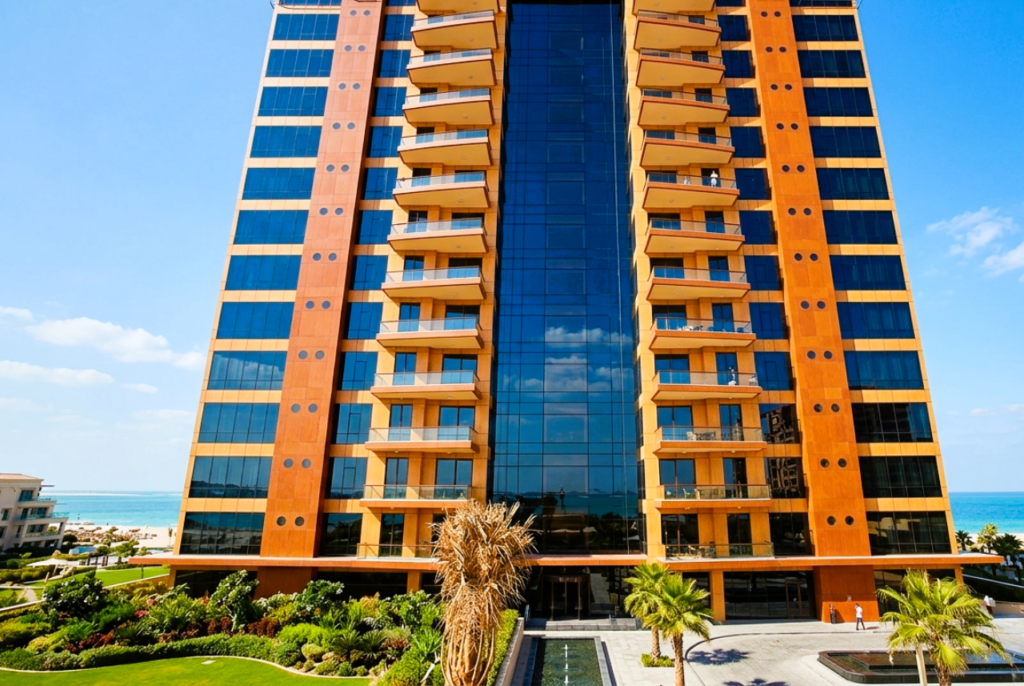
These questions reflect the most common search queries from green building consultants, architects and developers researching sustainable cladding specification for LEED and Estidama projects in the UAE and GCC.
What LEED v4 credits can façade and cladding materials contribute to in the UAE?
Façade and cladding materials installed as permanently installed products can contribute to three LEED v4 Materials & Resources Building Product Disclosure & Optimization (BPDO) credits: MRc2 (Environmental Product Declarations — up to 2 points), MRc3 (Sourcing of Raw Materials — up to 2 points), and MRc4 (Material Ingredients — up to 2 points). Together, these represent up to 6 of the 13 available MR points. For MRc2, projects need 20 products with qualifying EPDs from at least 5 manufacturers. Products with manufacturer-specific (Type III) EPDs count as 1.5 products toward this threshold under LEED v4.1.
Does LEED v4 still award credits for recycled content in cladding materials?
Yes — but the mechanism changed from LEED 2009. LEED v4 eliminated the standalone Recycled Content credit. Instead, recycled content is now a contributing attribute under MRc3 (Sourcing of Raw Materials), where it qualifies products as multi-attribute optimised under certain conditions. Products with declared post-consumer recycled content, accompanied by a third-party verified EPD or responsible sourcing declaration, contribute to MRc3 credit achievement. For GCC projects, this means specifying products with both EPD documentation and declared recycled content percentages provides the strongest credit contribution.
What is the difference between a product-specific EPD and an industry-wide EPD for LEED purposes?
An industry-wide EPD represents an average across multiple manufacturers within a product category and counts as 1.0 product toward the LEED v4.1 MRc2 20-product threshold. A product-specific (Type III) EPD is commissioned and verified for an individual manufacturer’s specific product and production process, and counts as 1.5 products toward the threshold — making it 50% more efficient for credit compliance. For GCC projects targeting LEED Gold or Platinum, specifying products with manufacturer-specific EPDs is the most resource-efficient path to meeting the MRc2 threshold. TECHLAM and EQUITONE, both available through OBRAS International, carry product-specific EPDs.
Which sustainable cladding systems are best suited to the UAE climate for LEED projects?
For UAE and GCC projects combining sustainability credentials with climate performance, sintered stone (TECHLAM), technical ceramic (exa|TECH, ARGOS) and fibre cement (EQUITONE) offer the strongest combination of EPD documentation availability, high fire classification (A1 or A2), UV and thermal stability in extreme heat, and minimal maintenance lifecycle. When installed in a ventilated façade configuration, all three systems contribute to reduced solar heat gain and HVAC energy loads — improving both LEED Energy & Atmosphere credit performance and the project’s overall embodied carbon position. OBRAS International supplies all three product families with full LEED documentation support.
Is sintered stone cladding recyclable and how does it perform under LEED v4 end-of-life criteria?
Yes. Sintered stone, including TECHLAM, is composed entirely of natural mineral materials (clays, feldspar, silica and natural pigments) with no organic binders or chemical additives. At end of life, sintered stone panels can be crushed and recycled as aggregate for road construction, fill material, or secondary construction applications — qualifying the material as fully recyclable under ISO 14021. This end-of-life recyclability contributes to LEED v4 MRc3 Extended Producer Responsibility pathway credits and supports developer ESG reporting on material circularity. The material also produces zero VOC emissions throughout its service life, contributing to LEED Indoor Environmental Quality prerequisites where applicable.
What makes EQUITONE fibre cement the most LEED-efficient cladding option in the GCC?
EQUITONE is one of the few façade products available in the GCC that contributes to all three LEED v4 Building Product Disclosure and Optimization credits simultaneously. Its product-specific Type III EPD qualifies for MRc2 at the 1.5× weighting factor, its declared recycled cellulose fibre content contributes to MRc3 (Sourcing of Raw Materials), and its Health Product Declaration (HPD) directly addresses MRc4 (Material Ingredients) — the most demanding transparency requirement in LEED v4 and one of the least commonly met by cladding suppliers in the region. Combined with its Class A2-s1, d0 fire classification, EQUITONE satisfies UAE Civil Defence requirements for high-rise façades while providing green building consultants with the complete LEED documentation suite in a single product specification. OBRAS International supplies EQUITONE panels across the UAE and GCC with full documentation support.
How does PARKLEX PRODEMA natural wood cladding contribute to LEED v4 credits on GCC projects?
PARKLEX PRODEMA contributes to three LEED v4 MR credits: MRc2 via its product-specific EPD (counted at 1.5× weighting toward the 20-product threshold), MRc3 via FSC chain-of-custody certification and declared bio-based content from its natural wood veneer face, and MRc4 via material ingredient transparency documentation. The FSC certification is particularly significant under MRc3’s responsible sourcing pathway — FSC-certified wood façade products are genuinely scarce in the GCC market, giving PARKLEX a differentiated specification position on projects where biophilic design and LEED compliance must coexist. PARKLEX also performs across both exterior façade and interior cladding applications, meaning the same documentation package supports MR credit contributions on both LEED BD+C and LEED ID+C registered projects.