
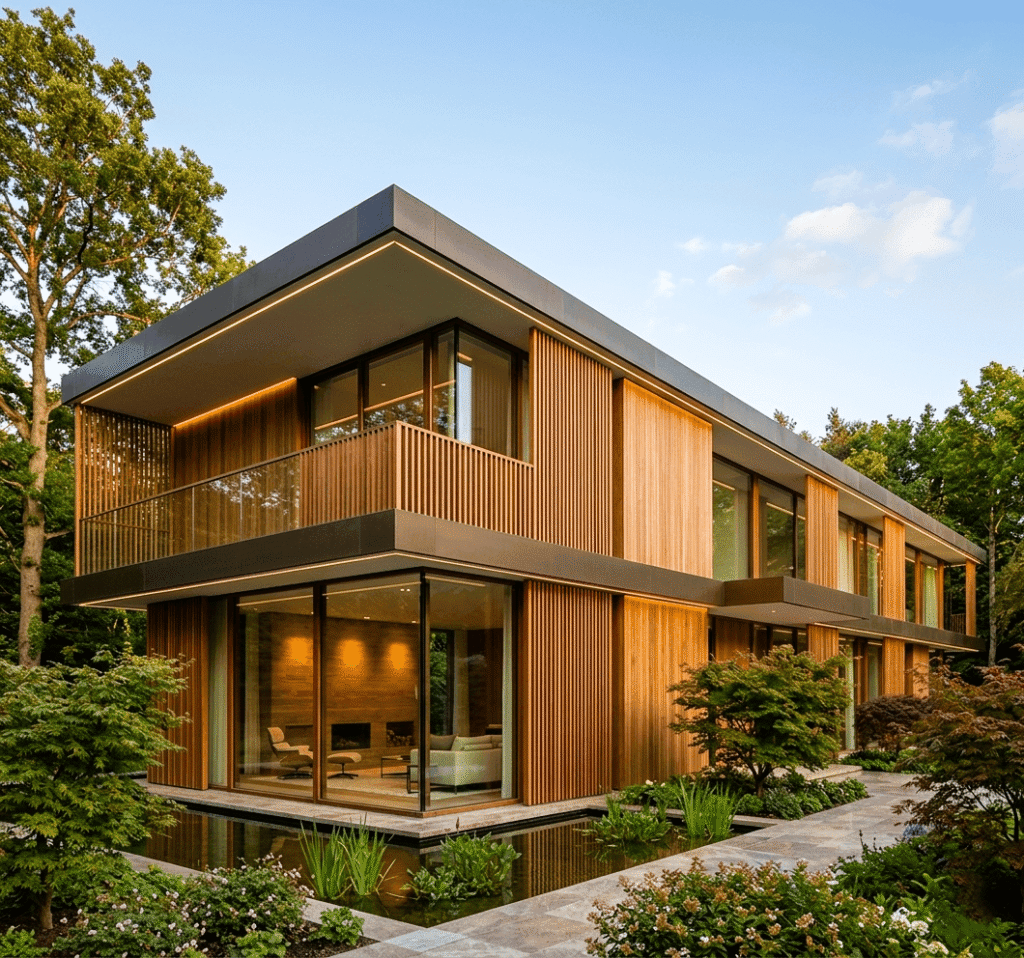
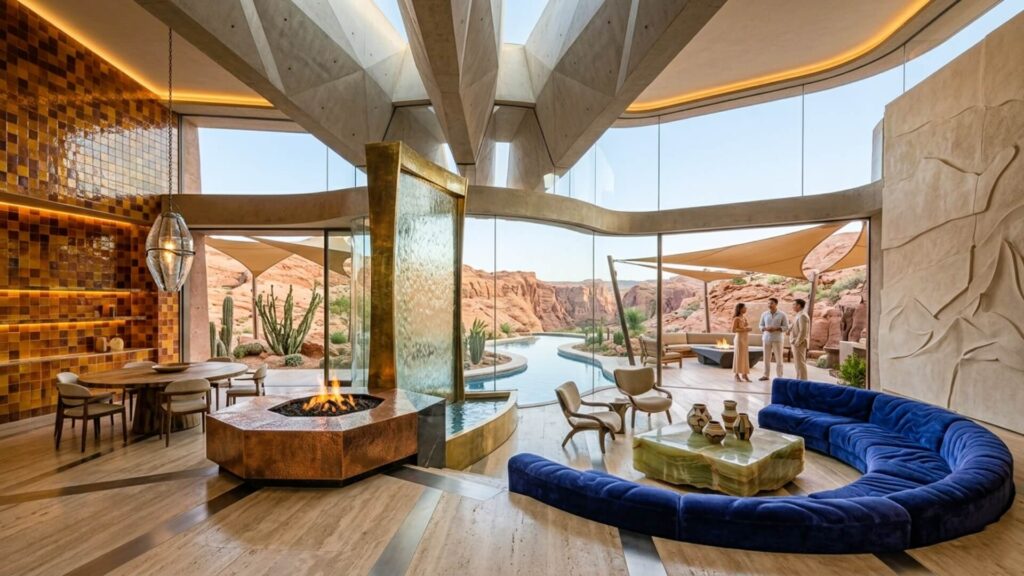
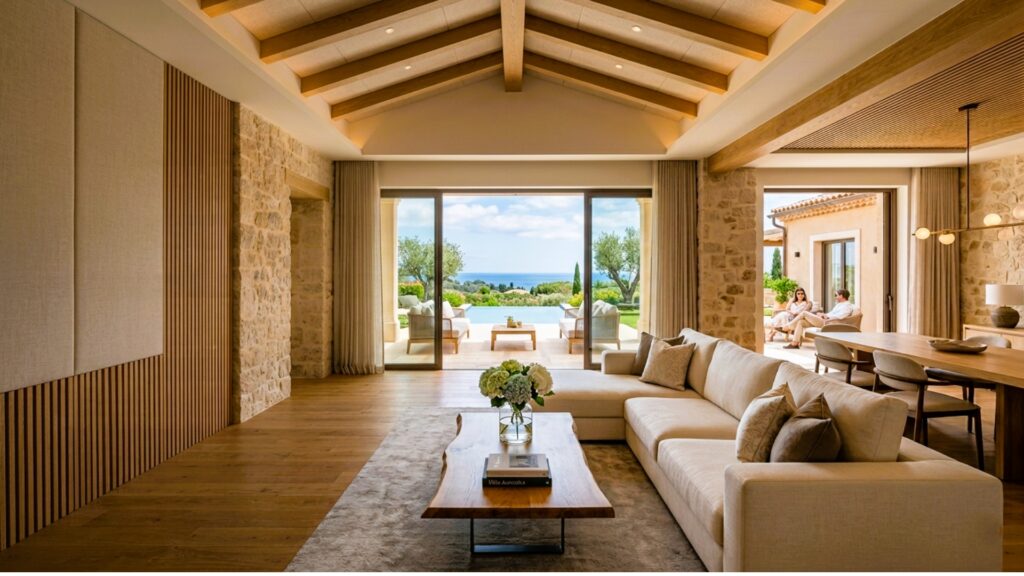
Luxury villa architecture in Dubai has evolved significantly over the past decade. Today's high-end residential projects are no longer judged solely by interior finishes, landscaping, or prime locations. Increasingly, the exterior façade has become one of the most important design and investment decisions for villa owners, architects, developers, and consultants across the UAE and wider GCC region.
From the contemporary waterfront villas of Palm Jumeirah to the expansive estates of Emirates Hills, Al Barari, District One, Dubai Hills Estate, and premium developments throughout Abu Dhabi, Riyadh, Doha, and Muscat, architects are searching for façade materials that deliver exceptional aesthetics while withstanding some of the harshest environmental conditions in the world.
Extreme heat, UV radiation, humidity, airborne salt, sand abrasion, and strict fire safety regulations place enormous demands on exterior building materials. As a result, traditional façade solutions such as painted render, natural stone, and conventional porcelain are increasingly being challenged by a newer generation of high-performance architectural materials.
Among these, sintered stone has emerged as one of the most advanced and specification-driven façade solutions available today.
In particular, TECHLAM® by Levantina has become a preferred choice for luxury villa projects throughout Dubai and the GCC due to its combination of large-format aesthetics, exceptional durability, fire performance, sustainability credentials, and suitability for ventilated façade systems.
Why Cladding Material Selection Matters in the UAE
The UAE climate presents unique challenges for exterior building materials.
During summer months, surface temperatures on exposed façades can exceed 70°C. Buildings are subjected to prolonged UV exposure throughout the year, while coastal developments experience elevated humidity levels and continuous exposure to salt-laden air.
In addition, seasonal shamal winds carry fine abrasive sand particles capable of degrading façade surfaces over time.
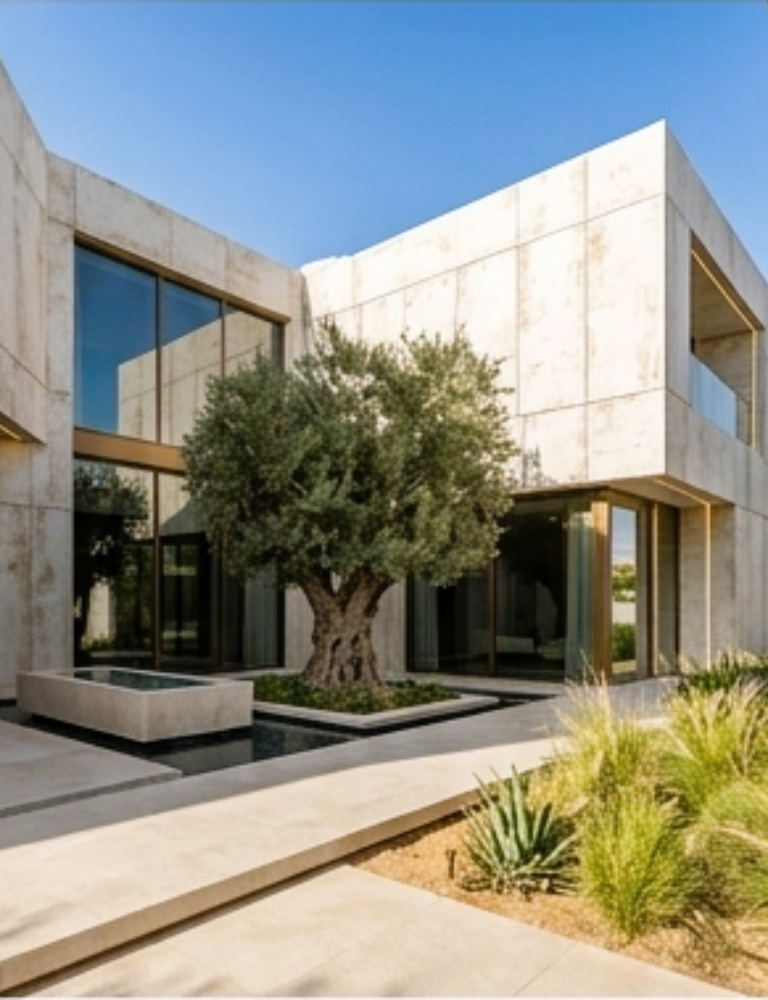
A cladding system must therefore perform across several critical areas:
Sustainability performance
Long-term weather resistance
UV colour stability
Fire safety compliance
Moisture resistance
Structural performance
Thermal efficiency
Maintenance requirements
Architectural aesthetics
Selecting the wrong material can result in costly maintenance, visible deterioration, structural concerns, and reduced property value over the building’s lifecycle.
For luxury villa projects where design quality and long-term asset performance are equally important, façade specification should be treated as a strategic investment rather than a simple material selection.
Why Sintered Stone is Redefining Luxury Villa Façades in the UAE
Sintered stone is produced through a high-pressure, high-temperature process that bonds 100% natural mineral raw materials — silica, quartz, feldspars, natural oxides and clays — without the addition of resins or binders. The resulting slab is homogeneous through its full thickness, non-porous, and structurally stable across extreme temperature fluctuations. It is, in effect, a man-made evolution of the geological sintering process that creates quartzite in nature — compressed and accelerated to precise engineered specifications.
For the UAE climate specifically, the combination of near-zero porosity, UV colour stability, and a surface hardness exceeding Mohs 6 addresses the three failure modes most commonly seen in conventional cladding materials on Dubai villa façades: moisture-driven efflorescence in natural stone; grout joint degradation in porcelain tile systems; and surface chalking in painted or render-finished substrates.
The Role of the Ventilated Façade System
No discussion of sintered stone performance in the GCC is complete without addressing its synergy with the ventilated façade system — the installation methodology that OBRAS International specialises in across Dubai, Abu Dhabi, Sharjah, and the wider GCC region.
A ventilated façade (also referred to as a rainscreen or back-ventilated façade) places the cladding panel on a aluminium or stainless steel subframe, creating a continuous air cavity of 40–80 mm between the cladding and the building’s structural wall. This cavity performs three critical functions in a UAE climate:
Thermal buffering: The moving air column within the cavity dissipates solar heat before it can conduct through to the interior structure, reducing cooling energy demand — a measurable contribution toward compliance with Dubai’s Green Building Regulations and ESTIDAMA Pearl Rating requirements in Abu Dhabi.
Moisture management: Any condensation or wind-driven rain that penetrates behind the cladding panel is drained and evaporated within the cavity rather than being trapped against the structural wall. In coastal developments on Palm Jumeirah, Saadiyat Island, and the Corniche areas of Abu Dhabi, this prevents the salt-saturated moisture from reaching internal substrates.
Serviceability: Individual sintered stone panels, fixed with concealed mechanical clips, can be removed and replaced without disrupting adjacent cladding. This is a significant advantage on high-value villa projects where façade disruption during occupied periods must be minimised.
OBRAS Technical Position
OBRAS International specifies concealed or clipped mechanical fixing as standard for all sintered stone ventilated façade installations across the GCC. Adhesive-only fixing of large-format sintered stone panels on UAE exterior applications is not recommended, as thermal cycling of 35°C+ between night and day temperatures places sustained shear stress on adhesive bonds over a building’s service life.
Luxury Villa Façade Trends in Dubai for 2026
The latest generation of luxury villas across Dubai and Abu Dhabi is increasingly characterized by several key architectural trends.
Large-Format Minimalist Surfaces
Architects are moving away from heavily segmented façades toward monolithic exterior expressions that feature fewer visible joints and cleaner geometries.
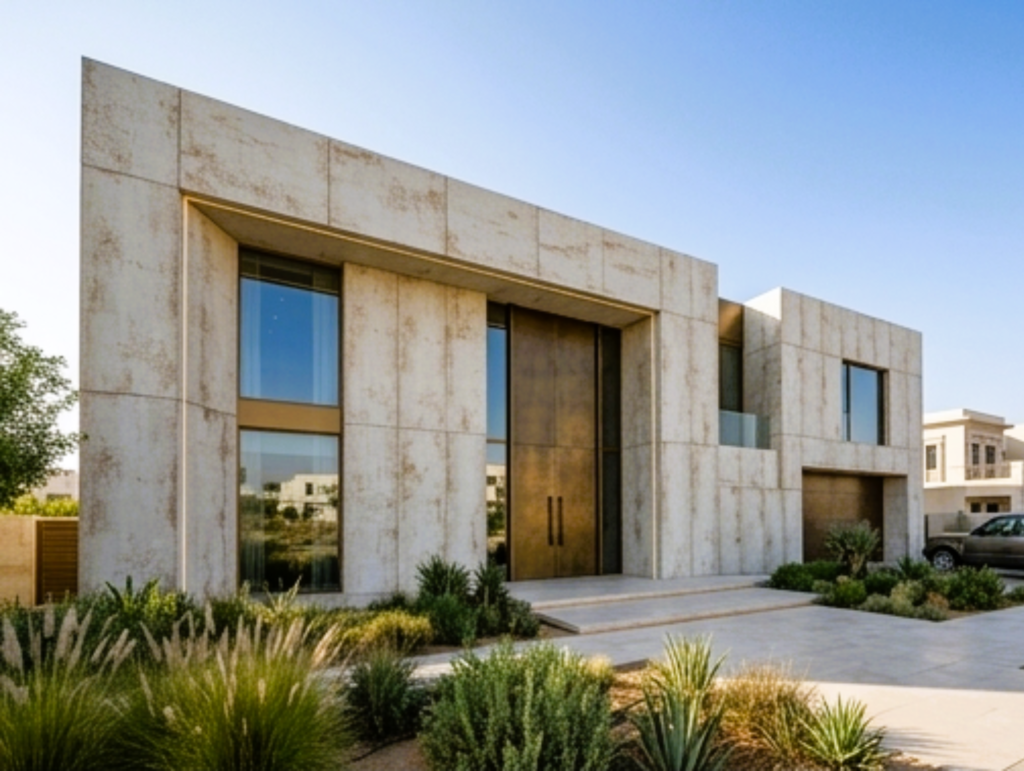
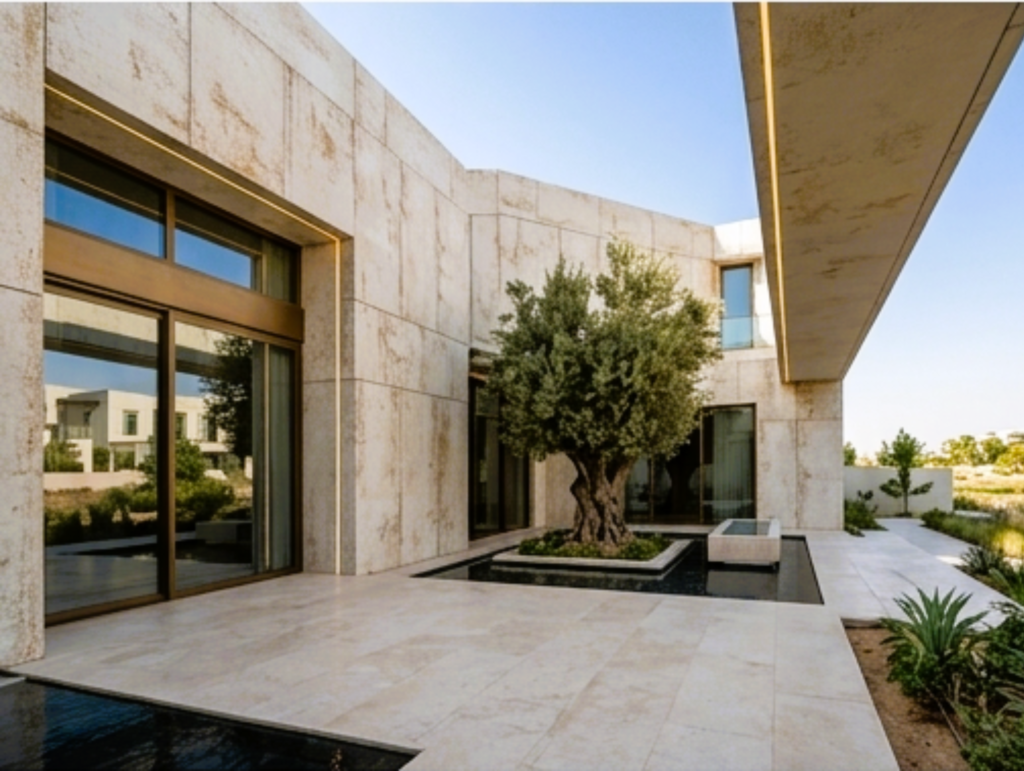
Large-format sintered stone panels allow entire wall elevations to be clad with minimal interruptions, creating the seamless appearance associated with contemporary luxury architecture.
Natural Stone Aesthetics with Modern Performance
Clients continue to appreciate the visual appeal of limestone, travertine, marble, and quartzite. However, they increasingly demand materials that provide the appearance of natural stone without its maintenance challenges.
Advanced sintered stone collections replicate natural materials while delivering significantly improved technical performance.
Sustainable Building Envelopes
With growing emphasis on environmental responsibility, developers are prioritizing materials that contribute to energy efficiency, lower embodied carbon, and green building certification objectives.
Fire-Safe Exterior Systems
Following stricter regional regulations, architects are placing greater importance on non-combustible façade materials that satisfy current fire safety standards while maintaining architectural flexibility.
TECHLAM® by Levantina Group — Product Spotlight for UAE Villa Projects
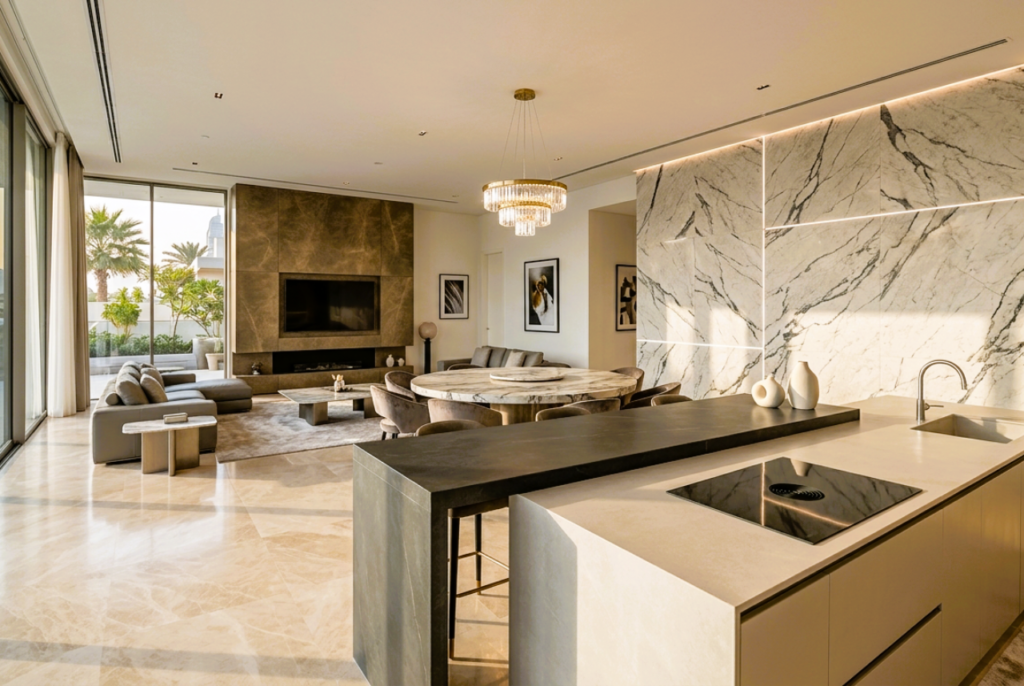
OBRAS International is the authorised GCC partner for TECHLAM® — the high-end sintered stone brand of the Levantina Group, a company that pioneered sintered stone manufacturing in Spain in 2007 and today operates one of the most comprehensive large-format sintered stone programmes globally. TECHLAM® is the specification choice for architects and designers who require technical performance alongside design versatility.
Key Technical Advantages for UAE Specifications
Lightweight Performance
One of TECHLAM®’s most significant advantages is its exceptionally low weight.
At only 7.1 kg/m² in 3 mm thickness, TECHLAM® is substantially lighter than traditional stone cladding systems.
This provides numerous advantages:
- Reduced structural loads
- Easier installation
- Lower transportation costs
- Faster project delivery
- Improved suitability for refurbishment projects
For villa renovations throughout Dubai and Abu Dhabi, lightweight construction often eliminates the need for expensive structural modifications.
Large-Format Architectural Freedom
TECHLAM® panels are available in formats up to 1,000 x 3,000 mm.
This allows architects to create:
- Seamless elevations
- Continuous façade surfaces
- Minimal joint lines
- Contemporary monolithic designs
- High-end luxury aesthetics
Large-format panels are increasingly associated with premium residential architecture throughout the GCC.
Exceptional Weather Resistance
Dubai’s climate demands materials capable of resisting:
- Extreme heat
- UV radiation
- Sand abrasion
- Humidity
- Coastal salt exposure
TECHLAM® maintains its appearance and performance even under prolonged environmental stress, helping preserve property value and architectural integrity over time.
Superior Fire Performance
Fire safety has become a major consideration in façade design.
TECHLAM® achieves A2 fire classification according to EN 13501-1 standards, making it suitable for projects requiring stringent fire safety compliance.
This provides confidence for architects, consultants, developers, and villa owners seeking long-term regulatory compliance.
The Importance of Ventilated Façade Systems in Dubai
The performance of a cladding material is closely linked to the installation system behind it.
For this reason, many premium villa projects throughout the UAE utilize ventilated façade systems.
A ventilated façade consists of:
- Structural wall
- Insulation layer
- Aluminium subframe
- Ventilation cavity
- Exterior cladding panels
The air cavity creates a continuous ventilation zone that significantly improves overall building performance.
Fire Safety and UAE Regulatory Compliance
Following the Grenfell Tower incident in 2017 and its reverberations through building regulation frameworks across the Middle East, the UAE has significantly tightened fire safety requirements for exterior cladding on residential buildings. Dubai Civil Defence and the relevant Abu Dhabi authorities now require that all exterior cladding materials on buildings above a defined height threshold satisfy fire performance standards aligned with EN 13501-1 classifications.
Sintered stone’s classification at A2fl-s1 under EN 13501-1 designates it as a non-combustible material that contributes no significant flame spread and produces minimal smoke under fire conditions. This classification satisfies the requirements of the UAE Fire and Life Safety Code of Practice for the overwhelming majority of villa and low-to-mid-rise residential applications across Dubai and Abu Dhabi.
It is worth noting a nuance in fire performance between material types: natural stone panels, while rated A1 (fully non-combustible), carry a secondary fire risk on ventilated façade applications related to the weight and thermal shock behaviour of thick stone panels. Research into ventilated façade fire behaviour has documented that heavy stone panels can detach from their anchoring systems under fire-induced thermal stress, creating falling element hazards for evacuation. Sintered stone panels at 3–12 mm — weighing a fraction of natural stone — present a significantly lower secondary risk profile in this regard.
Performance in Dubai’s Extreme Climate: What Architects Need to Know
Solar Reflectivity and Urban Heat Island Mitigation
Light-toned sintered stone surfaces with matte or bushhammered finishes demonstrate measurably higher solar reflectance (SRI values of 45–70) compared to dark-painted render or polished natural stone. In the context of Dubai’s urban heat island effect — which can elevate neighbourhood temperatures by 3–5°C above ambient desert temperatures — a villa façade’s SRI value has direct implications for the building’s cooling energy consumption and its contribution to the surrounding microclimate.
Salt-Laden Air in Coastal Developments
Palm Jumeirah, Dubai Marina, Jumeirah Beach Residence and the coastal zones of Abu Dhabi and Oman present elevated chloride exposure for exterior materials. Sintered stone’s non-porous composition prevents chloride ion ingress — the mechanism behind carbonation and reinforcement corrosion in rendered facades and the efflorescence discolouration seen in unsealed natural limestone and travertine on UAE coastal villas.
Sand Abrasion and Surface Integrity
The shamal wind season brings fine silica particulate that acts as a continuous micro-abrasive against exterior surfaces. TECHLAM®’s surface hardness of Mohs 6–7 — comparable to granite and significantly harder than limestone or marble — maintains surface integrity and finish quality over extended service periods. In contrast, soft limestone cladding and painted render systems typically require refinishing within 5–8 years of installation in exposed Dubai locations.
Sustainability, LEED, ESTIDAMA and Green Building Compliance
The GCC’s sustainability agenda is moving from aspiration to specification requirement. Dubai’s Green Building Regulations mandate energy performance standards for new residential construction, while Abu Dhabi’s ESTIDAMA Pearl Rating System and the increasingly common LEED certification on premium villa developments create structured incentives for material selection that reduces embodied carbon and operational energy use.
Sintered stone contributes to multiple green building criteria simultaneously. Its production from 100% natural raw materials with zero VOC emissions supports Indoor Environmental Quality credits. Its lightweight composition reduces the structural material required in subframe design, lowering embodied carbon relative to heavy-stone alternatives. Combined with a ventilated façade system, it contributes to a building’s thermal envelope performance, supporting energy efficiency credits. TECHLAM®’s recyclability at end of building life additionally supports circular economy compliance pathways in developments targeting LEED BD+C or BREEAM certification.
Decision Guide: Which Material is Right for Your Project?
Specify Sintered Stone When:
The project prioritises minimal long-term maintenance, maximum design continuity through large-format panels, strict fire compliance, coastal or high-UV exposure, retrofit cladding of an existing structure, or a sustainability certification target. Sintered stone is the specification-grade default for architects and developers working on premium villa projects in Dubai and Abu Dhabi’s 2026 development pipeline.
Consider Natural Stone When:
The project demands the irreplaceable authenticity of geological material — unique veining and pattern variation that cannot be replicated industrially — and the client accepts the corresponding maintenance programme. Natural stone remains the prestige specification on ultra-luxury projects where the material provenance narrative is integral to the design brief. OBRAS International can advise on the appropriate sealing systems, fixing methodologies and maintenance protocols for natural stone in the UAE climate.
Consider Porcelain When:
The project has a constrained façade budget and the application is a sheltered or semi-exterior surface area with lower UV and wind-abrasion exposure. Large-format porcelain represents a credible value specification for villa courtyards, covered terraces, and boundary wall cladding where the full performance envelope of sintered stone is not required.
OBRAS International’s specification team works directly with architects, interior designers and villa developers across Dubai, Abu Dhabi, Sharjah, Saudi Arabia, Qatar and Oman to select the right TECHLAM® collection, confirm fixing system compatibility and produce project-specific technical submittals.
Request a Consultation
Sintered Stone Cladding for UAE Villa Projects
Is sintered stone suitable for exterior cladding in Dubai’s climate?
Yes. TECHLAM® sintered stone by Levantina Group is engineered for extreme climates. Its near-zero porosity prevents moisture ingress; its UV-stable mineral composition prevents colour fading under Dubai’s intense solar radiation; and its low thermal mass, combined with a ventilated façade cavity, reduces surface temperatures and lowers HVAC loads. It is one of the most technically suited materials available for UAE exterior villa cladding.
What is the fire rating of sintered stone and does it comply with UAE building regulations?
TECHLAM® sintered stone achieves a Class A2fl-s1 reaction-to-fire classification under EN 13501-1, rendering it non-combustible for practical purposes. This satisfies Dubai Civil Defence requirements and aligns with the UAE Fire and Life Safety Code of Practice for exterior cladding on residential buildings. OBRAS International can provide material fire certification documentation as part of project technical submittals.
How does sintered stone compare to natural stone in weight and structural load?
At 3 mm thickness, TECHLAM® sintered stone weighs approximately 7.1 kg/m². Traditional natural stone at 20–30 mm thickness weighs 54–80 kg/m². This weight reduction of up to 85–90% significantly reduces structural dead loads, simplifies subframe engineering, lowers installation costs, and makes sintered stone viable for re-cladding existing Dubai villas where the structure cannot bear the load of heavy stone panels.
What fixing method is recommended for sintered stone on a ventilated façade in the UAE?
Concealed mechanical fixing or clip systems are the specification-grade standard for ventilated façades in the UAE. This method eliminates visible fasteners for a seamless aesthetic, prevents thermal bridging, allows individual panel replacement without disturbing adjacent cladding, and accommodates the thermal movement expected across Dubai’s temperature range of 10°C to 48°C. OBRAS International designs all façade fixing systems in accordance with current UAE and GCC structural codes.
Which TECHLAM® collections are available for villa projects in Dubai and the GCC?
OBRAS International supplies the full TECHLAM® range by Levantina Group — including Limestone, Patagonia, Basic Series, Steel Collection, Wood Collection and 3D Carving variants — in thicknesses from 3 mm to 20 mm, in panels up to 1 × 3 metres. Collections span marble-look, concrete, limestone, wood-effect and architectural solid tones. OBRAS serves Dubai, Abu Dhabi, Sharjah, Saudi Arabia, Qatar and Oman. Contact OBRAS International for project-specific sampling, technical data sheets and pricing.