
WPC decking for GCC villas has become one of the most decisive material specifications shaping contemporary outdoor architecture across the UAE and wider Gulf region. In a climate defined by extreme heat, humidity, and coastal exposure, outdoor surfaces are no longer decorative extensions of design—they are performance systems that must endure.
For architects, developers, and façade consultants, the shift toward WPC (Wood Plastic Composite) is not aesthetic evolution alone. It is a response to environmental reality, lifecycle performance, and the increasing demand for low-maintenance luxury living in Dubai, Abu Dhabi, Saudi Arabia, and Oman.
The GCC Climate as the Ultimate Material Test
In the Gulf, every material is exposed to an accelerated aging process.
Surface temperatures frequently exceed 45°C, UV exposure is constant throughout the year, and coastal developments face persistent humidity and salt-laden air. Add to this sand abrasion and thermal cycling, and outdoor materials are pushed far beyond conventional design thresholds.
Traditional timber, while visually warm and architecturally familiar, struggles under these conditions. It warps, fades, splinters, and demands continuous maintenance cycles that conflict with modern villa expectations.
This is where WPC decking for GCC villas fundamentally changes the equation.
Why WPC Decking for GCC Villas Outperforms Traditional Timber
WPC decking is engineered from a composite of wood fibers and high-performance polymers, creating a material designed specifically for environmental stress resistance.
Unlike timber, it does not depend on surface coatings for survival. Instead, its performance is embedded in its structure.
It delivers three critical advantages for GCC residential architecture:
- Dimensional stability under extreme heat
- Resistance to moisture and coastal humidity
- Controlled, predictable aging over time
For design teams, this introduces something highly valuable: certainty in long-term performance.
Thermal Stability and UV Performance in Outdoor Villa Design
One of the defining challenges in GCC architecture is solar exposure. Outdoor surfaces are not just heated—they are continuously stressed.
WPC decking integrates UV stabilizers that significantly slow down fading and surface degradation. While natural weathering is inevitable, it remains controlled and visually consistent over time.
More importantly, WPC maintains dimensional integrity. It resists:
- Warping under heat cycles
- Surface cracking under prolonged sun exposure
- Expansion issues that disrupt seamless detailing
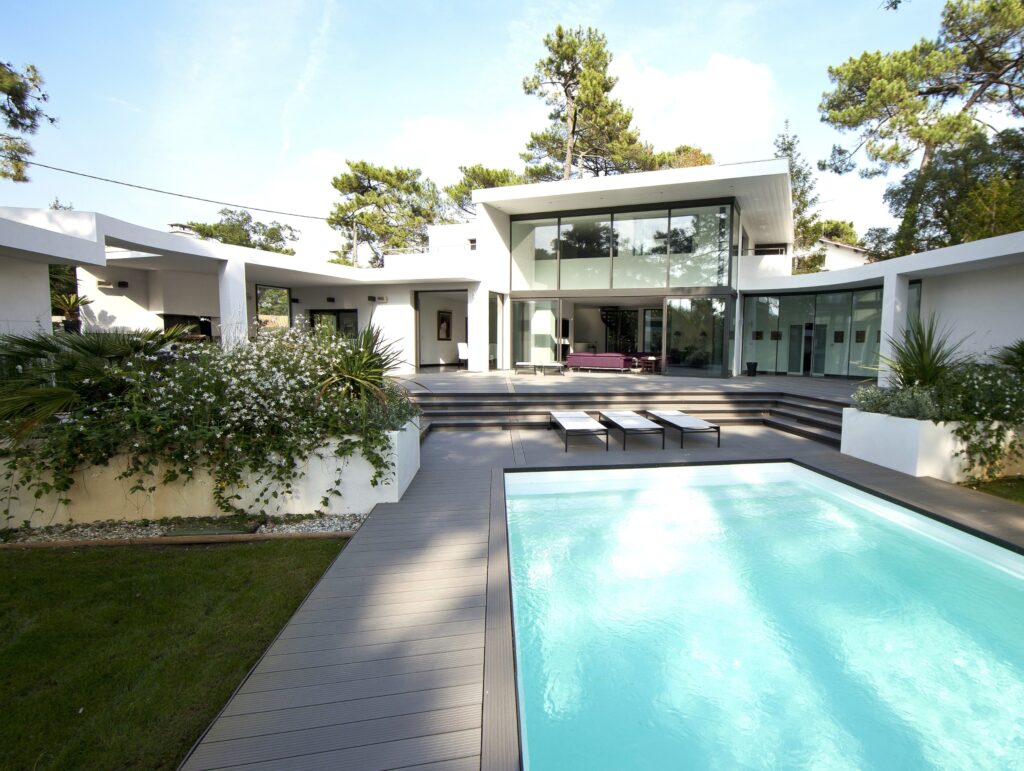
This makes it especially suitable for large-format terraces, infinity pool decks, and indoor-outdoor transitional spaces where architectural continuity is essential.
Moisture, Salt Air, and Coastal Durability
From Palm Jumeirah in Dubai to waterfront developments in Abu Dhabi and Muscat, coastal exposure is a defining design condition.
Timber absorbs moisture, leading to swelling, decay, and structural fatigue over time. In contrast, WPC decking for GCC villas is engineered with a non-absorbent polymer matrix that resists water ingress.
This makes it ideal for:
- Poolside landscapes
- Rooftop terraces
- Irrigated garden walkways
- Beachfront villa environments
The result is not just durability—but reduced engineering complexity in drainage and maintenance detailing.
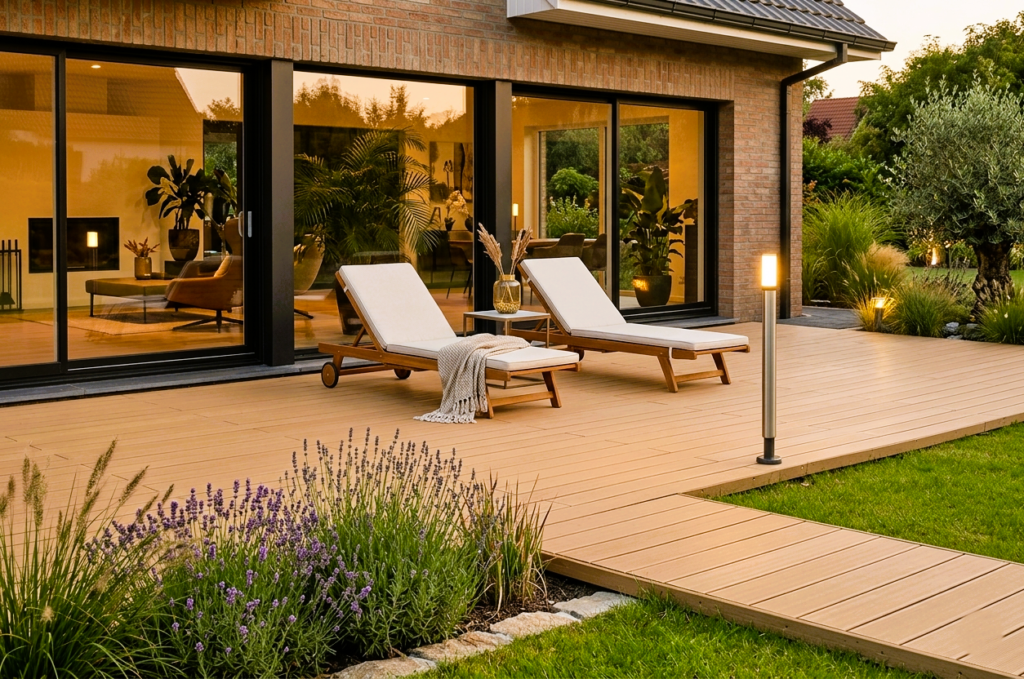
Low-Maintenance Luxury: The New Definition of Outdoor Design
Luxury in the GCC has shifted. It is no longer defined solely by material rarity, but by ease of ownership.
WPC decking supports this evolution by eliminating the intensive maintenance cycles associated with timber. No staining. No sealing. No annual refinishing.
Routine care is limited to simple cleaning, preserving both appearance and performance.
From a development perspective, this translates into:
- Lower lifecycle costs
- Reduced facility management requirements
- Higher long-term asset value
For high-end villas, it also ensures something more intangible: design integrity over time.
Safety, Comfort, and Daily Experience in Villa Living
Outdoor spaces in GCC villas are highly active environments—pool areas, family terraces, and entertainment decks are used year-round.
WPC decking contributes directly to user experience through:
- Slip-resistant surface textures for wet zones
- Splinter-free barefoot comfort
- Balanced surface temperature performance in lighter tones
These factors are not secondary design considerations—they define how outdoor architecture is lived, not just viewed.
Aesthetic Flexibility for Contemporary GCC Architecture
Modern villa design in the UAE and GCC is increasingly hybrid in language—combining minimalism, regional identity, and resort-inspired spatial planning.
WPC decking supports this diversity through a wide range of finishes and profiles:
- Natural timber-inspired textures
- Clean linear contemporary boards
- Dark, architectural tones for contrast landscapes
It integrates seamlessly with stone, glass, aluminium, and shaded structural systems, allowing architects to maintain visual coherence across façade and landscape design strategies.
For broader design integration, WPC often works alongside:
- Ventilated façade systems for façade continuity
- Fibre cement cladding solutions for material contrast and durability balance
Sustainability and Responsible Specification in the GCC
Sustainability is becoming central to design conversations across the Middle East, particularly in UAE green building frameworks and Saudi Vision-aligned developments.
WPC decking contributes to this shift by:
- Utilizing recycled wood and polymer content
- Reducing dependency on virgin timber resources
- Offering extended lifecycle performance (20–25 years)
Its durability directly reduces material replacement cycles, making it a pragmatic choice for environmentally conscious specification strategies.
Where WPC Decking Performs Best in GCC Villas
Across regional villa developments, WPC decking is most effectively applied in:
- Pool decks and wet leisure zones
- Rooftop entertainment terraces
- Garden circulation paths
- Balconies and shaded outdoor extensions
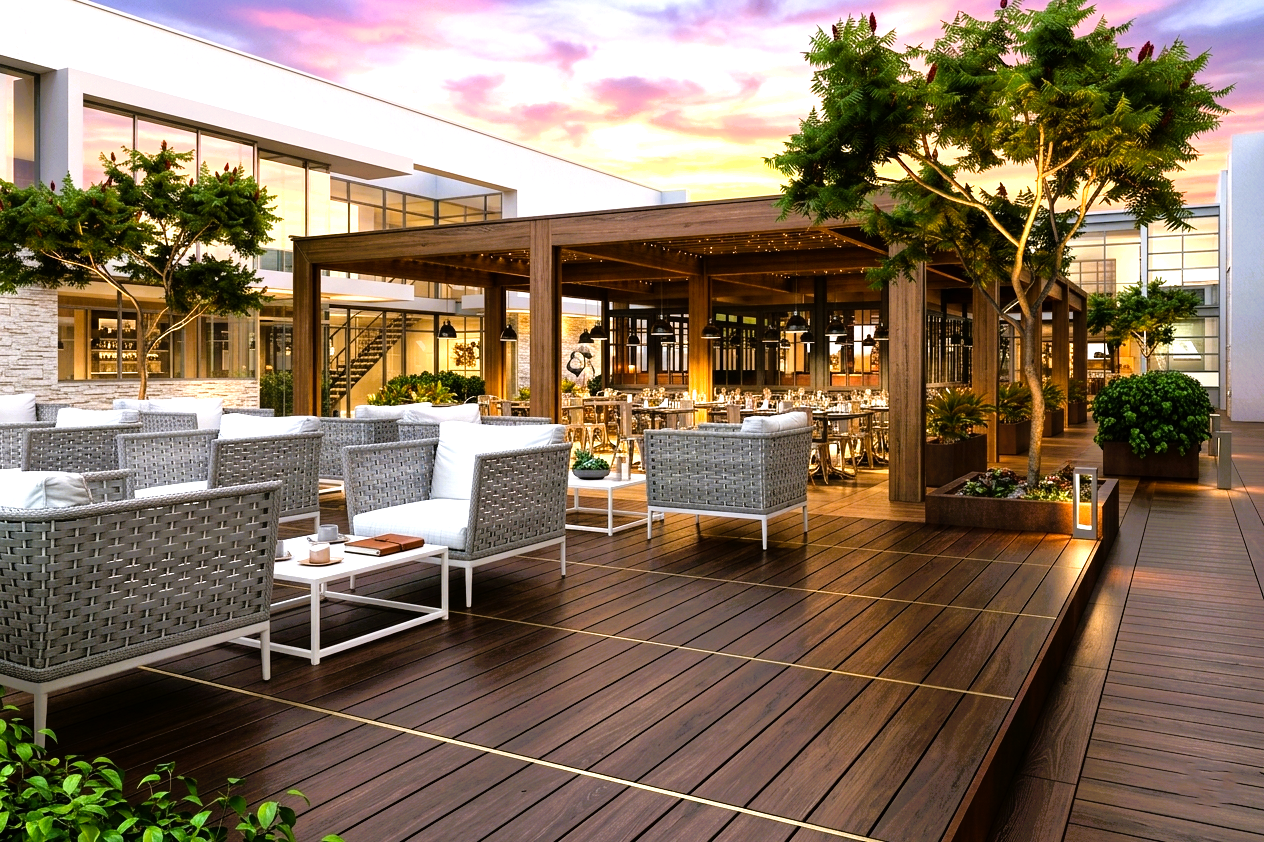
In each case, it supports not only function, but architectural continuity between built form and landscape design.
Specification Intelligence: What Architects Must Consider
Not all WPC systems perform equally. In high-performance villa projects, specification requires careful evaluation of:
- Composite density and board composition
- UV resistance ratings and additive quality
- Substructure systems (aluminium vs steel frameworks)
- Hidden fixing mechanisms for clean detailing
- Fire performance compliance in dense villa communities
This is where early technical engagement becomes essential to avoid downstream design compromises.
Trusted Systems in GCC Villa Projects: XYLTECH & EXTERPARK
Within the regional specification landscape, systems such as XYLTECH and EXTERPARK are frequently selected for villa and hospitality applications.
- XYLTECH is recognized for its high UV stability and structural consistency, making it suitable for large-scale residential applications.
- EXTERPARK delivers premium outdoor flooring systems with strong detailing precision for high-end architectural environments.
Selection typically depends on project intent, detailing complexity, and long-term performance expectations rather than branding alone.
The Role of Specification Support in Successful Delivery
Material performance is only one layer of success. In the GCC, execution quality depends equally on technical guidance, supply reliability, and installation precision.
This is where experienced partners become critical.
With over two decades of regional expertise, Obras International supports architects and developers across the UAE and GCC with specification advisory, system integration, and façade coordination.
Explore more:
- Ventilated façade integration systems
- Fibre cement cladding solutions
- Obras project portfolio
- Specification and technical support services
WPC Decking for GCC Villas as a Design Standard
WPC decking for GCC villas is no longer an alternative material choice—it is becoming a baseline specification for outdoor residential architecture across the Gulf.
It aligns performance with climate reality, reduces maintenance burden, and supports the evolving definition of luxury living in the UAE and GCC.
For architects, the conversation is no longer whether WPC belongs in villa design—but how intelligently it is integrated into the architectural system as a whole.
For architects and developers working on villa or residential projects in the UAE and GCC, early-stage material specification can significantly influence long-term performance outcomes.
Engage with Obras International for technical guidance, system selection, and integrated façade-to-landscape material strategies.