In the GCC, façades are far more than decorative envelopes—they are performative layers, mediating heat, light, and environmental stress while articulating architectural intent. For decades, traditional finishes like plaster, stone, and ceramic tiles dominated, yet these systems increasingly struggle under the harsh realities of desert and coastal climates. High UV exposure, sand-laden winds, and humidity challenge durability, color retention, and thermal stability.
Against this backdrop, fiber cement cladding emerges as a material that balances technical resilience, design flexibility, and aesthetic refinement—qualities architects demand when shaping projects for the region. Through our exclusive partnership with EQUITONE®, Obras International brings architects access to a curated suite of high-density fiber cement panels engineered for contemporary, performance-driven façades.
Climate-Responsive Performance Without Compromise
GCC architects often face a tension between form and function: façades must articulate the design vision while withstanding extreme environmental conditions. Traditional plaster and tile finishes, while familiar, reveal their limitations as thermal stress and UV exposure accelerate cracking, fading, and moisture-related failures. Even high-maintenance interventions such as repainting or resealing fail to ensure lasting visual consistency.
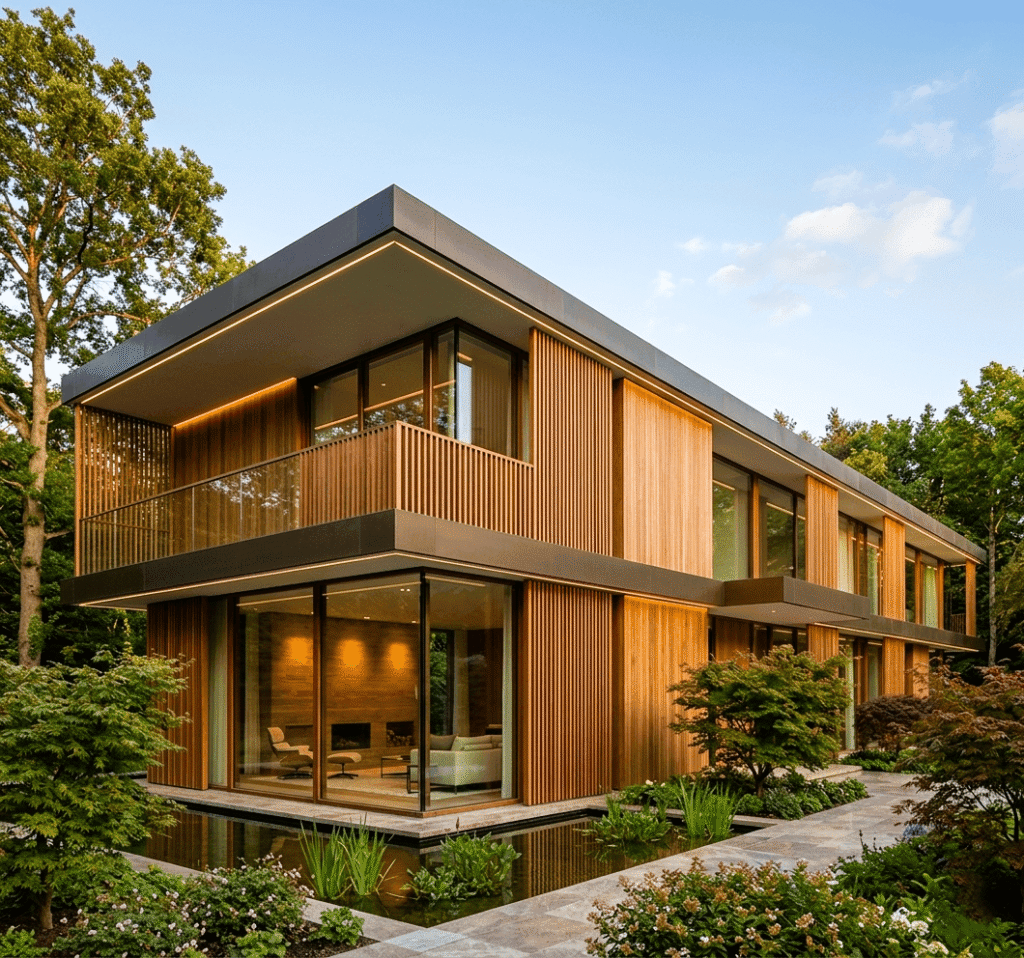
Fiber cement cladding, in contrast, offers through-colored, mineral-rich panels that retain structural integrity and color vibrancy throughout their lifespan. Unlike surface-coated alternatives, the color and texture extend fully through the material, ensuring façades endure without frequent intervention. Its dimensional stability makes it especially suitable for ventilated façade systems, allowing architects to explore monolithic expressions, planar continuity, and sculptural forms that respond to contextual climate pressures.
Architectural Freedom Meets Technical Precision
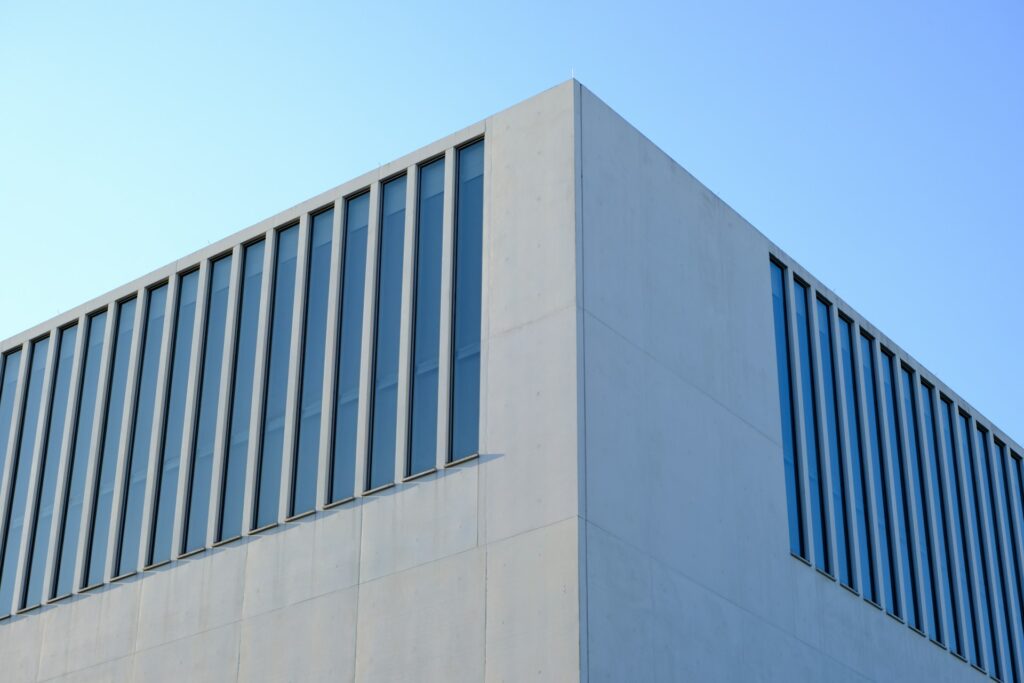
Modern GCC projects are increasingly ambitious—residential towers, mixed-use developments, and luxury hospitality projects demand façades that are both expressive and resilient. Fiber cement allows architects to push beyond traditional constraints. Large-format panels enable uninterrupted planes and minimal joint expression, giving rise to façades that read as continuous, monolithic surfaces. Meanwhile, the material’s natural textures—from smooth, refined surfaces to tactile, raw finishes—create opportunities for layered shadow and light, subtly enriching the building’s visual narrative.
EQUITONE® fiber cement panels, supplied through Obras International, come in an array of finishes and through-colored palettes, giving designers latitude to articulate branding, environmental cues, or cultural motifs. In short, architects can pursue bolder forms, precise detailing, and high-performance envelopes without compromise.
Performance That Aligns with GCC Standards
Beyond aesthetics, façade performance is increasingly under scrutiny—from fire compliance to energy efficiency and green building certification. Fiber cement addresses these concerns with inherent non-combustibility, meeting Class A fire ratings, and producing no toxic smoke emissions. Its low thermal conductivity, combined with ventilated façade detailing, improves building envelope efficiency, reducing reliance on mechanical cooling and contributing to LEED, GSAS, and Estidama goals.
In essence, specifying fiber cement allows architects to future-proof their projects, mitigating risks associated with environmental degradation, maintenance costs, and regulatory non-compliance.
Obras International and EQUITONE®: Partnering for Specification Success
Selecting a high-performance material is only the first step; achieving consistent execution across the GCC requires technical expertise, logistical support, and design coordination. This is where Obras International provides critical value. As the exclusive partner for EQUITONE® fiber cement panels in the region, Obras delivers a full-spectrum façade service, encompassing:
- Early-stage technical consultation and façade detailing.
- Specification support to streamline approval processes and tender documentation.
- Access to curated product catalogs highlighting panel types, textures, and finishes optimized for GCC climates.
- Coordination with approved installers to ensure installation quality and aesthetic precision.
This integrated approach gives architects confidence, enabling them to design bold, resilient, and elegant façades while maintaining project schedules and budgets.
Real-World Applications Across GCC Projects
Fiber cement cladding has proven adaptable across a wide range of typologies. In corporate headquarters, it expresses modern minimalism with crisp lines and expansive planes. In residential towers, it articulates rhythm and proportion while resisting coastal moisture. Hospitality and resort projects benefit from the material’s textured, tactile appeal, creating façades that are experiential yet low-maintenance. Educational and healthcare facilities gain durable, compliant envelopes that safeguard occupants while meeting rigorous fire and hygiene standards.
Obras International’s curated EQUITONE® product catalog provides architects with ready access to panels that suit these diverse applications—bridging inspiration with specification-ready solutions.
Elevate Your Next GCC Project
Designing high-performance façades in the GCC demands materials that combine technical rigor, aesthetic flexibility, and sustainability. Fiber cement cladding, as supplied and supported by Obras International through EQUITONE®, meets these criteria, enabling architects to deliver projects that are elegant, safe, and future-ready.
For architects ready to explore fiber cement façades, Obras International provides: comprehensive product catalogs, specification guidance, and project support, ensuring that your vision translates seamlessly from concept to built reality.
Start the conversation today. Discover how fiber cement can transform your next project—connect with Obras International for a technical consultation and product catalog tailored to your design ambitions.
People Also Ask
Is fiber cement suitable for the extreme heat of the GCC?
Yes. High-density fiber cement panels retain their structural and visual integrity under intense UV exposure, sandstorms, and temperature extremes.
Does fiber cement require regular maintenance?
No. Unlike plaster or painted systems, through-colored fiber cement panels do not require repainting or sealing, dramatically reducing lifecycle costs.
Can fiber cement be specified for ventilated façades?
Absolutely. Its engineered compatibility with ventilated systems improves thermal performance and moisture control while supporting contemporary design.
Is fiber cement fire-compliant?
Yes. High-density panels are non-combustible and meet GCC fire regulations, providing peace of mind for architects and clients alike.