



GCC architectural regulations 2026 define how architecture is conceived, approved, and delivered across the UAE, Saudi Arabia, and the wider Gulf region. For architects and developers, compliance is no longer a final checkpoint—it is a design driver that influences façade systems, material selection, structural strategy, and even aesthetic expression.
In cities like Dubai and Abu Dhabi, regulatory frameworks are becoming more integrated with sustainability goals, fire safety performance, and lifecycle efficiency. This shift is reshaping how buildings are designed from concept to execution.
For modern architecture in the GCC, compliance is not a limitation—it is a framework for performance-driven design.
Understanding GCC Architectural Regulations 2026
The GCC architectural regulations 2026 represent a convergence of national building codes, international standards, and sustainability mandates.
Across the region, authorities are prioritizing:
- Fire and life safety compliance
- Energy efficiency performance
- Façade system safety and durability
- Material certification and testing standards
- Sustainability frameworks such as Estidama and LEED
In the UAE, regulations are particularly strict for façade systems due to climate exposure and high-rise density. Saudi Arabia is also rapidly aligning its construction codes with global performance standards under Vision 2030.
These regulations are shaping a new architectural language across the GCC—one defined by precision, safety, and environmental responsibility.
UAE Building Codes and Façade Compliance Requirements
In the UAE, façade systems are subject to strict regulatory approval processes governed by civil defense authorities and municipal building codes.
Key compliance areas include:
- Fire-rated façade assemblies (A2-s1,d0 classification where applicable)
- Ventilated façade system approval
- Structural wind load resistance
- Thermal performance requirements
- Material testing under ASTM and EN standards
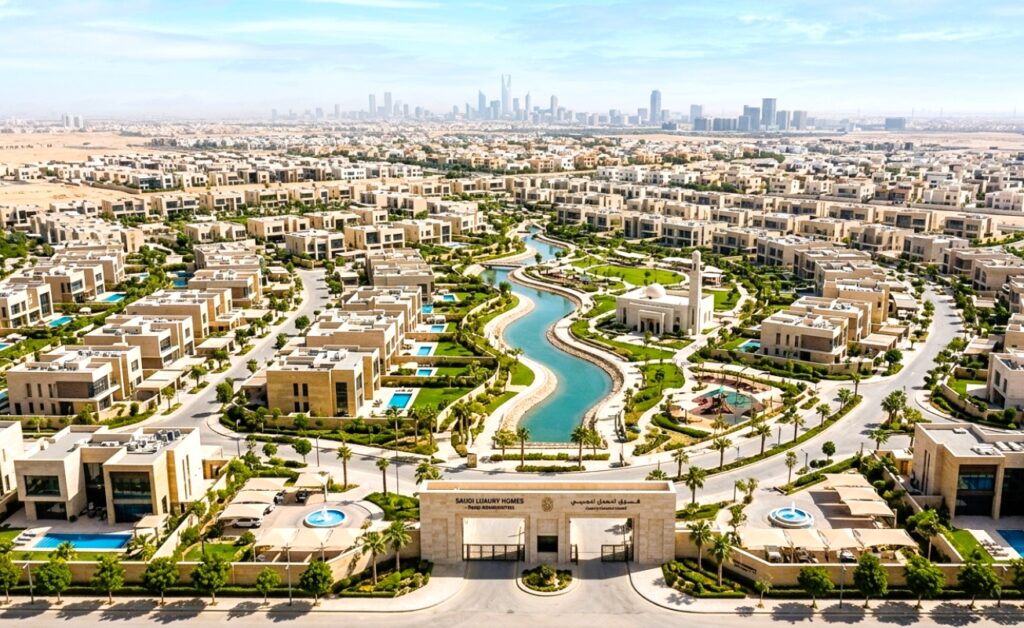
Façade compliance is particularly critical in high-rise developments across Dubai Marina, Downtown Dubai, and Abu Dhabi’s urban districts.
To explore compliant systems, see Obras ventilated façade systems UAE and fibre cement cladding solutions UAE.
Fire Safety Standards in GCC Architecture
Fire safety is one of the most influential components of GCC architectural regulations 2026.
Modern building codes require:
- Non-combustible façade materials in high-rise applications
- Tested and certified cladding assemblies
- Fire barrier integration within ventilated systems
- Smoke propagation control between façade layers
This has significantly increased the adoption of fibre cement panels and engineered façade systems across the region.
Fire compliance is not just regulatory—it directly influences occupant safety, insurance approvals, and project delivery timelines.
Saudi Arabia & UAE Regulatory Alignment in 2026
A major shift in GCC architectural regulations 2026 is the increasing alignment between Saudi Arabia and UAE building codes.
Saudi Arabia’s giga-projects such as NEOM and The Line are driving:
- Advanced façade engineering standards
- High-performance material requirements
- Sustainability-first construction frameworks
Meanwhile, the UAE continues to refine its urban safety and energy efficiency codes, particularly in Dubai and Abu Dhabi.
This alignment is creating a more unified GCC construction ecosystem, where architects must design for cross-border compliance expectations.
How Regulations Impact Façade Design and Material Selection
Façade design is one of the most regulated components in GCC architecture.
Regulatory frameworks directly influence:
- Material selection (fire-rated vs decorative systems)
- System depth and ventilated cavity design
- Fixing methods and substructure engineering
- Thermal insulation integration
- Maintenance accessibility requirements
This is why early-stage façade consultancy is essential in GCC projects.
Key Compliance Risks in GCC Construction Projects
Failure to align with GCC architectural regulations 2026 can result in serious project consequences.
Common risks include:
- Design approval delays
- Material rejection during site inspections
- Rework of façade systems post-submission
- Fire safety non-compliance penalties
- Increased lifecycle maintenance costs
The most critical issue is late-stage substitution of façade materials, which often compromises both performance and regulatory approval.
Best Practices for Regulatory Approval in the UAE
To ensure smooth approval processes in the UAE and GCC, architects and developers should adopt a structured compliance strategy:
- Start façade and material planning during concept design
- Align early with civil defense and municipality requirements
- Specify certified façade systems only
- Use tested ventilated façade assemblies
- Collaborate with façade specialists during design development
Early integration of compliance reduces risk, accelerates approvals, and preserves architectural intent.
Façade systems are no longer purely architectural elements—they are regulated performance systems.
Modern compliant façade systems must meet fire safety classifications, deliver thermal insulation efficiency, ensure structural stability under wind loads, and support sustainable building certifications.
This shift is why ventilated façade systems and fibre cement cladding have become dominant across UAE and GCC developments.
Internal Specification Ecosystem (Obras Integration)
For architects and consultants working on GCC projects, integrated specification support is essential.
Explore:
- Ventilated façade systems UAE → high-performance rainscreen solution
- Fibre cement cladding solutions → fire-rated architectural finishes
- Obras project portfolio → real GCC façade applications
- Specification consultation services → compliance and design advisory
These resources ensure regulatory alignment from concept to execution.
The Future of GCC Architectural Regulations
The evolution of GCC architectural regulations 2026 signals a clear direction for regional architecture: performance-led, safety-driven, and sustainability-focused design.
For architects and developers, compliance is no longer a technical afterthought—it is a design framework that shapes material selection, façade systems, and architectural identity.
Projects that integrate regulatory intelligence early will not only achieve approval faster but will also deliver higher-performing, more resilient buildings across the UAE and GCC.
Designing a compliant project in the UAE or GCC?
Work with Obras International to integrate façade systems, certified materials, and regulatory-ready solutions from concept to execution.
👉 Request specification support or material consultation today.