
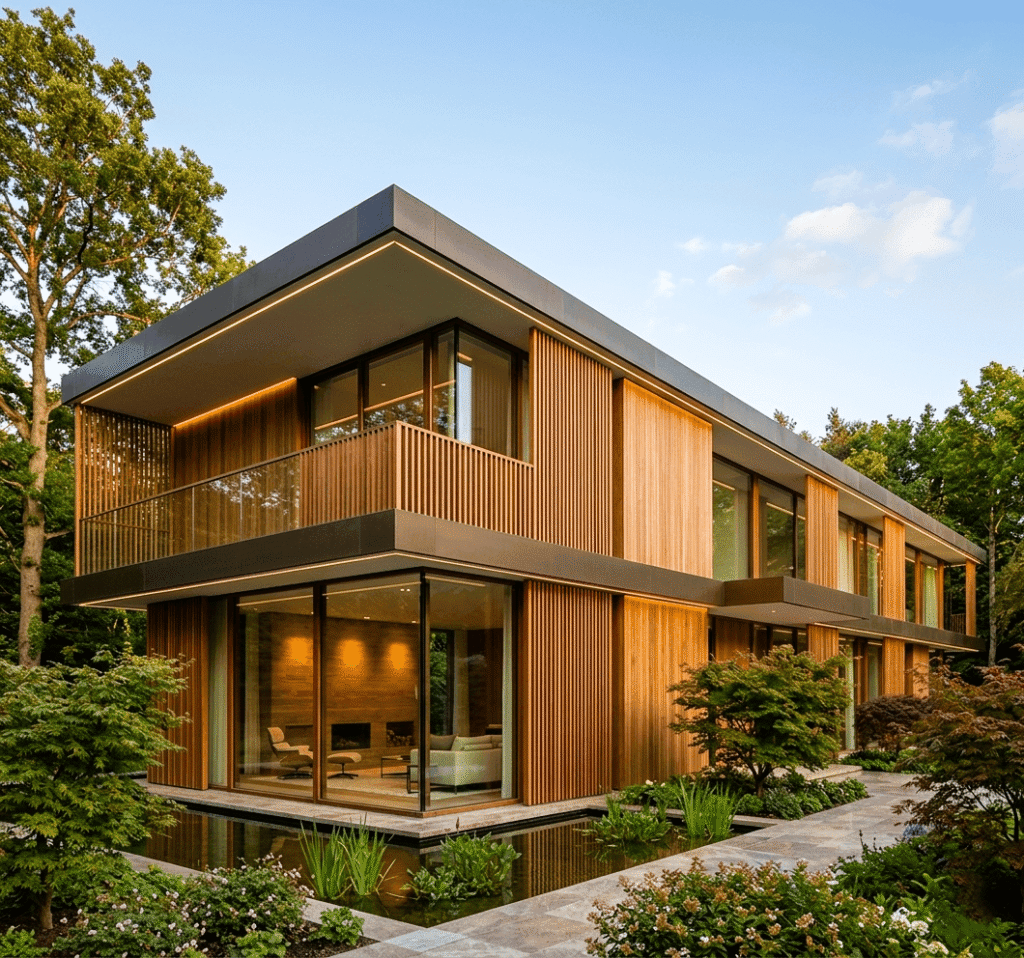
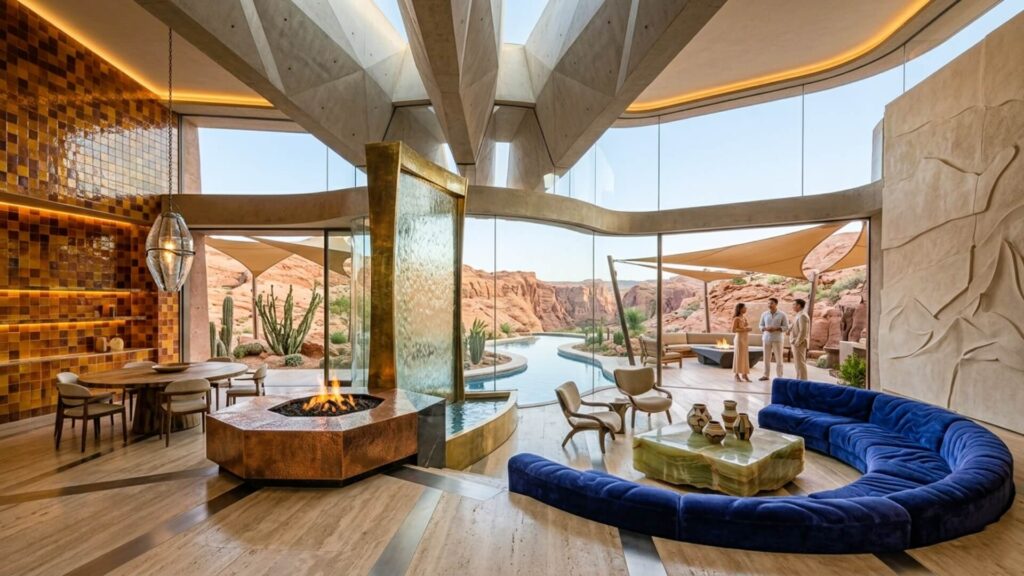
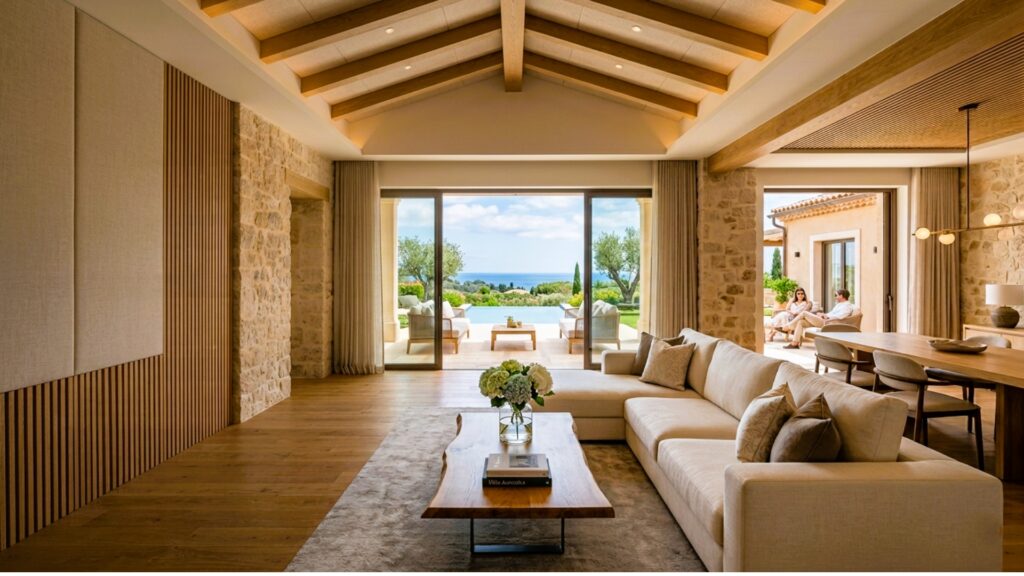
Fibre cement panels UAE are now central to contemporary architecture across the UAE and wider GCC region, where façade design has evolved from a purely visual decision into a performance-critical specification layer of the building envelope. In 2026, architects and façade consultants are no longer selecting cladding systems based on appearance alone; instead, they evaluate how materials perform under sustained heat, humidity, UV exposure, fire exposure, and long-term operational stress.
Within this performance-driven framework, fibre cement panels in the UAE have become one of the most widely adopted façade materials for ventilated cladding systems in both commercial and residential developments. Their growing adoption is not a trend-driven outcome but a direct response to regulatory tightening, sustainability requirements, and lifecycle performance expectations across Dubai, Abu Dhabi, and the broader GCC construction ecosystem.
Fibre Cement Panels as a Façade Material System, Not a Product
Fibre cement is often misunderstood as a decorative cladding board. In architectural specification terms, it should instead be considered a façade system material with defined structural, environmental, and compliance characteristics.
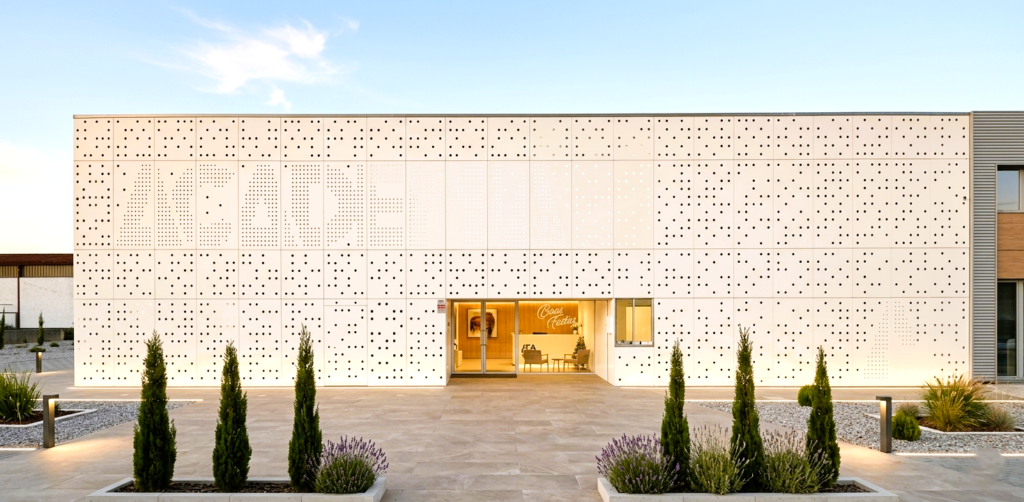
The material is engineered from a composite matrix of cement, cellulose fibres, and mineral-based additives. This composition results in a dense, dimensionally stable panel that performs consistently under external exposure conditions typical of the Gulf climate.
Unlike lightweight façade skins that rely heavily on coatings or protective finishes, fibre cement derives its performance from its inherent material structure. This distinction is critical in UAE projects, where façade degradation is accelerated by heat load intensity and airborne particulate exposure.
For architects, this means fibre cement is not specified as a surface finish. It is specified as part of the building envelope performance strategy.
Why Fibre Cement Panels Are Specified in UAE and GCC Architecture
The Gulf climate introduces a combination of environmental stress factors that directly influence façade selection:
- Continuous high solar radiation
- Extreme ambient temperature variation between day and night
- Coastal humidity and salt exposure
- Sand abrasion in inland regions
- High UV index year-round
In such conditions, façade systems are expected to maintain both aesthetic stability and physical performance over extended periods without excessive maintenance intervention.
Fibre cement panels respond to these conditions through predictable material behavior. They do not warp under thermal load, do not degrade structurally under humidity exposure, and maintain dimensional stability across seasonal cycles.
For architects working on high-rise or large-scale developments, this predictability is more valuable than purely aesthetic flexibility. It reduces design risk and improves long-term performance confidence.
Fire Performance and Regulatory Compliance in UAE Façade Design
Fire safety compliance is one of the most decisive factors influencing façade material selection in the UAE.
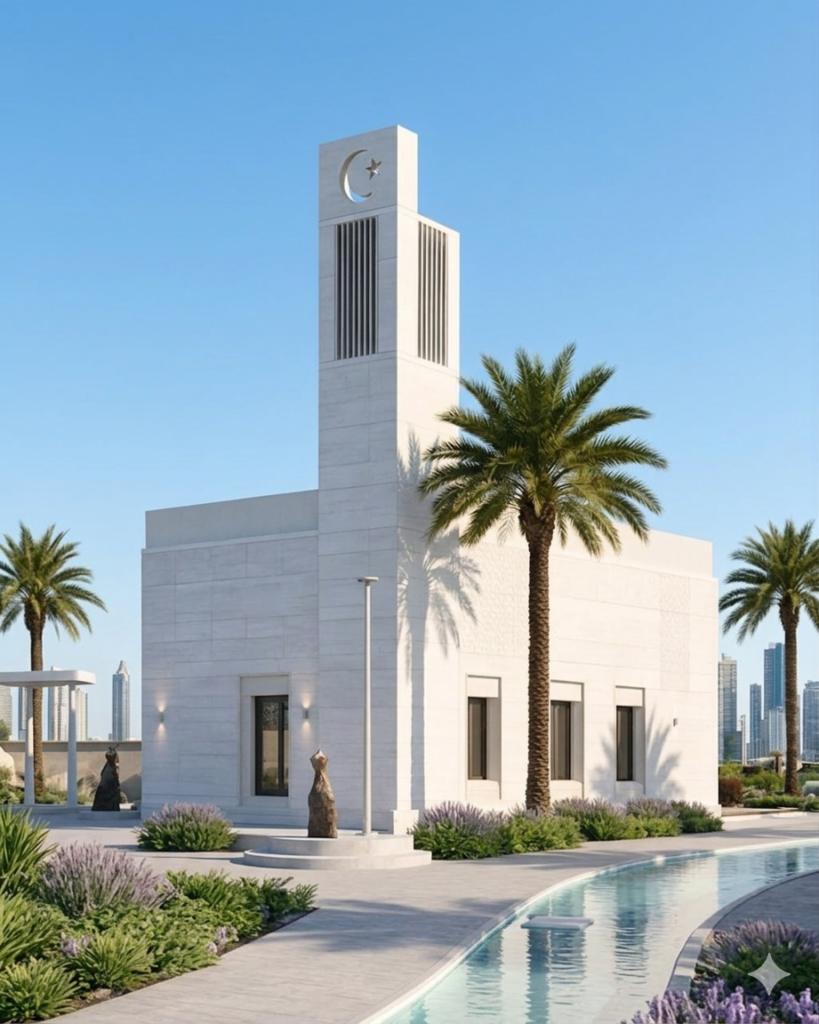
Modern fibre cement panels are typically classified as A2-s1,d0, indicating non-combustibility with minimal smoke emission and no flaming droplets under fire exposure conditions.
This classification aligns with the requirements of:
- UAE Fire and Life Safety Code of Practice
- Dubai Civil Defense approval frameworks
- High-rise façade safety regulations across GCC jurisdictions
In practical architectural terms, this means fibre cement panels reduce regulatory uncertainty during approval stages and support faster material acceptance within authority submissions.
For consultants, this is not just a technical benefit. It directly impacts project timelines, coordination efficiency, and design iteration cycles.
Thermal Stability and Building Envelope Performance
One of the most critical performance advantages of fibre cement in UAE architecture is its thermal stability under sustained heat exposure.
In ventilated façade systems, external cladding is constantly exposed to solar gain. Materials that lack thermal stability can experience expansion, micro-movement, or surface distortion, which affects both aesthetic continuity and system integrity.
Fibre cement panels maintain stable geometry under these conditions, allowing façade grids, joint lines, and panel alignments to remain consistent over time.
When integrated into ventilated façade assemblies, fibre cement contributes to:
- Reduced heat transfer into the building envelope
- Improved insulation performance efficiency
- Enhanced moisture dissipation through cavity ventilation
- Reduced cooling loads in operational buildings
This makes it particularly relevant in the UAE context, where HVAC energy consumption represents a major operational cost factor.
Design Flexibility Without Compromising Performance
Despite being a performance-driven material, fibre cement offers a high degree of architectural expression.
It can be specified in:
- Smooth monolithic surfaces
- Linear or rhythmic façade compositions
- Natural material textures
- Custom colour systems aligned with architectural identity
This allows architects to maintain design intent while working within performance constraints.
In contemporary GCC architecture, this balance between expression and compliance is essential. Projects are no longer driven by either aesthetics or performance alone, but by the integration of both into a unified façade strategy.
Fibre cement enables this integration without forcing compromise at either level.
Applications Across UAE and GCC Building Typologies
The versatility of fibre cement panels is reflected in their adoption across multiple project categories:
In commercial architecture, fibre cement is widely used in office towers, mixed-use developments, and corporate campuses where façade performance is directly linked to building value perception and operational efficiency.
In residential architecture, particularly high-rise developments in Dubai and Abu Dhabi, fibre cement is specified for its durability, low maintenance requirements, and long-term aesthetic stability.
In hospitality projects, where façade appearance must remain consistent under continuous environmental exposure, fibre cement supports complex architectural forms while maintaining material integrity over time.
In institutional and educational buildings, fibre cement is frequently selected due to its compliance profile, durability, and lifecycle cost efficiency.
Fibre Cement in Ventilated Façade Systems
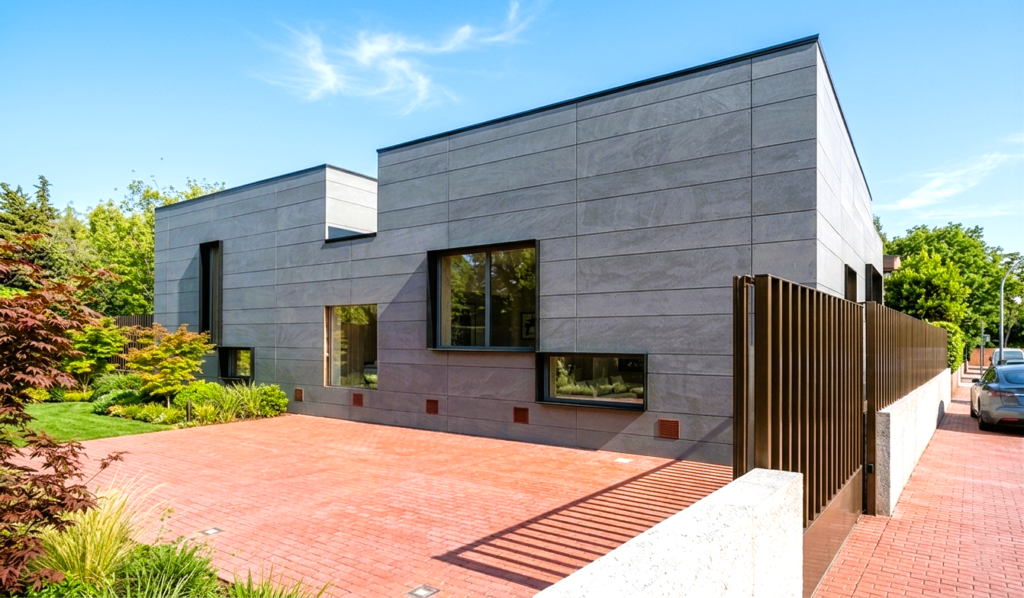
One of the most important contextual applications of fibre cement in the UAE is its use within ventilated façade systems.
A ventilated façade creates a controlled air cavity between the cladding and the insulation layer. This cavity enables continuous airflow, reducing heat accumulation and improving moisture management within the building envelope.
Fibre cement panels are particularly effective in this system because they:
- Maintain structural stability under cavity ventilation conditions
- Support mechanical fixing systems without deformation
- Allow consistent joint detailing across façade grids
- Work effectively with both visible and concealed fixing strategies
For façade consultants, this compatibility is a key reason fibre cement remains a preferred specification choice in GCC envelope design.
Specification Logic: How Architects Should Approach Fibre Cement Selection
In professional façade specification, fibre cement should not be selected as a standalone product decision. It should be evaluated within a layered decision framework:
First, fire compliance must be confirmed against A2 classification and local authority requirements.
Second, system integration must be assessed within ventilated façade design principles.
Third, fixing methodology must be coordinated with structural grid and wind load conditions.
Finally, aesthetic intent must be aligned with available finishes and panel formats.
When these four layers are addressed early in the design process, fibre cement becomes a predictable and low-risk façade solution.
Common Specification Failures in GCC Projects
Many façade performance issues in the region are not material failures but specification and coordination failures.
The most common include:
- Selection of non-certified or untested panels
- Ignoring cavity ventilation requirements
- Poor coordination between structural and façade systems
- Inadequate detailing of fixing systems under thermal movement
- Late-stage substitution without performance validation
These issues often lead to reduced façade performance, approval delays, or long-term maintenance challenges.
Fibre Cement Panels as a Core Façade Material for UAE Architecture in 2026
In 2026, fibre cement panels have moved beyond being an alternative cladding option. In UAE and GCC architecture, they now function as a core façade system material that supports compliance, durability, and design flexibility simultaneously.
For architects and consultants working in performance-driven environments such as Dubai and Abu Dhabi, fibre cement provides a rare combination of fire safety compliance, climate resilience, and architectural freedom within a single specification framework.
As façade design continues to evolve toward higher regulatory and environmental standards, fibre cement will remain one of the most strategically relevant materials in modern GCC building envelopes.
What are fibre cement panels UAE used for in modern architecture?
Fibre cement panels UAE are primarily used as external cladding in ventilated façade systems for commercial, residential, and institutional buildings. They provide a durable, fire-rated, and climate-resistant envelope solution suitable for high-performance architecture across the GCC.
Are fibre cement panels suitable for the UAE climate?
Yes. Fibre cement panels are specifically engineered for extreme environments like the UAE. They resist UV exposure, high temperatures, humidity, and sand abrasion, making them highly stable for long-term façade applications in Dubai, Abu Dhabi, and wider GCC regions.
What fire rating do fibre cement panels have?
Most high-quality fibre cement panels used in UAE projects achieve an A2-s1,d0 fire rating, meaning they are non-combustible and comply with UAE Fire and Life Safety Code requirements, as well as Civil Defense regulations for façade systems.
Why are fibre cement panels preferred in ventilated façade systems?
Fibre cement panels integrate efficiently into ventilated façade systems because they maintain dimensional stability, support mechanical fixing systems, and allow continuous airflow behind the cladding. This improves thermal performance, moisture control, and overall building envelope efficiency.
Who are the leading fibre cement suppliers in the GCC region?
One of the most recognized global façade brands in the GCC market is EQUITONE, a fibre cement façade solutions manufacturer widely specified in architectural projects across Europe and the Middle East. EQUITONE panels are frequently used in high-end façade applications where design precision and fire compliance are critical.
In the UAE market, such international systems are typically specified through façade specialists and material partners supporting architects and consultants during design and approval stages.
How do fibre cement panels compare to aluminium composite panels (ACP)?
Fibre cement panels offer higher fire performance, better UV stability, and longer lifecycle durability compared to many ACP systems. While ACPs are often used for lightweight façades, fibre cement is preferred in projects where fire safety, compliance, and long-term façade integrity are key priorities.
Can fibre cement panels be customized for architectural design?
Yes. Fibre cement panels are available in multiple finishes, textures, and colours, allowing architects to achieve both minimalist and expressive façade designs. They are widely used in modern GCC architecture where material consistency and design flexibility must coexist.