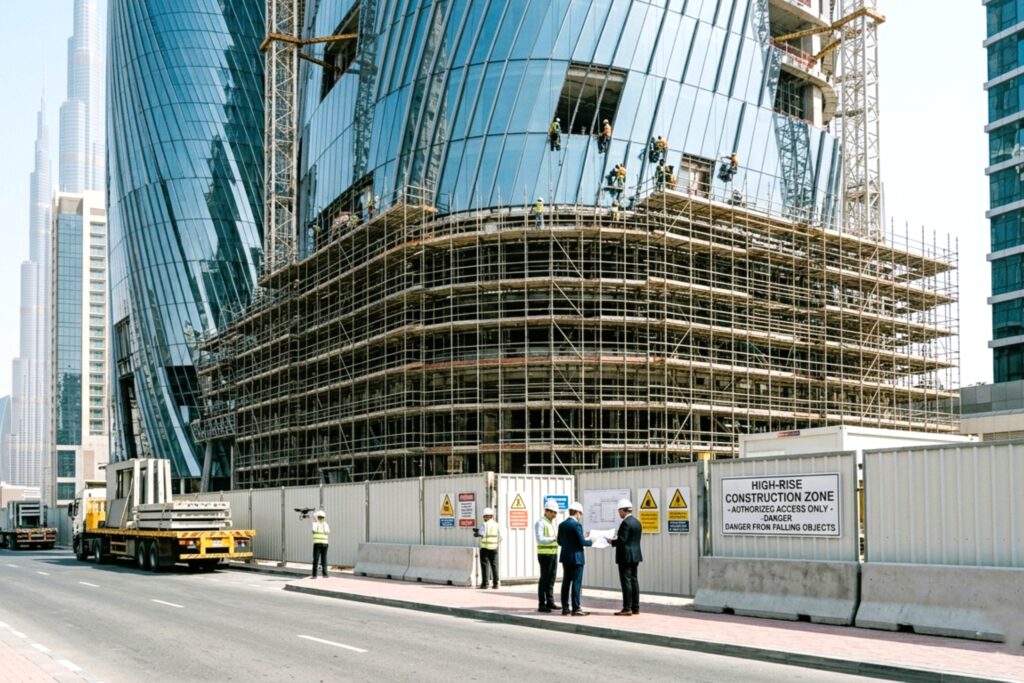
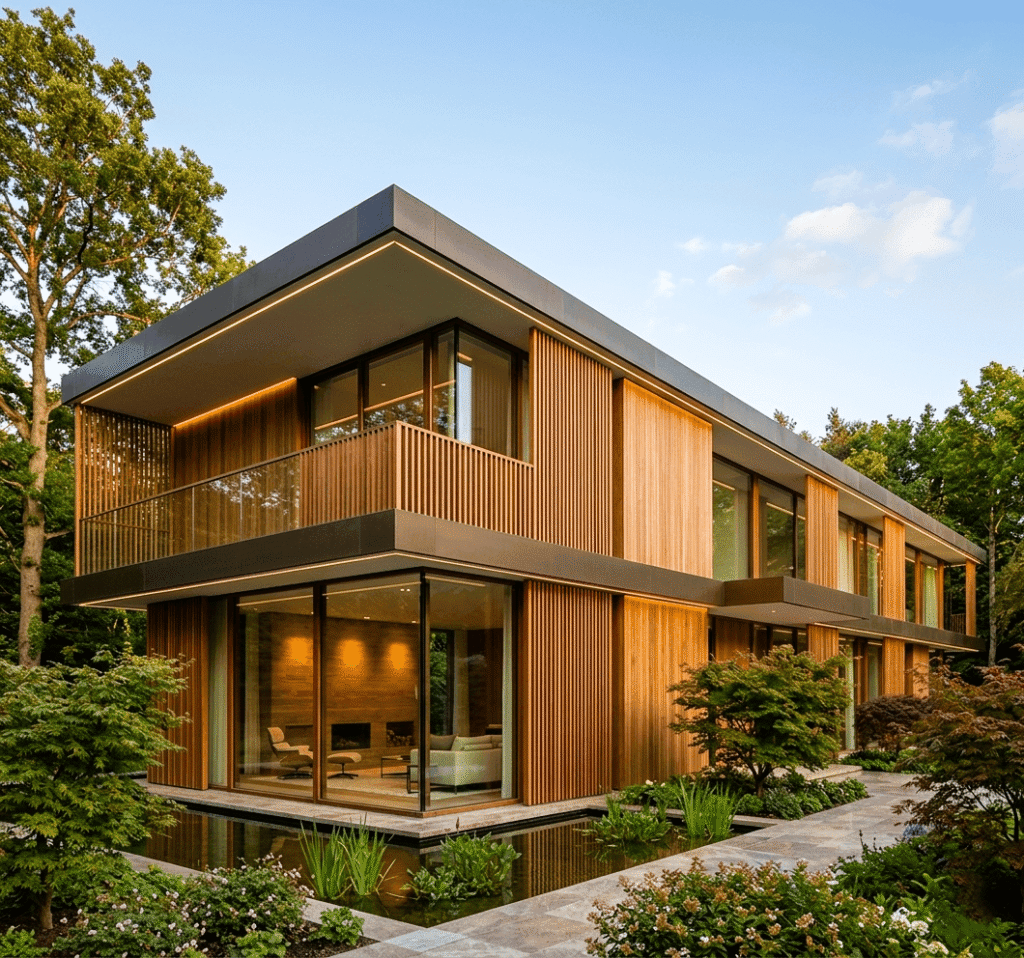
In the rapidly evolving construction landscape of the UAE and wider GCC, façade performance has become one of the most critical determinants of building durability, safety, and long-term value. Common façade failures in the GCC are no longer isolated technical issues—they are costly, reputation-damaging problems that directly impact developers, consultants, and contractors. As projects scale in complexity across cities like Dubai, Abu Dhabi, and Riyadh, the need for high-performance façade systems that can withstand extreme climate conditions is more urgent than ever.
In 2026, façade specification in the GCC must go beyond aesthetics. Architects and façade consultants are now expected to deliver systems that perform under intense UV exposure, thermal cycling, sand abrasion, humidity, and strict fire safety regulations. Failures often stem not from a single mistake, but from a chain of misaligned decisions—material selection, detailing, installation, and compliance gaps.
This industry-focused article combines real-world failure patterns, regulatory insights, and specification strategies to help architects and consultants prevent façade risks while aligning with high-performance materials available through Obras International.
What Are the Most Common Façade Failures in the GCC?
Façade failures in the GCC are rarely random. They are predictable outcomes of environmental stress combined with specification or execution gaps. Across commercial, residential, and mixed-use projects, recurring issues continue to surface.
One of the most prevalent problems is panel cracking and surface degradation, particularly in materials that are not engineered for high thermal expansion. Under GCC conditions, façade surfaces can experience temperature fluctuations exceeding 40°C within a single day. Materials that lack dimensional stability begin to warp, crack, or delaminate over time.
Another critical failure is fixing system corrosion. In coastal cities like Dubai and Doha, saline air accelerates corrosion in substructures that are not properly specified using marine-grade metals. This leads to structural instability and, in extreme cases, panel detachment.
Water ingress is also a major concern. Improper sealing, poor joint design, and lack of ventilation in façade systems often result in moisture penetration. Over time, this compromises insulation, internal finishes, and indoor air quality.
Fire-related failures have gained heightened attention following stricter regulations across the region. Materials that do not comply with fire safety standards such as those outlined by UAE Civil Defense have led to façade retrofits and project delays.
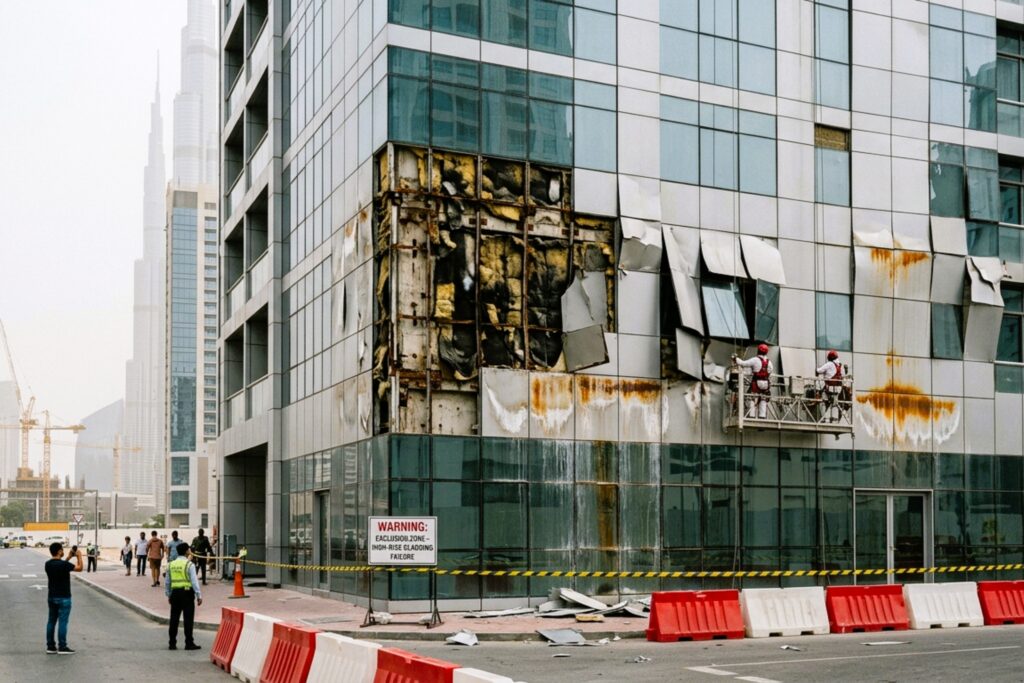
Finally, aesthetic degradation—including discoloration, staining, and uneven weathering—affects the perceived value of buildings. This is particularly critical in high-visibility developments where façade appearance is a key design driver.
Why Façade Failures Happen in the GCC Climate
The GCC presents one of the most aggressive environments for building envelopes globally. Understanding why façade systems fail begins with understanding the region itself.
Extreme heat is a constant factor. Surface temperatures on façades can exceed 70°C under direct sunlight. This causes expansion and contraction cycles that stress both materials and fixings. If expansion joints and installation tolerances are not properly designed, the system begins to fail prematurely.
Humidity adds another layer of complexity. In coastal areas, high moisture levels combined with heat accelerate chemical reactions, particularly in metals and adhesives. This leads to corrosion and bond failure.
Dust and sand abrasion are often underestimated. Fine particles carried by wind act as a continuous abrasive force on façade surfaces, especially on softer materials or coatings with low resistance.
UV radiation is another silent contributor to façade degradation. Prolonged exposure breaks down polymers, fades colors, and weakens protective coatings.
Many failures are not purely environmental—they are specification-driven. Selecting materials based on cost rather than performance, or applying global standards without GCC adaptation, often results in mismatch between design intent and real-world performance.
Benefits of High-Performance Façade Specification
Avoiding façade failures is not just about risk mitigation—it is a strategic advantage. High-performance façade systems deliver measurable benefits across lifecycle cost, safety, and sustainability.
Durability is the most immediate benefit. Materials engineered for GCC conditions maintain structural integrity and appearance over decades, reducing maintenance cycles and replacement costs.
Energy efficiency is another critical outcome. Properly designed ventilated façade systems improve thermal performance, reducing HVAC loads and contributing to sustainability targets aligned with frameworks such as Estidama and LEED.
Fire safety compliance ensures that buildings meet stringent regional regulations, minimizing legal and operational risks.
From a design perspective, high-performance façades allow architects to achieve aesthetic goals without compromising on technical performance. This is particularly relevant in landmark developments where façade identity defines the project.
Most importantly, reliable façade systems build trust—with clients, regulators, and end users.
GCC Regulations and Compliance Requirements for Façades
Regulatory frameworks in the GCC have evolved significantly, particularly in response to fire incidents and performance failures.
In the UAE, façade systems must comply with fire and life safety codes governed by UAE Civil Defense. These regulations specify requirements for material combustibility, flame spread, and system testing.
International standards also play a role. Testing protocols from ASTM International and BSI Group are widely referenced in façade specification. These include tests for weather resistance, structural performance, and fire behavior.
However, compliance alone is not sufficient. Many projects meet baseline standards but fail in long-term performance due to lack of contextual adaptation. GCC-specific detailing—such as enhanced ventilation gaps, corrosion-resistant fixings, and UV-stable finishes—is essential.
Authorities are also increasingly requiring mock-up testing and on-site performance validation, ensuring that façade systems perform as intended before full-scale installation.
Materials That Prevent Façade Failures in the GCC
Material selection is the most निर्णing factor in preventing façade failures. The shift in 2026 is clear—architects are prioritizing engineered, tested, and region-specific solutions over generic materials.
Fibre cement panels have emerged as a reliable solution due to their dimensional stability and resistance to UV and moisture. High-performance options such as those offered through Obras International provide consistent performance across diverse project types.
Engineered stone façades are increasingly used in high-end applications where durability and aesthetic consistency are critical. These systems offer excellent resistance to abrasion and environmental stress.
Explore:
Porcelain façade systems are another high-performance option, known for their low porosity, color stability, and resistance to staining.
Terracotta ventilated façades provide natural thermal performance and long-term durability, making them suitable for both contemporary and heritage-inspired designs.
The key is not just the material itself, but the system integration—including substructure, fixings, and installation methodology.
How to Prevent Façade Failures: Specification Strategies for Architects
Preventing façade failures requires a proactive, integrated approach from the early design stages through execution.
It begins with climate-responsive design. Understanding project location, orientation, and exposure conditions informs material selection and detailing.
System-based specification is essential. Rather than selecting individual components, architects should specify complete façade systems that have been tested and validated.
Mock-up testing should be treated as a non-negotiable step. It allows teams to identify potential issues before full-scale implementation.
Collaboration between architects, façade consultants, and suppliers is critical. Early engagement with experienced partners such as Obras International ensures that design intent aligns with technical feasibility.
Finally, lifecycle thinking must guide decisions. Initial cost savings often lead to long-term expenses if performance is compromised.
Building Façades That Perform in the GCC
The era of façade design driven purely by aesthetics is over. In the GCC, performance is the foundation of successful projects. Understanding common façade failures in the GCC and addressing them through intelligent specification is essential for architects and consultants aiming to deliver high-quality, future-proof buildings.
With increasing regulatory scrutiny and rising client expectations, the margin for error is shrinking. The solution lies in combining technical expertise, high-performance materials, and region-specific knowledge.
Request Expert Façade Consultation – Obras International
If you are working on a project in the UAE or GCC and want to avoid costly façade failures, Obras International provides technical consultation, material expertise, and specification support tailored to regional conditions.
Explore solutions or request samples