
A Complete Architect’s Guide to Performance, Materials & Specification
Why Ventilated Façades Are Becoming the Default Choice for GCC Architects
Designing building envelopes in the GCC is no longer just about aesthetics. Architects today must balance thermal performance, fire compliance, durability, sustainability, and lifecycle cost — all while responding to extreme heat, humidity, sandstorms, and rapid urban density.
This is why ventilated façade systems have evolved from a “premium option” into a baseline strategy for high-performance buildings across the UAE, Saudi Arabia, Qatar, Kuwait, and Bahrain.
A properly engineered ventilated façade creates a continuous air cavity between the structural wall and the external cladding. This passive design principle dramatically reduces heat gain, manages moisture, and protects the building envelope — making it one of the most climate-resilient façade systems available for desert environments.
“For architects working on mid-rise, high-rise, hospitality, education, or mixed-use projects, ventilated façades are no longer optional — they are essential.”
What Is a Ventilated Façade System?
A ventilated façade is a multi-layered external envelope system designed to improve building performance through controlled airflow and material separation.
Unlike direct-fixed cladding, the ventilated approach allows the façade to breathe, adapt, and perform independently of the structure.
Core Layers of a High-Performance Ventilated Façade
1. External Cladding Layer
This is the visible architectural skin and one of the most critical specification decisions.
In the GCC, high-performing ventilated façades commonly use:
- High-density fiber cement panels (fire-rated and dimensionally stable)
- Porcelain façade slabs (including large-format and XXL panels)
- Engineered stone cladding with varied textures
- Sintered stone slabs for premium façades
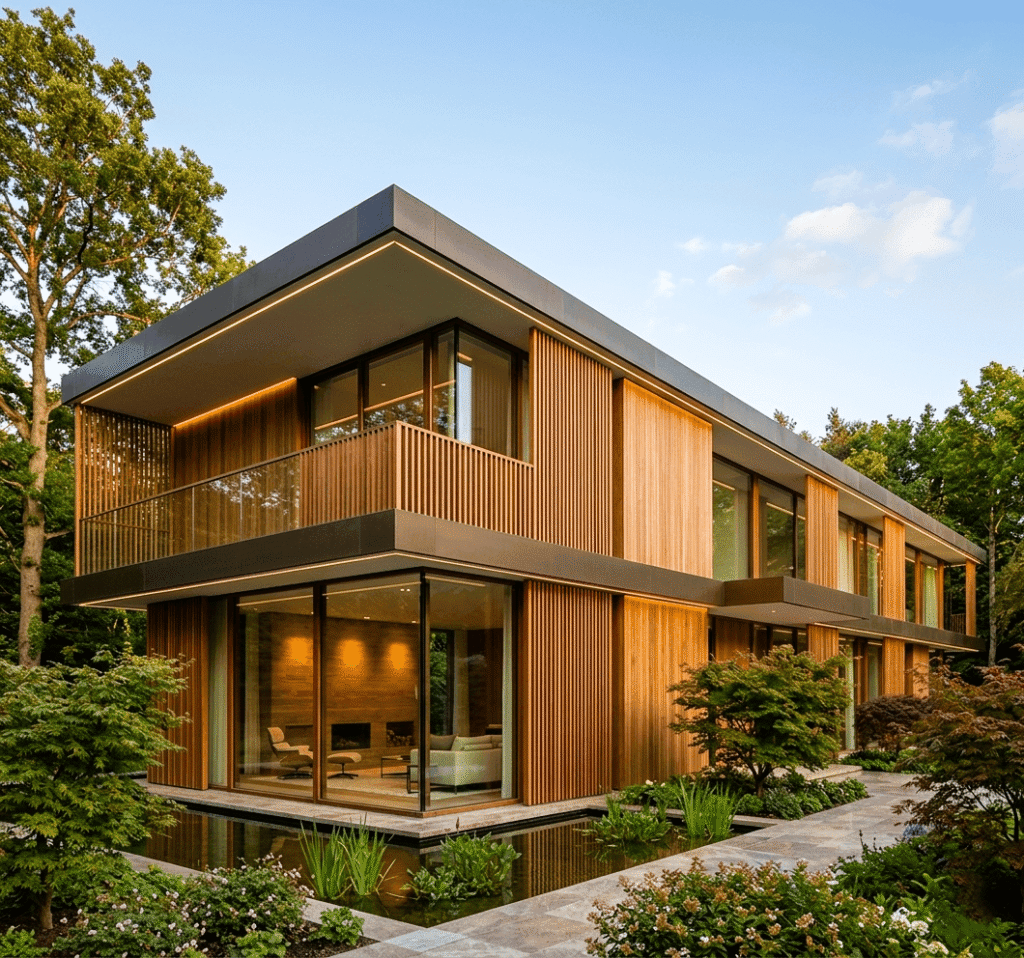
- Natural wood-look HPL panels with maintenance-free performance
- WPC systems for feature façades, ceilings, and louvers
- Profiled terracotta or ceramic slats for solar shading and texture
- Acoustic wood panels for façade-adjacent interiors and soffits
Each material brings different thermal behavior, fire performance, weight, fixing logic, and aesthetic outcomes — which must be aligned early in design development.
2. Ventilation Cavity (Air Gap)
The cavity is the system’s hidden performance engine.
- Hot air rises and exits naturally
- Heat transfer to the building is reduced
- Condensation and trapped moisture are eliminated
- Façade lifespan is significantly extended
This cavity is especially critical in coastal and high-humidity zones such as Dubai, Abu Dhabi, Doha, and Dammam.
3. Substructure & Fixing System
The substructure ensures precision, safety, and long-term stability.
Engineered systems are designed to:
- Accommodate wind loads and building movement
- Maintain alignment under thermal expansion
- Allow panel replacement and access
- Meet fire and civil defense requirements
A well-designed substructure is often the difference between a façade that lasts 10 years and one that performs for 40+ years.
4. Insulation & Weather Barrier
High-performance insulation boards and membranes are essential for:
- Reducing cooling loads
- Meeting regional energy efficiency standards
- Supporting ESG and sustainability goals
Why Ventilated Façades Perform Better in the GCC Climate
1. Superior Thermal Performance & Energy Efficiency
Ventilated façade systems function as a passive cooling layer, significantly reducing heat transfer through the building envelope. By allowing hot air to escape naturally, cooling loads can be reduced by up to 25–30%, depending on façade orientation and material specification — a critical advantage for buildings in hot desert climates.
2. Effective Moisture & Condensation Control
High humidity and temperature fluctuations in the GCC accelerate façade deterioration. Ventilated façades maintain a dry, breathable envelope by continuously expelling trapped moisture, protecting:
- Structural walls
- Insulation systems
- Mechanical fixings and anchors
This improves durability and extends façade lifespan.
3. Fire Safety & GCC Regulatory Compliance
Modern ventilated façade systems are engineered using fire-rated materials, certified fixing solutions, and tested assembly configurations. This ensures full compliance with UAE and GCC Civil Defense regulations, while allowing architects to meet performance and safety requirements without limiting design intent.
4. Architectural Flexibility Without Performance Compromise
Ventilated façades give architects the freedom to combine materials, introduce depth, and integrate functional elements such as louvers, screens, and acoustic panels. Large-format, ribbed, or textured panels can be specified confidently — delivering visual impact without sacrificing structural performance, fire safety, or long-term maintainability.
Most Specified Ventilated Façade Materials in the GCC
Natural Wood Look Panels (Maintenance-Free)
High-pressure laminate panels with natural wood veneer surfaces deliver the warmth of timber without ongoing maintenance. They offer UV stability, moisture resistance, and long-term color performance, making them ideal for hospitality, residential, and mixed-use façades in the GCC climate.
Fire-Rated Fiber Cement Panels
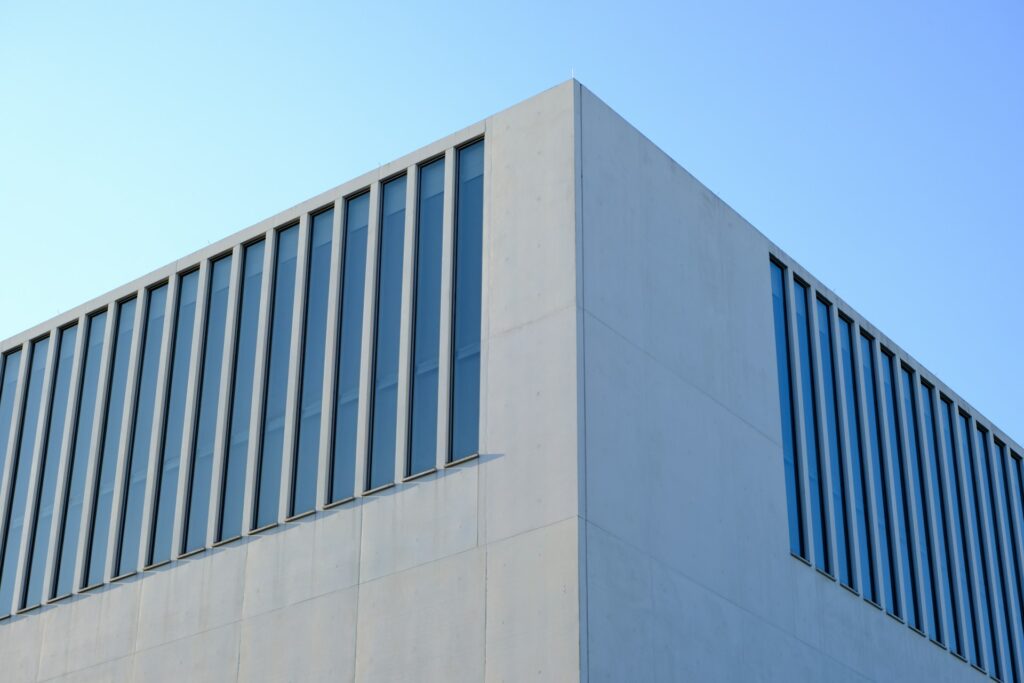
A widely specified solution for education, healthcare, mid-rise residential, and cost-sensitive commercial buildings. High-density fiber cement panels provide non-combustible performance, dimensional stability, and long service life, aligning with GCC fire and durability requirements
Porcelain & XXL Porcelain Façades
Increasingly used on luxury residential towers, retail podiums, and corporate developments, porcelain façades offer color stability, scratch resistance, and minimal water absorption. Large-format and XXL panels support contemporary façade design while maintaining performance.
Sintered Stone & Engineered Stone Cladding
Preferred for premium developments, these systems combine exceptional density and strength with natural stone aesthetics. Compared to solid stone, they offer reduced weight, advanced surface finishes, and greater design flexibility in ventilated façade applications.
WPC Systems for Façades, Ceilings & Louvers
Wood-plastic composite systems are commonly specified for feature façades, soffits, ceilings, and screening elements. They are UAE-climate adapted, low maintenance, cost-effective, and allow easy installation and future replacement.
Terracotta & Profiled Ceramic Façade Systems
Ideal for solar shading façades, cultural projects, and institutional architecture, rear-ventilated ceramic and terracotta slat systems introduce depth, rhythm, and texture while delivering modern thermal and durability performance.
Why Architects Across the GCC Partner with OBRAS International
For over two decades, OBRAS International has specialized exclusively in ventilated façade and cladding solutions tailored to GCC conditions.
Architects and consultants value OBRAS for:
- Deep material knowledge across global façade systems
- Early-stage technical support and detailing
- Fire-rated and certified system selection
- ISO-certified quality processes
- Long-term performance accountability
From specification to execution support, OBRAS acts as a technical façade partner, not just a supplier.
Designing Façades That Perform as Well as They Look
In the GCC, façades are no longer decorative skins — they are climate shields, energy systems, and architectural statements.
Ventilated façade systems allow architects to design boldly, responsibly, and intelligently — without compromise.
If your next project demands performance-driven materials, fire-safe systems, and long-term value, a technically engineered ventilated façade strategy is the smartest place to start.
Explore how the right façade system can elevate your next project — from concept to completion.
People Also Ask
What is the best façade system for hot climates like the GCC?
Ventilated façade systems are the most effective for hot climates due to their ability to reduce heat gain, control moisture, and improve energy efficiency through natural airflow.

Are ventilated façades suitable for high-rise buildings?
Yes. When engineered correctly, ventilated façades perform exceptionally well on high-rise buildings and are widely used across residential and commercial towers in the GCC.
Which façade materials are fire-rated in ventilated systems?
Common fire-rated options include high-density fiber cement panels, porcelain façades, sintered stone, engineered stone, and terracotta systems when installed as part of a certified assembly.
Do ventilated façades require more maintenance?
No. In fact, ventilated façades typically require less maintenance than traditional cladding systems due to reduced moisture exposure and easy panel replacement.
Can multiple façade materials be used in one ventilated system?
Yes. One of the key advantages is the ability to combine materials — such as porcelain, wood-look panels, stone, and louvers — within a single engineered system.