
Designing Silence, Crafting Prestige, and Specifying Performance
In the evolving landscape of high-end workplaces across the UAE and wider GCC, Acoustic Panel Solutions for Luxury Offices in the GCC have moved far beyond technical necessity. They now define how architecture is experienced—how silence is shaped, how conversations are controlled, and how corporate identity is perceived within space.
In cities such as Dubai, Abu Dhabi, Riyadh, and Doha, where architectural ambition meets extreme environmental conditions, acoustic design is no longer an afterthought. It is an integrated layer of spatial intelligence. For architects, developers, and façade consultants, the specification of acoustic systems has become a strategic design decision—one that directly influences user experience, productivity, and brand perception.
The New Language of Acoustic Design in Luxury Workspaces
Contemporary luxury offices across the GCC are no longer defined by visual impact alone. They are defined by sensory balance.
Walk into a premium executive office in Dubai or a corporate headquarters in Riyadh, and the difference is immediate. The harsh reflections of glass, stone, and metal have been replaced with controlled acoustic environments. Spaces feel composed. Conversations feel intentional. Silence is no longer empty—it is designed.
This transformation is driven by advanced acoustic engineering integrated into architectural finishes. Unlike traditional insulation methods, modern systems rely on sound absorption, diffusion, and spatial calibration rather than isolation.
This shift is especially critical in:
- Executive offices requiring confidentiality
- Boardrooms demanding speech clarity
- Open-plan workplaces balancing collaboration and focus
At the core of this evolution lies a simple architectural truth: performance must now be invisible, yet deeply felt.
Why Acoustic Panel Solutions for Luxury Offices in the GCC Matter More Than Ever
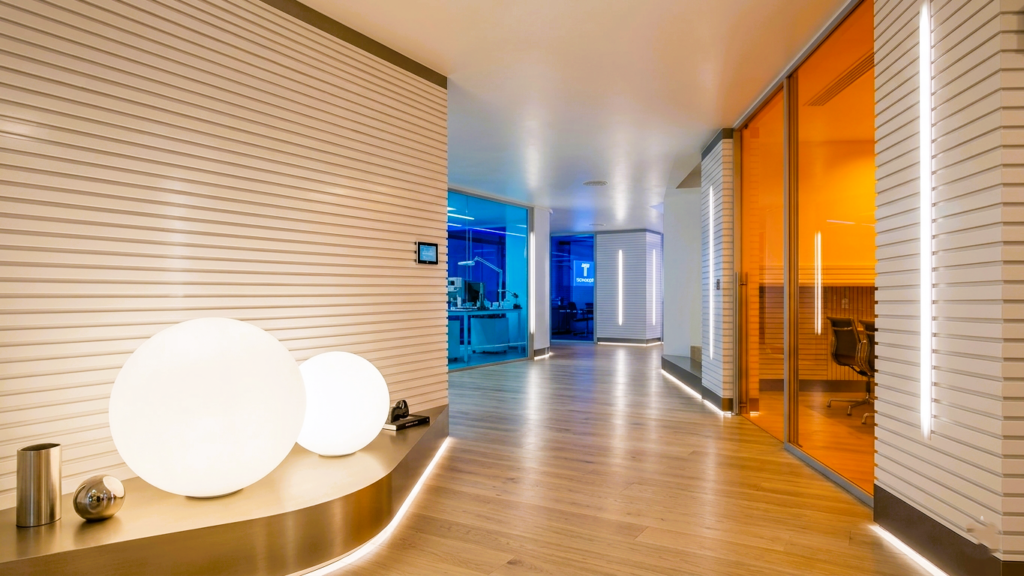
The GCC workplace landscape is undergoing a rapid transformation. Hybrid work models, global corporate expansion, and design-led real estate development have elevated expectations.
Today, Acoustic Panel Solutions for Luxury Offices in the GCC are essential because they directly influence:
- Cognitive comfort and employee productivity
- Acoustic privacy in executive environments
- Brand perception in client-facing spaces
- Architectural coherence in open-plan layouts
In high-performance workplaces, poor acoustics are not just an inconvenience—they are a design failure.
Wood Acoustic Panels: The Benchmark of Luxury Interior Performance
mong all acoustic systems, wood-based solutions have become the preferred specification in premium GCC offices.
Systems such as DECUSTIK wood acoustic panels represent the convergence of craftsmanship and engineering. They are not add-ons—they are architectural surfaces.
These panels combine:
- Precision perforation design
- High-performance acoustic backings
- Natural veneer or engineered wood finishes
- Customisable geometries aligned with design intent
The result is a surface that performs acoustically while contributing materially to architectural identity.
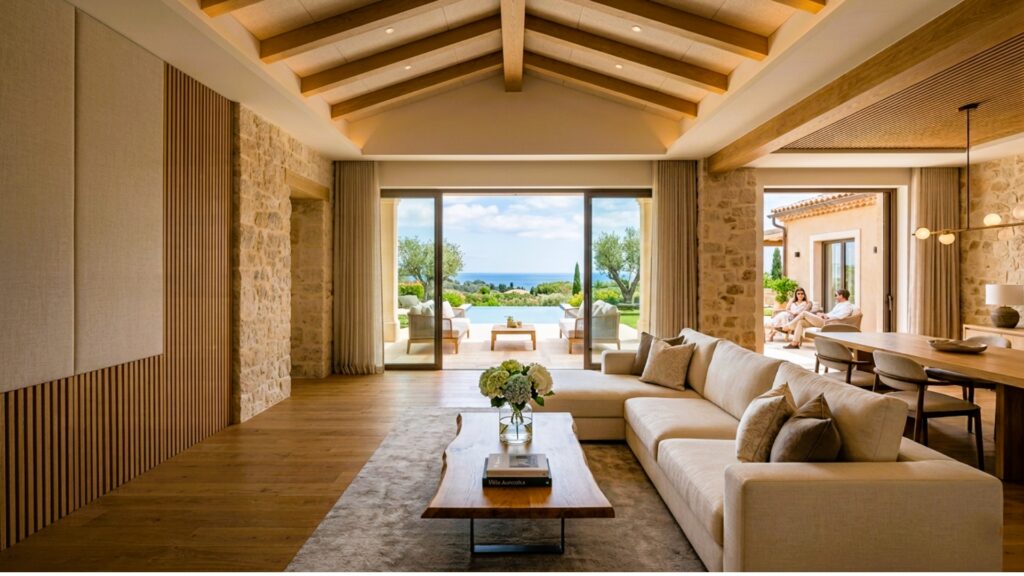
Wood acoustic panels bring something essential to luxury interiors: warmth. In environments dominated by glass and polished stone, they introduce balance—both visually and acoustically.
Understanding Acoustic Performance Beyond Aesthetics
When specifying Acoustic Panel Solutions for Luxury Offices in the GCC, aesthetics alone are not sufficient. Performance must be measurable.
One of the most important metrics is the Noise Reduction Coefficient (NRC).

NRC≥0.75

In premium office environments, an NRC of 0.75 or higher is typically required to ensure effective sound absorption.
However, real acoustic performance is not defined by a single number. It depends on spatial behaviour:
- Boardrooms require controlled reverberation for speech clarity
- Open offices require distributed absorption zones
- Executive suites require balanced privacy without dead acoustics
This is where engineered systems excel. Custom perforation ratios, backing densities, and modular installation strategies allow acoustic performance to be tuned to each architectural condition.
Zoning Strategy: Acoustic Design Across Workplace Typologies
A luxury office is not a single acoustic environment—it is a collection of micro-environments.
Executive Offices: Privacy with Presence
Here, acoustic panels are integrated subtly behind workstations or feature walls. The objective is discretion without visual heaviness.
Boardrooms: Clarity and Control
Ceiling and wall integration ensures speech intelligibility. Reflections are controlled without flattening the spatial experience.
Open-Plan Workspaces: Structured Fluidity
These environments require layered acoustic strategies—wall panels, ceiling systems, and spatial partitioning working together.
Reception Areas: Acoustic Branding
First impressions matter. Acoustic panels in these zones often double as architectural branding elements.
Ceiling Acoustics: The Fifth Façade of Interior Design
In many GCC projects, ceilings are still underutilised in acoustic planning. Yet they are critical to performance.
Untreated ceilings allow sound to propagate freely, amplifying noise in large corporate environments. This is why ceiling-integrated acoustic systems are essential.
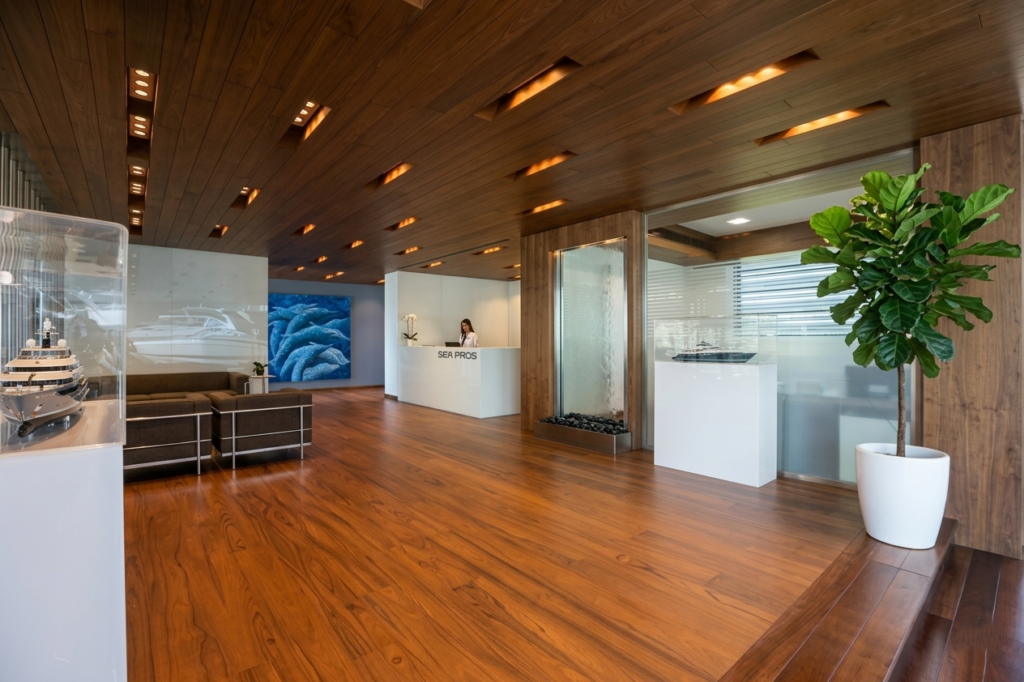
Wood acoustic ceilings—especially when aligned with wall systems—create continuity in material language. The result is a unified acoustic envelope that supports both function and design coherence.
For architects seeking deeper integration, explore our ventilated façade systems to maintain material consistency across interior and exterior envelopes.
Sustainability in Acoustic Specification
Sustainability has become a defining criterion in GCC architecture.
Modern acoustic systems increasingly incorporate:
- FSC-certified timber
- Low-VOC adhesives and finishes
- Recycled acoustic cores
- LEED and Estidama compliance support
For developers targeting green certification in Dubai, Abu Dhabi, or Saudi Arabia, acoustic panels contribute directly to indoor environmental quality credits.
Sustainability in acoustics is no longer optional—it is part of specification responsibility.
Craftsmanship and Customisation: Where Architecture Becomes Detail
In luxury office design, refinement is defined by detail precision.
Acoustic panels today are fully customisable:
- Perforation patterns aligned with architectural grids
- Veneer finishes matched to joinery and flooring
- Seamless panel transitions to avoid visual fragmentation
- Bespoke sizing for large-scale corporate environments
This level of detail transforms acoustic systems into architectural instruments rather than functional layers.
It is also where collaboration becomes essential—between architect, façade consultant, and technical supplier.
GCC Climate Considerations in Acoustic Design
Specifying Acoustic Panel Solutions for Luxury Offices in the GCC requires regional intelligence.
Extreme heat, humidity variations, and continuous HVAC operation demand materials that are:
- Dimensionally stable
- Moisture-resistant
- Long-term durable under thermal stress
Engineered wood acoustic systems designed for global performance standards must be adapted for GCC environmental conditions.
This is where experience becomes critical. With over two decades of regional expertise, Obras International supports architects and developers with specification accuracy, technical validation, and material selection aligned with climate performance.
Explore our Obras project portfolio to see real-world applications across the GCC.
From Acoustic Material to Architectural Experience
The true success of acoustic design is not visibility—it is invisibility.
When Acoustic Panel Solutions for Luxury Offices in the GCC are correctly specified, space becomes effortless:
- Conversations feel natural
- Focus becomes intuitive
- Silence feels intentional rather than absent
At this level, acoustics are no longer a layer of construction—they are part of spatial identity.
Specifying Silence as Architecture
Luxury office design in the GCC is entering a more refined phase—one where performance, materiality, and experience are inseparable.
Acoustic systems are no longer technical insertions. They are architectural statements.
For architects and developers shaping the next generation of workplaces in Dubai, Abu Dhabi, Riyadh, and beyond, the opportunity lies in redefining acoustics as design intent—not correction.
With advanced systems like DECUSTIK wood acoustic panels and the technical expertise of Obras International, silence becomes not just controlled—but composed.
Because in modern architecture, silence is not empty space.
It is designed space.
For specification support, technical documentation, or project consultation on Acoustic Panel Solutions for Luxury Offices in the GCC, connect with the Obras International team to integrate performance-led acoustic systems into your next project.
What are acoustic panel solutions for luxury offices in the GCC?
Acoustic panel solutions for luxury offices in the GCC are high-performance architectural systems designed to control sound within premium workspaces. They use materials such as wood, fabric, or fibre-based cores to absorb and diffuse sound, improving speech clarity, reducing echo, and enhancing overall spatial comfort. In high-end offices across Dubai, Abu Dhabi, and Saudi Arabia, these panels are integrated as part of the interior design rather than added as secondary elements.
Why are acoustic panels essential in modern GCC office design?
Acoustic panels are essential because contemporary office environments in the GCC rely heavily on glass, stone, and open-plan layouts, which amplify noise. Without proper acoustic treatment, spaces can become disruptive and inefficient. Acoustic panel solutions help create balanced environments that support productivity, ensure privacy in executive areas, and elevate the overall user experience in luxury workplaces.
What is the ideal NRC rating for office acoustic panels?
For luxury office environments, an NRC (Noise Reduction Coefficient) of 0.75 or higher is generally recommended. This means the panel absorbs at least 75% of sound energy. However, optimal performance depends on correct placement, panel coverage, and integration with ceilings and walls to ensure consistent acoustic comfort across different zones such as boardrooms, open offices, and meeting spaces.
Which materials are best for acoustic panel solutions in the GCC?
Wood acoustic panels are widely considered the best choice for luxury offices in the GCC due to their balance of performance and aesthetics. Systems like engineered wood panels with perforations and acoustic backing provide effective sound absorption while adding warmth and architectural depth. Other materials, such as fabric-wrapped panels and fibre cement-based systems, may also be used depending on design intent and project requirements.
How do acoustic panels contribute to sustainability in GCC projects?
Acoustic panels contribute to sustainability by improving indoor environmental quality and supporting green building certifications such as LEED and Estidama. Many high-performance systems use FSC-certified wood, low-VOC finishes, and recycled acoustic cores. In the GCC, where energy efficiency and occupant comfort are critical, properly specified acoustic solutions also enhance HVAC efficiency by stabilizing interior environments.