
Choosing façade materials in the UAE is no longer a purely architectural decision—it is a high-impact performance strategy that defines how a building behaves over time. In 2026, architects and consultants across Dubai, Abu Dhabi, and the wider GCC are required to balance climate resilience, fire safety compliance, sustainability targets, and lifecycle cost efficiency—all within one of the most demanding environmental contexts in the world.
With the rapid evolution of modern cladding systems in the UAE, façade specification has shifted from aesthetic preference to performance-driven engineering. The buildings that succeed today are not those that look impressive on day one, but those that continue to perform, comply, and retain value after 10–20 years of exposure to extreme heat, humidity, and environmental stress.
This extended, industry guide combines technical insight with practical specification strategy—positioning Obras International as a trusted façade partner for architects seeking high-performance, compliant, and future-ready solutions across the GCC.
Why Façade Material Selection Is Critical in the UAE
The UAE climate is not simply “hot”—it is structurally aggressive. Façades are exposed to continuous thermal cycling, intense UV radiation, coastal humidity, and abrasive sandstorms. These factors act simultaneously, placing enormous stress on building envelopes.
Incorrect façade material selection can lead to excessive heat gain, increased energy consumption, façade deterioration, and even regulatory non-compliance. In high-rise projects, failure to meet fire safety standards can result in rejection by authorities, project delays, and costly redesigns.
This is why façade specification in the UAE must be approached as a system-level decision, not a material-only choice. Architects must evaluate how materials perform within complete assemblies—considering insulation, substructure, ventilation, and compliance as a unified strategy.
The Key Factors That Define Façade Material Selection in the UAE
Façade materials must respond intelligently to the environmental and regulatory conditions of the GCC. In 2026, five core factors define successful façade specification.
The first is extreme heat and solar radiation. Surface temperatures can exceed 70°C, causing expansion, contraction, and long-term stress on materials. Without proper design, this leads to cracking, warping, and joint failure.
Humidity and coastal exposure introduce risks of condensation, corrosion, and material degradation. This is particularly critical in cities like Dubai, where saline air accelerates deterioration in poorly specified systems.
Fire safety compliance is non-negotiable. Materials must meet A2-s1,d0 classification or equivalent and comply with the UAE Fire & Life Safety Code. This requirement alone eliminates many traditional cladding options.
Building typology also plays a major role. High-rise buildings require fully non-combustible systems, while villas and low-rise projects allow more flexibility—but still demand durability and climate resistance.
Finally, lifecycle cost must be considered over initial cost. A façade that appears economical at installation may result in significantly higher maintenance and replacement costs over time.
The 2026 Shift: From Material Selection to Façade System Thinking
One of the most important changes in façade design across the GCC is the move from material-based decisions to system-based thinking. Architects are no longer specifying panels in isolation—they are designing integrated façade systems that deliver measurable performance.
This includes ventilated façade assemblies, thermal break substructures, and moisture management strategies that work together to reduce heat gain, prevent condensation, and extend material lifespan.
The façade is now treated as a performance layer of the building envelope, directly influencing energy consumption, indoor comfort, and long-term asset value.
Best Façade Materials in the UAE (2026 Performance Comparison)
Fibre Cement Panels: The Leading Specification Choice
Fibre cement panels have emerged as one of the most reliable façade materials in the UAE due to their balance of durability, fire safety, and aesthetic versatility.
When combined with ventilated façade systems, fibre cement panels deliver exceptional thermal efficiency, making them a preferred choice for architects focused on performance-driven design.
Through Obras International, architects can access advanced fibre cement façade solutions engineered specifically for GCC conditions, ensuring both compliance and design flexibility.
Ventilated Façade Systems: The Performance Standard
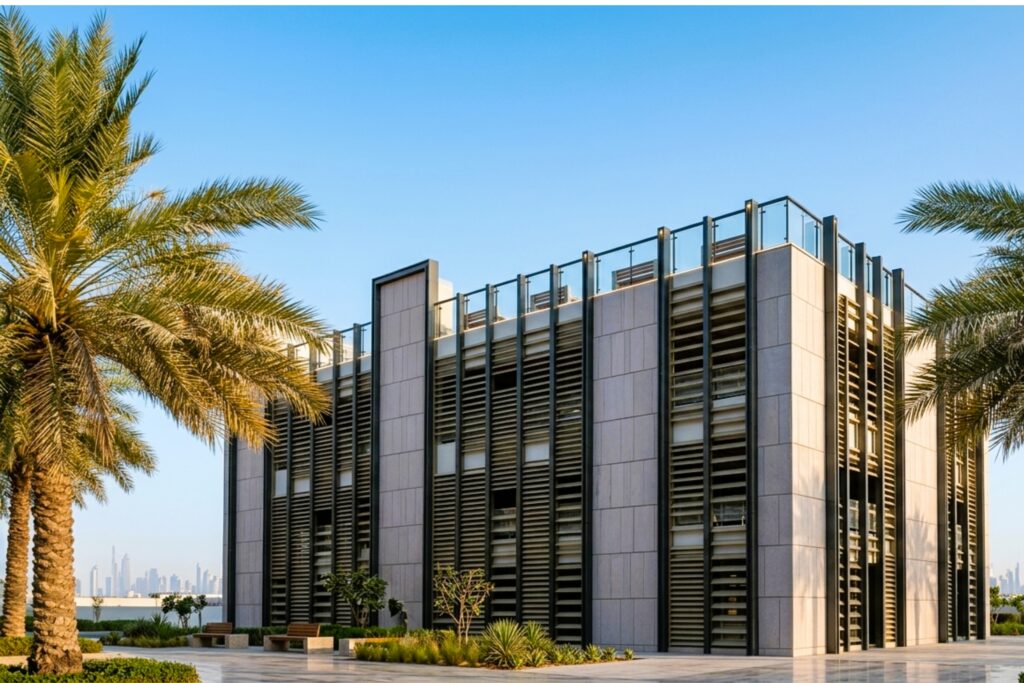
Ventilated façades are not a material—they are a system. And in 2026, they are rapidly becoming the default specification for high-performance buildings in the UAE.
By creating an air cavity between the cladding and the building envelope, ventilated systems allow heat to dissipate before reaching the interior. This significantly reduces cooling loads and improves energy efficiency.
At the same time, these systems manage moisture effectively, preventing condensation and extending the lifespan of façade materials. For architects seeking long-term performance, ventilated façades are essential.
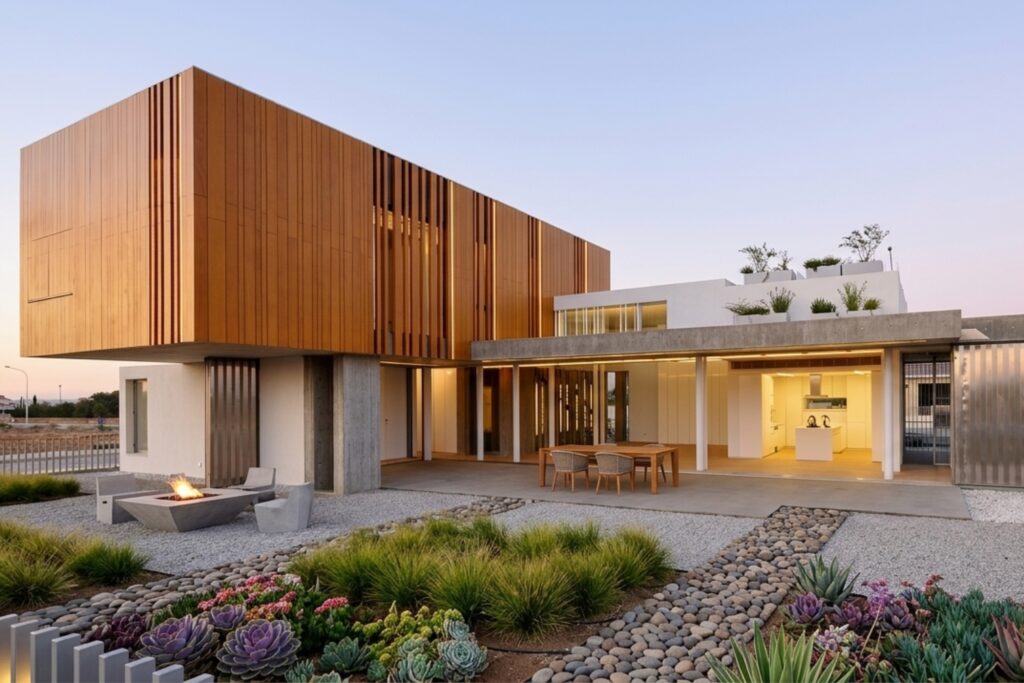
Architectural Composite Wood: Natural Aesthetics with Engineered Performance
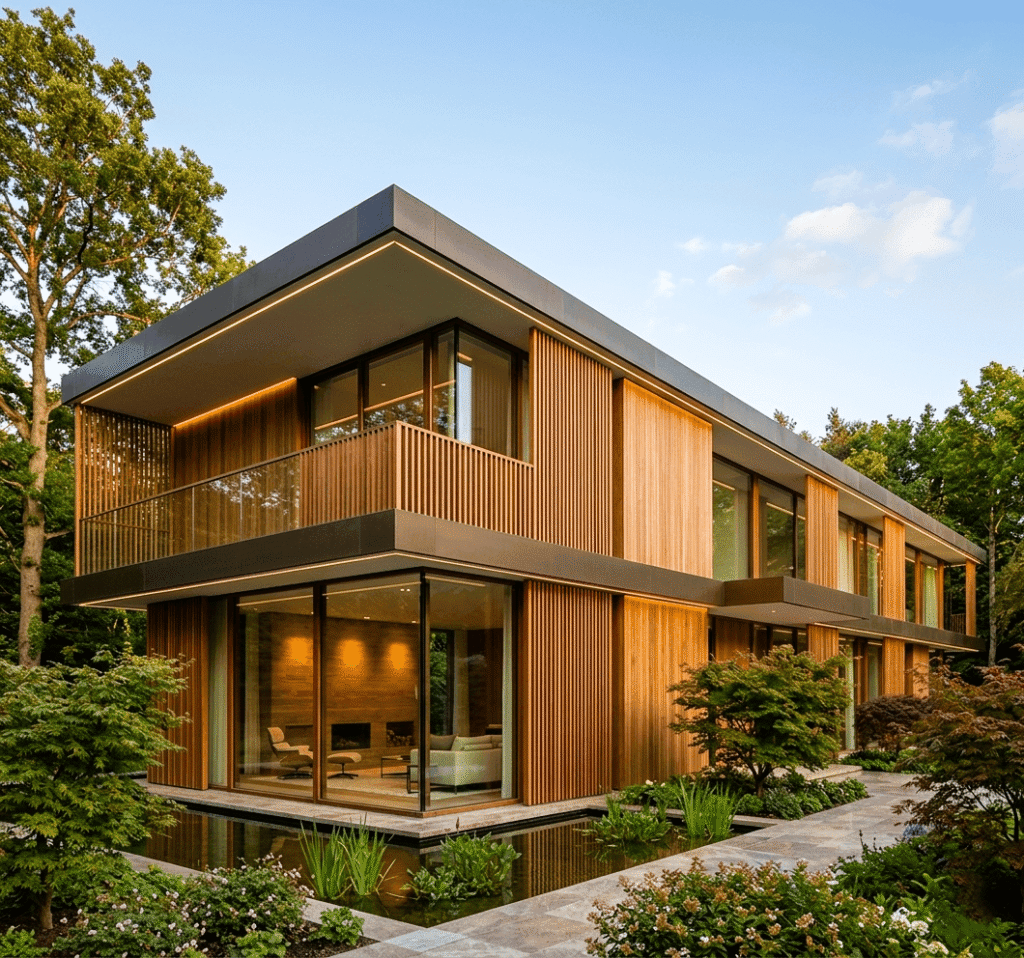
Composite wood cladding offers the warmth of natural timber while addressing the durability challenges associated with organic materials in harsh climates.
These systems are resistant to moisture, insects, and UV exposure, making them suitable for villas, hospitality projects, and mixed-use developments. Sustainable options are also available, aligning with green building requirements.
High-Pressure Laminate (HPL): Decorative Versatility
HPL panels are commonly used for decorative façade applications due to their wide range of finishes and cost-effectiveness. While they offer moderate durability, they must be carefully evaluated for fire performance and long-term exposure in the UAE climate.
They are best suited for low-rise or secondary façade elements where performance demands are less critical.
Step-by-Step Guide: How to Choose the Right Façade Material in the UAE
The process of selecting façade materials should be structured, strategic, and aligned with project goals.
The first step is to define the project type. High-rise buildings require non-combustible, A2-rated materials and full system compliance. Villas offer more flexibility but still require durable, climate-resistant solutions. Commercial projects demand a balance between performance, compliance, and design intent.
The second step is to prioritize fire safety. Every material and system must comply with UAE Fire & Life Safety Code requirements. This includes not only the cladding but also insulation and substructure components.
Next, architects must evaluate climate performance. Materials should be tested for UV resistance, thermal stability, moisture tolerance, and abrasion resistance. This ensures long-term durability in GCC conditions.
Integration with ventilated façade systems should also be considered. This enhances thermal performance, improves moisture control, and significantly extends the lifespan of the façade.
Finally, lifecycle cost analysis should guide decision-making. Maintenance requirements, replacement cycles, and energy savings must all be factored into the overall cost evaluation.
Façade Material Selection Matrix (Quick Decision Framework)
In practical terms, façade selection can be aligned with project typology and performance priorities.
High-rise developments typically benefit from fibre cement panels integrated into ventilated façade systems, where fire safety and thermal performance are critical.
Villa projects often use a combination of composite wood and fibre cement, balancing aesthetic expression with durability.
Commercial buildings favor fibre cement or metal cladding within ventilated systems to achieve both compliance and performance efficiency.
Hospitality projects frequently adopt hybrid solutions, combining composite wood with high-performance materials to achieve both design impact and sustainability goals.
Common Façade Material Selection Mistakes in the UAE
Despite advancements in façade technology, several common mistakes continue to impact project outcomes.
One of the most frequent errors is selecting materials based solely on upfront cost. This often leads to higher maintenance expenses and reduced lifespan.
Ignoring fire safety ratings is another critical issue. Non-compliant materials can result in project rejection and costly redesigns.
Failing to incorporate ventilated façade systems limits thermal performance and accelerates material degradation.
Late-stage substitutions, often driven by budget constraints, can compromise both compliance and performance, leading to long-term risks.
Avoiding these mistakes requires early-stage planning and collaboration with experienced façade specialists.
How Obras International Supports Façade Specification
Obras International plays a strategic role in helping architects and consultants navigate the complexities of façade material selection in the UAE.
This includes recommending high-performance façade materials tailored to project conditions, providing A2-rated compliant solutions, and assisting in the design of ventilated façade systems.
Obras also ensures alignment with UAE regulations by offering technical documentation, material samples, and expert consultation—enabling architects to make informed, confident decisions.
By bridging global material innovation with local expertise, Obras ensures that façade designs are not only visually compelling but also technically sound and regulation-ready.
A Performance-First Approach to Façade Design
In 2026, façade material selection in the UAE is defined by performance, compliance, and long-term value. Architects must move beyond aesthetic considerations and adopt a holistic approach that integrates thermal efficiency, fire safety, durability, and sustainability.
The most successful projects are those that treat the façade as a high-performance system—one that protects, insulates, and enhances the building over its entire lifecycle.
With the right strategy and the right partner, architects can deliver façades that meet the demands of the GCC environment while achieving design excellence.
If you are designing a project in the UAE or GCC, façade selection should not be left to chance. The right materials and systems can define the success of your building for decades.
Obras International offers expert façade specification support, high-performance compliant materials, and project-specific consultation tailored to architects and consultants.
Request material samples, explore advanced cladding systems, and connect with façade experts who understand both global standards and local challenges.
Your façade is more than a surface—it is your building’s performance engine.