



In the UAE and wider GCC construction landscape, façade fire safety compliance is no longer a secondary design consideration. It is a defining regulatory framework that directly determines whether a project is approved, delayed, redesigned, or rejected. In 2026, the UAE façade fire safety code has become one of the most critical specification drivers for architects, façade consultants, and developers working on high-rise, commercial, hospitality, and mixed-use developments across Dubai, Abu Dhabi, and the broader Gulf region.
For professionals specifying external cladding systems, ventilated façades, or modern architectural envelopes, understanding the UAE Fire & Life Safety Code of Practice is essential. It governs material classification, façade system behavior under fire exposure, and the approval pathways required by Civil Defense authorities. This guide by Obras International provides a comprehensive, specification-focused interpretation of façade fire safety regulations, with emphasis on A2-rated materials, ventilated façade systems, and compliance pathways aligned with UAE Civil Defense requirements.
Understanding the UAE Façade Fire Safety Code of Practice
The UAE Fire & Life Safety Code of Practice is the primary regulatory framework governing fire performance across all building typologies in the United Arab Emirates. It is issued and enforced through Civil Defense authorities and applies to both new developments and refurbishment projects, including façade upgrades and cladding replacements.
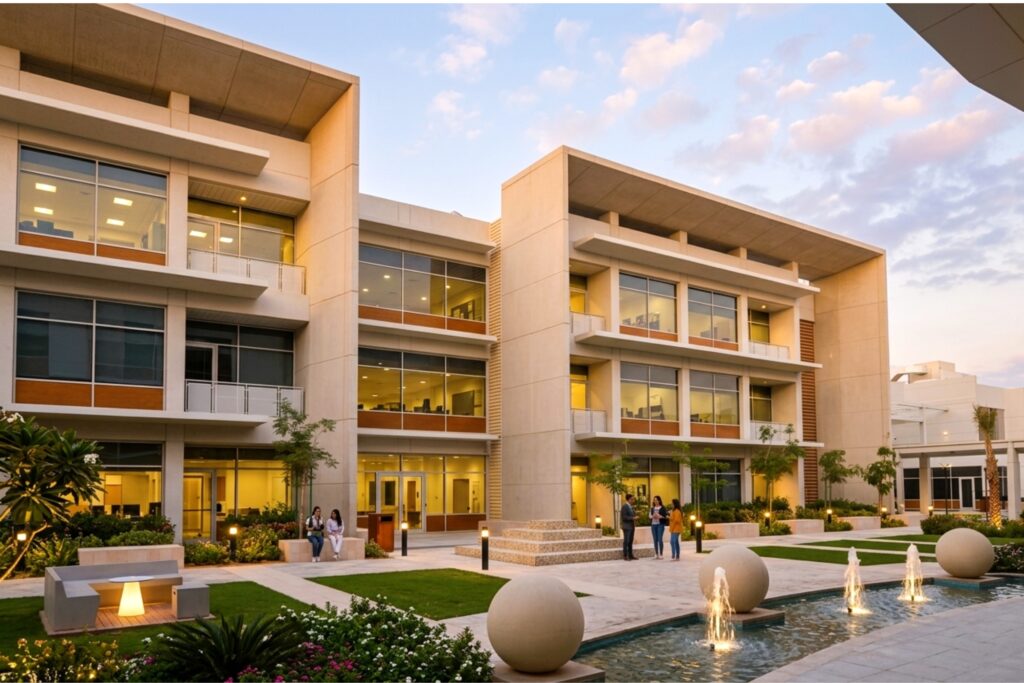
The code defines how external wall systems must behave during fire exposure, including limitations on flame spread, smoke development, and material combustibility. It also establishes mandatory certification requirements for façade materials and system assemblies, ensuring that fire risk is controlled at both material and system levels.
A critical aspect of the code is that it does not evaluate materials in isolation alone; it evaluates complete façade systems. This includes insulation layers, fixing mechanisms, cavity barriers, and cladding finishes working together as a unified fire-resistant envelope.
The official regulatory framework can be referenced through UAE Civil Defense documentation and Dubai Civil Defense preventive safety regulations.
Why Façade Fire Compliance Defines Project Approval in the UAE
The UAE construction ecosystem is characterized by rapid urban growth, high-rise density, and extreme environmental exposure. These conditions have historically elevated façade fire risk concerns, particularly in tall residential and commercial towers. As a result, regulatory authorities have progressively tightened fire safety requirements to ensure that façade systems contribute minimally to fire propagation.
Today, façade fire compliance is directly linked to project approvals, construction timelines, and occupancy certification. Civil Defense authorities enforce strict verification processes that require full documentation of material fire ratings, system testing reports, and installation methodologies.
Any deviation from approved specifications can lead to significant consequences, including project suspension, redesign mandates, or full rejection of façade systems. In commercial terms, non-compliance can also create contractual disputes between developers, consultants, and contractors, making early-stage specification alignment essential.
Fire Performance Classification for Façade Materials (EN 13501-1)
The UAE predominantly follows the European fire classification system EN 13501-1 for evaluating façade materials. This system classifies materials based on combustibility, smoke production, and flaming droplet behavior.
At the highest level, A1 materials are fully non-combustible and represent the safest category. A2 materials are considered to have very limited combustibility and are widely accepted for façade applications in high-rise construction. Below this threshold, B, C, and D classifications represent increasing levels of combustibility and are subject to stricter restrictions depending on building height and occupancy type.

Among these classifications, A2-s1,d0 has become the preferred benchmark for façade systems in the UAE due to its balanced performance profile. It ensures minimal fire contribution, low smoke emission, and no flaming droplets, making it suitable for complex architectural façades exposed to vertical fire spread risks.
What A2-s1,d0 Means in Real Façade Performance Terms
The classification A2-s1,d0 is not simply a label; it represents a measurable fire performance standard that directly impacts occupant safety and building behavior during fire events.
The “A2” component indicates that the material has very limited combustibility under fire exposure. The “s1” classification confirms that smoke production is minimal, which is critical for safe evacuation conditions in high-rise buildings where smoke inhalation is often a primary hazard. The “d0” rating ensures that the material does not produce flaming droplets or particles that could contribute to fire spread across façade surfaces or lower floors.
When integrated into ventilated façade systems, A2-rated materials help maintain compartmentalization of fire zones, reduce vertical fire propagation risk, and support safe evacuation pathways by limiting smoke density in escape routes.
Approved Façade Material Systems in UAE & GCC Projects
Across the UAE construction market, several façade material systems are widely recognized for compliance with fire safety regulations when correctly specified and installed as part of tested assemblies.
Fibre cement panels represent one of the most commonly approved façade solutions due to their A2 fire rating, durability under GCC climatic conditions, and compatibility with ventilated façade systems. These systems are frequently used in residential towers, commercial buildings, and institutional developments where both aesthetic flexibility and compliance are required. Obras International provides engineered façade solutions in this category through its fibre cement systems portfolio.
Metal cladding systems, including aluminium and steel-based façades, are also widely used when specified with non-combustible cores and certified installation systems. These materials offer architectural flexibility while maintaining compliance when correctly detailed.
Fire-rated insulation materials, particularly mineral wool systems, play a critical role in ensuring full façade compliance. These materials act as passive fire barriers within façade cavities and are essential in ventilated façade assemblies where vertical fire spread risk must be controlled.
Restricted Façade Materials and Compliance Risks
Certain façade materials remain restricted or require additional certification due to their combustibility characteristics. Composite panels with polyethylene cores, non-certified cladding systems, and materials with lower fire ratings than A2 are subject to strict regulatory scrutiny in the UAE.
In high-rise applications, such materials may be entirely prohibited or require full-scale system testing before approval. Civil Defense authorities assess not only material classification but also how materials behave within complete façade assemblies under fire conditions.
Failure to comply with these requirements can result in approval delays, redesign costs, and in some cases, complete rejection of façade systems during construction review stages.
UAE Civil Defense Façade Approval Process Explained
Façade fire compliance in the UAE follows a structured approval process that ensures all external wall systems meet required safety standards before installation.
The process begins with material selection, where architects and consultants must ensure that all specified components meet A2 fire classification requirements or higher. This is followed by system-level testing, where façade assemblies are evaluated for fire propagation resistance and structural behavior under fire exposure.
Once testing is completed, detailed documentation including certification reports, technical datasheets, and compliance declarations must be submitted to Civil Defense authorities. This documentation is reviewed as part of the formal approval process.
Final approval is granted only after successful verification and, in some cases, site inspections to ensure installation aligns with approved specifications.

Ventilated Façade Systems and Fire Safety Engineering
Ventilated façade systems are widely used across the UAE due to their performance advantages in thermal efficiency and architectural expression. However, they also introduce specific fire safety considerations due to the presence of air cavities between cladding layers and structural walls.
One of the primary risks associated with ventilated façades is the chimney effect, where fire can spread rapidly through vertical cavities if not properly controlled. To mitigate this risk, façade systems must incorporate fire barriers at strategic intervals, ensuring compartmentalization of vertical and horizontal cavity spaces.
Non-combustible insulation materials are also essential in preventing fire propagation within façade assemblies. When correctly designed, ventilated façade systems fully comply with UAE fire safety regulations while delivering high-performance building envelopes suited to extreme climatic conditions.
Common Façade Fire Compliance Mistakes in GCC Projects
Despite clear regulatory frameworks, several recurring compliance mistakes continue to affect façade projects across the GCC. One of the most common issues is the substitution of specified materials with lower-cost alternatives that do not meet fire classification requirements.
Another frequent challenge is the assumption that individual material certification is sufficient, without considering full system testing requirements. In reality, façade compliance is determined at system level rather than component level.
Inadequate detailing of fire barriers within façade cavities also contributes to compliance failures, particularly in complex architectural geometries. Additionally, late-stage material substitutions during construction often result in approval delays and redesign requirements.
Ensuring Façade Fire Compliance from Design Stage
Achieving compliance in UAE façade projects requires early integration of fire safety considerations into the design and specification process. Architects and consultants must clearly define A2-rated material requirements within project specifications to avoid ambiguity during procurement.
Using tested façade systems rather than isolated components significantly improves compliance reliability, as system-level certification aligns with Civil Defense evaluation criteria. Early coordination with façade specialists ensures that design intent is maintained while meeting regulatory requirements.
Continuous alignment with updated Civil Defense guidelines is also essential, as fire safety codes are periodically revised to reflect evolving safety standards and construction technologies.
Fire Safety vs Architectural Performance in Façade Design
Modern façade design in the UAE must balance fire safety compliance with architectural performance requirements. This includes thermal efficiency, durability under high solar exposure, resistance to humidity and sand abrasion, and long-term maintenance efficiency.
Materials such as fibre cement panels integrated into ventilated façade systems provide a balanced solution that meets fire safety requirements while supporting architectural expression and environmental performance. This dual performance requirement is now a defining characteristic of contemporary façade engineering across the GCC.
Fire Safety as the Core of UAE Façade Specification in 2026
In 2026, façade fire safety compliance is not an optional consideration but a fundamental requirement shaping architectural design, material selection, and construction approval processes across the UAE and GCC. The adoption of A2-rated materials, adherence to UAE Fire & Life Safety Code requirements, and implementation of tested façade systems are essential for delivering safe, approved, and high-performance buildings.
For architects and developers, early-stage compliance integration is the most effective strategy to ensure project success, reduce risk, and maintain design integrity while meeting regulatory expectations.