
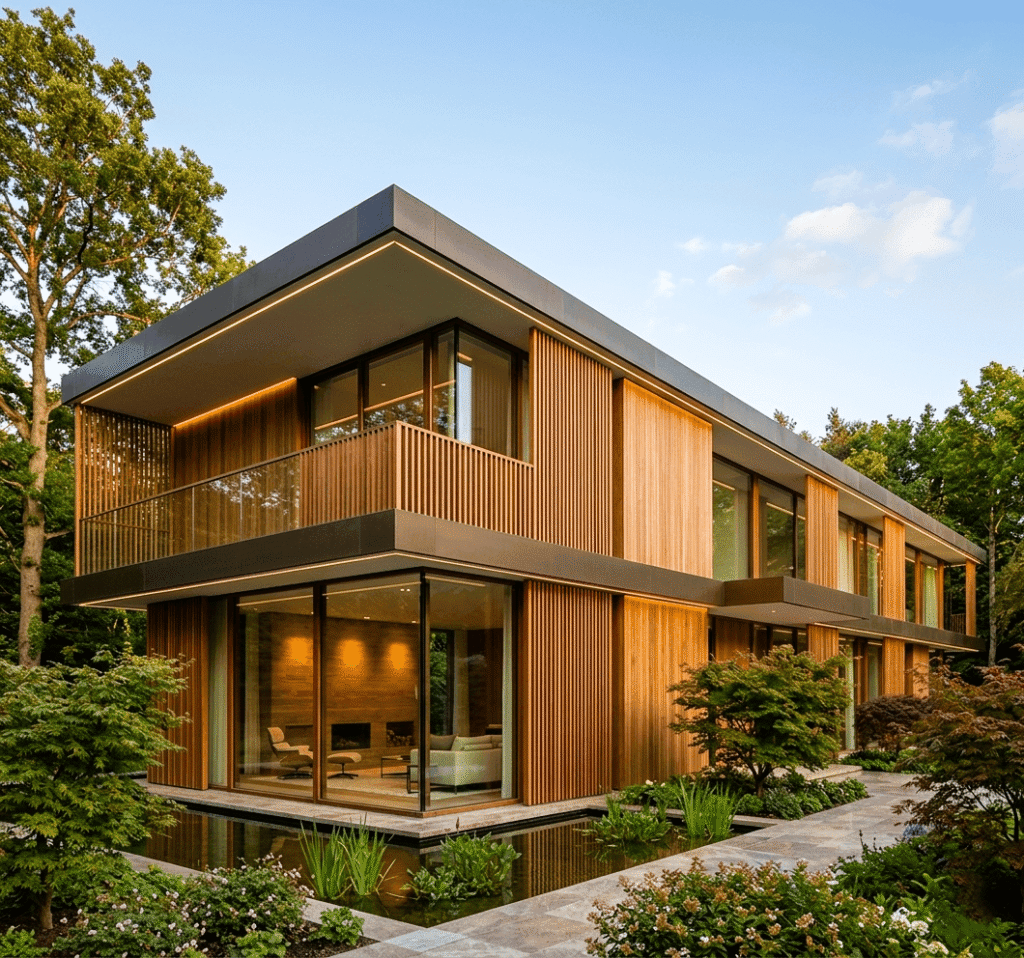
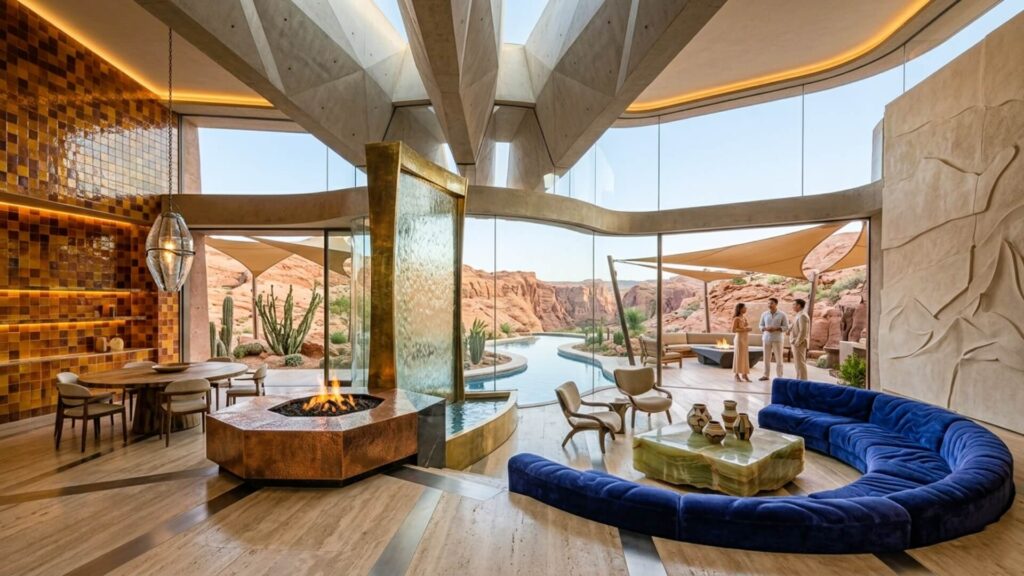
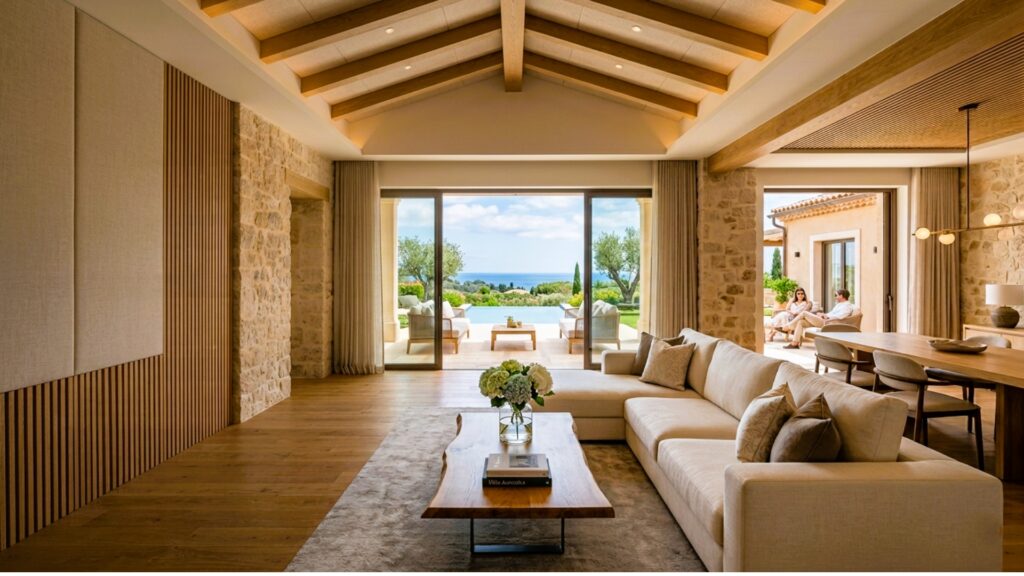
Top façade design trends in the UAE & GCC for 2026 are no longer shaped by visual expression alone—they are defined by performance, sustainability, and strict regulatory alignment. Across Dubai, Abu Dhabi, and the wider GCC, architects and façade consultants are rethinking the building envelope as a high-performance system rather than a surface treatment.
As climate intensity increases and regulatory frameworks evolve, the façade becomes a critical interface between architecture and environment. The demand is clear: modern cladding solutions in the UAE must deliver thermal efficiency, fire safety compliance, and long-term durability—without compromising design intent.
This shift marks a new era in façade thinking—where material intelligence and engineering precision define architectural value.
What Are the Key Façade Design Trends in the UAE & GCC for 2026?
The top façade design trends in the UAE & GCC for 2026 reflect a deeper integration of material science, environmental performance, and architectural minimalism.
Architects across the Middle East are increasingly specifying:
High-performance ventilated façade systems that respond to extreme heat,
Advanced fibre cement cladding with non-combustible properties,
Sustainable façade strategies aligned with Estidama and LEED frameworks,
Monolithic, texture-driven exterior finishes,
Hybrid façade compositions combining multiple material systems
These trends are not aesthetic preferences—they are responses to climate, compliance, and lifecycle performance expectations in the GCC.
Why Façade Strategy Defines Building Performance in the GCC
In the UAE and Saudi Arabia, façade design directly impacts how a building performs over time. The external envelope determines thermal behavior, energy consumption, and long-term operational efficiency.
Poor façade specification often leads to excessive heat gain, increased HVAC loads, and accelerated material degradation. More critically, non-compliant materials can create fire safety risks and regulatory delays.
A well-engineered façade strategy ensures:
- Improved indoor thermal comfort despite extreme outdoor temperatures
- Reduced energy demand aligned with UAE sustainability targets
- Compliance with fire and life safety regulations
- Lower lifecycle maintenance costs
For consultants and developers, façade decisions made early in the design phase often define the success of the entire project.
Benefits of Modern Cladding Systems in the UAE
Thermal Efficiency & Energy Reduction: Modern façade systems are designed to mitigate solar heat gain, significantly improving building energy performance. In high-exposure environments like Dubai, this directly reduces cooling demand and operational costs.
Fire Safety Compliance: Fire-rated materials—particularly A2-s1,d0 classified systems—are increasingly specified across the UAE to meet stringent Civil Defense requirements.
Durability in Harsh GCC Climates: Façade materials must withstand UV radiation, humidity, and sand abrasion. High-performance cladding systems are engineered for longevity under these conditions.
Design Flexibility for Architects: Advanced façade materials allow for refined detailing, natural textures, and seamless surfaces—supporting both minimalist and complex architectural expressions.
Façade Regulations & Compliance in the UAE & GCC
Façade design in the region must align with strict regulatory frameworks, including:
- UAE Fire & Life Safety Code of Practice
- Civil Defense façade compliance requirements
- ASTM and EN testing standards
- Estidama and LEED sustainability guidelines
Compliance is not optional. It is a core component of façade specification that directly influences project approvals, timelines, and safety performance.
Best Façade Systems for UAE Projects (Quick Comparison)
| System | Fire Rating | Durability | Best Use |
| Fibre Cement | A2 | High | Commercial / Residential |
| Ventilated Façade | A2 | Very High | High-rise Developments |
| Composite Wood | B/A2 (varies) | Medium | Hospitality / Retail |
Top Façade Materials Dominating GCC Projects in 2026
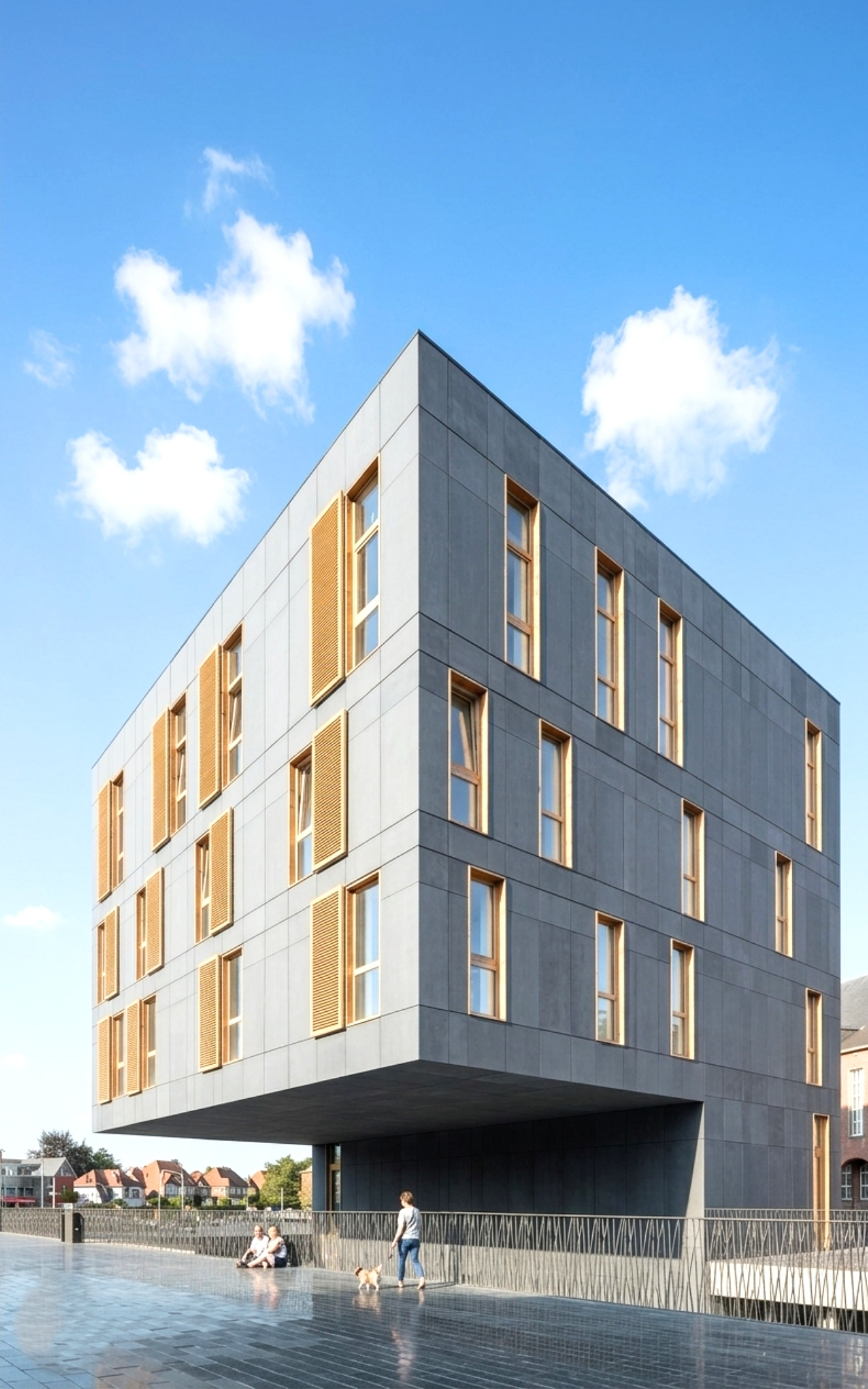
Fibre Cement Panels: The Benchmark for Performance
Fibre cement panels are at the forefront of top façade design trends in the UAE & GCC for 2026. Their non-combustible composition and refined surface quality make them a preferred choice for architects seeking both safety and aesthetics.
” These panels offer A2-s1,d0 fire classification, high resistance to UV exposure and moisture, and a natural, raw material expression suited to contemporary architecture. Their compatibility with ventilated façade systems further enhances their performance”
Used across commercial towers in Dubai and institutional projects in Abu Dhabi, fibre cement enables a balance between durability and design clarity.
Explore more through Obras’ fibre cement cladding solutions.
Ventilated Façade Systems: Performance Through Layering
Ventilated façade systems are rapidly becoming the standard for high-performance buildings across the GCC. By introducing a continuous air cavity between the cladding and structure, these systems reduce heat transfer and prevent moisture accumulation.
In extreme climates, this layered approach significantly improves thermal efficiency and façade longevity.
A typical system includes structural support, insulation, an air cavity, and external cladding—each layer contributing to overall performance.
For deeper technical insight, visit Obras’ ventilated façade systems page.
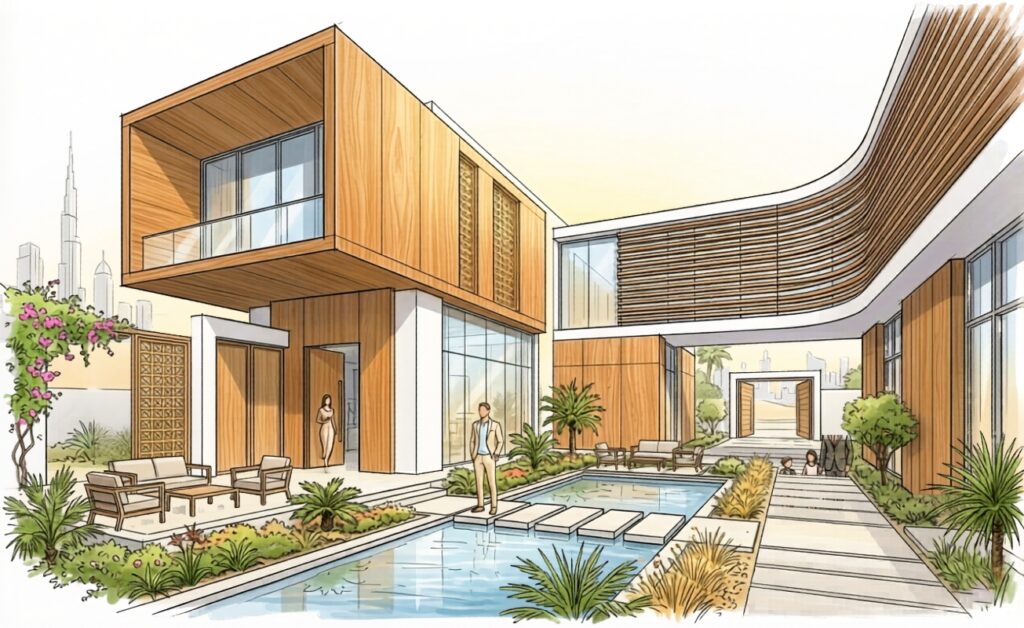
Architectural Composite Wood: A Sustainable Expression
As sustainability becomes central to design strategy, composite wood materials are gaining traction in hospitality and residential projects.
They provide the warmth of natural timber without the maintenance challenges associated with organic materials. Resistant to moisture, UV exposure, and insects, composite wood supports biophilic design while aligning with environmental standards.
This material is particularly relevant for projects targeting green building certifications in the UAE and Saudi Arabia.
Hybrid Façade Systems: Material Intelligence in Design
Hybrid façades represent one of the most sophisticated trends in GCC architecture. By combining fibre cement, metal, and composite wood, architects achieve both performance optimization and visual depth.
This approach allows different materials to respond to specific environmental conditions within the same building—enhancing both efficiency and design expression.
Hybrid systems are increasingly visible in landmark developments across the Middle East, reflecting a shift toward integrated façade engineering.
How to Specify the Right Façade System in the UAE
Specifying a façade in the GCC requires more than material selection—it demands a strategic, performance-driven approach.
Successful specification considers climate responsiveness, fire safety compliance, and integration with ventilated systems. It also evaluates lifecycle costs rather than focusing solely on initial budgets.
Early collaboration with façade specialists is essential. It ensures that architectural intent is preserved while meeting regulatory and environmental demands.
For project references, explore Obras project pages and see how these systems are applied in real GCC developments.
The Future of Façade Design in the GCC
The top façade design trends in the UAE & GCC for 2026 reflect a decisive shift toward performance-driven architecture. Materials are no longer selected for appearance alone—they are chosen for how they perform, comply, and endure.
For architects and developers, the façade is now a strategic asset. It defines energy efficiency, safety, and long-term value.
Projects that embrace advanced cladding systems, sustainable materials, and integrated façade strategies will not only meet today’s standards—but set new benchmarks for the future of architecture in the GCC.
Specification Support
Designing a façade for your next project in Dubai, Abu Dhabi, or across the GCC?
Work with Obras International to specify high-performance façade systems, sustainable cladding solutions, and materials tailored for regional conditions.
Request a consultation or material sample today.