
Top Ventilated Façade Systems for Dubai’s Climate: A Complete Specification Guide for Architects
In the evolving architectural landscape of the UAE, Top Ventilated Façade Systems for Dubai’s Climate: A Complete Specification Guide for Architects has become more than a design reference—it is now a critical framework for performance-driven building envelopes.
Dubai’s climate is not forgiving. Intense solar exposure, airborne dust, high humidity shifts along coastal zones, and extreme temperature fluctuations continuously test façade systems beyond conventional limits. In this environment, ventilated façades are no longer an optional upgrade; they are a foundational specification strategy for resilient architecture across the GCC.
For architects, developers, and façade consultants, the real challenge is not identifying whether ventilated systems are needed—but understanding which system aligns with design intent, regulatory compliance, and long-term performance expectations.
This guide reframes Top Ventilated Façade Systems for Dubai’s Climate: A Complete Specification Guide for Architects into a specification-led architectural narrative shaped by regional experience, material science, and real-world GCC project application.
Why Ventilated Façades Define Modern Architecture in Dubai
In Dubai, façade performance is inseparable from building efficiency. A ventilated façade introduces a calibrated cavity between structure and cladding, creating a dynamic thermal buffer that actively reduces heat transmission.
This air gap allows heat absorbed by the external skin to dissipate naturally before reaching the building envelope. The result is reduced HVAC dependency—a critical consideration in a region where cooling loads dominate operational energy consumption.
Equally important is moisture and vapor control. While the UAE is generally arid, coastal humidity fluctuations introduce condensation risks within façade assemblies. Ventilated systems mitigate this by allowing continuous airflow and vapor release, protecting structural longevity.
Within this framework, Top Ventilated Façade Systems for Dubai’s Climate: A Complete Specification Guide for Architects becomes essential knowledge for any design team working on high-performance buildings in the GCC.
Reframing Ventilated Façade Systems for GCC Performance Conditions
Global façade classifications often focus on material types—ceramic, metal, stone, or composite systems. However, in Dubai and across the GCC, performance is defined less by category and more by environmental resistance.
Key performance drivers include:
- UV and solar radiation resistance
- Sand abrasion durability
- Fire compliance under UAE codes
- Thermal expansion stability
- Long-term color retention
- Maintenance efficiency over lifecycle cost
This shifts the conversation from aesthetics alone to a more integrated approach where Top Ventilated Façade Systems for Dubai’s Climate: A Complete Specification Guide for Architects becomes a performance-driven selection process.
1. Engineered Timber Systems: Natural Expression, Engineered Stability
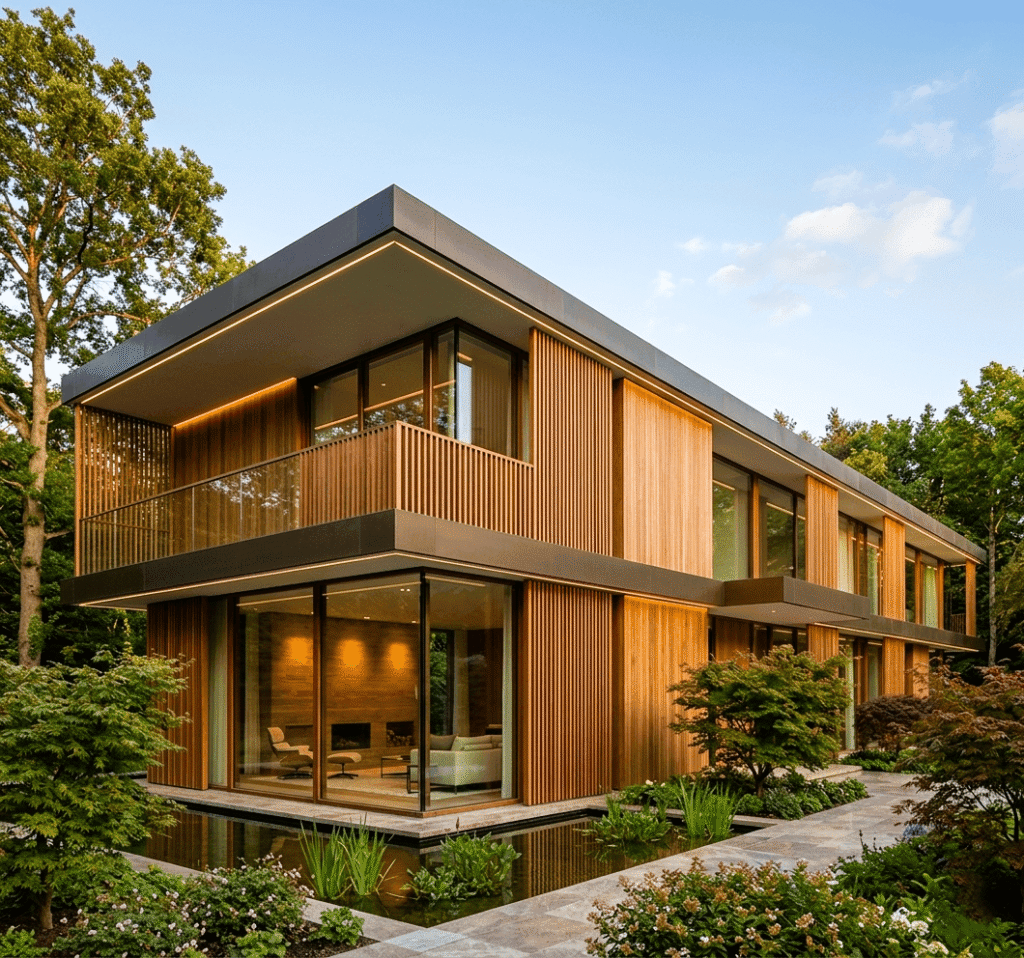
Timber façades are increasingly specified in Dubai’s luxury residential, hospitality, and wellness architecture. However, natural wood alone cannot withstand the region’s environmental extremes.
These systems offer:
- UV-resistant surface stability
- Moisture and humidity protection
- Biological decay resistance
- Low-maintenance exterior performance
Advanced engineered systems such as PARKLEX PRODEMA and WOODN redefine timber performance by combining natural aesthetics with high-density resin protection and composite reinforcement.
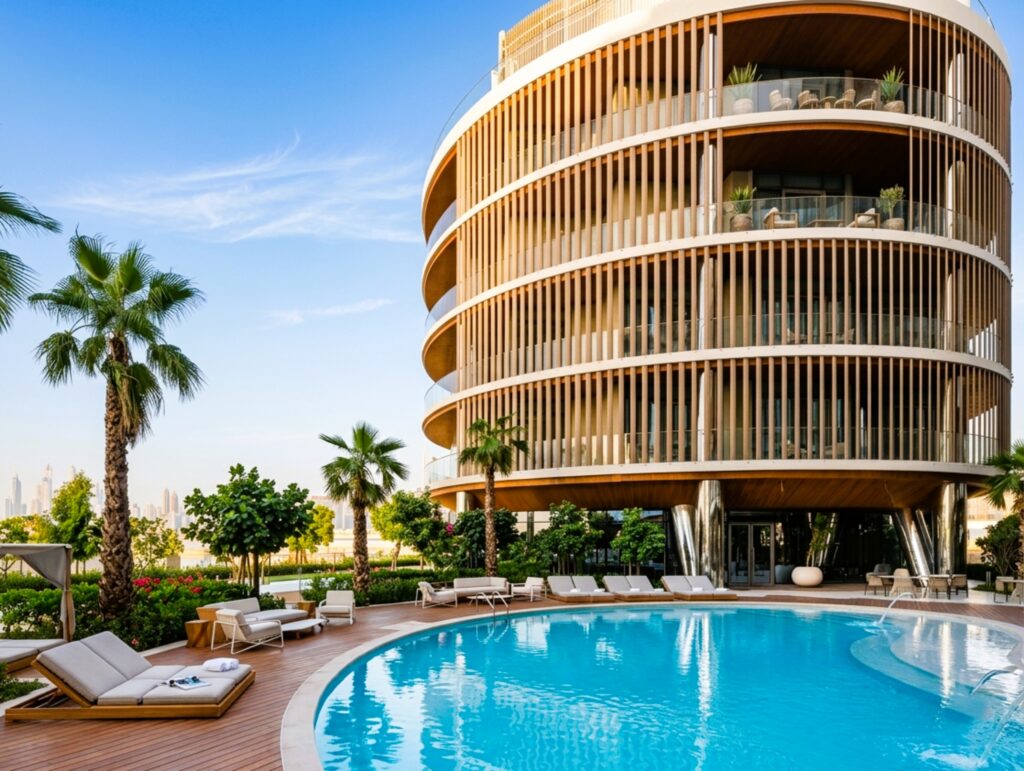
Within ventilated assemblies, engineered timber performs exceptionally well by reducing heat retention behind darker finishes, making it a refined yet technically viable solution in Top Ventilated Façade Systems for Dubai’s Climate: A Complete Specification Guide for Architects.
2. Fibre Cement Façades: Precision, Fire Safety, and Architectural Control
Fibre cement has become a defining material in GCC façade architecture due to its balance of durability, neutrality, and regulatory compliance.
Systems such as EQUITONE offer through-colored composition, ensuring surface consistency even under abrasion from sand-laden winds—a critical advantage in Dubai’s urban environment.
Key advantages include:
- Non-combustible fire-rated performance
- High dimensional stability under thermal stress
- Minimal maintenance requirements
- Sharp architectural detailing capability
For institutional, cultural, and commercial projects, fibre cement remains central to Top Ventilated Façade Systems for Dubai’s Climate: A Complete Specification Guide for Architects due to its long-term reliability.
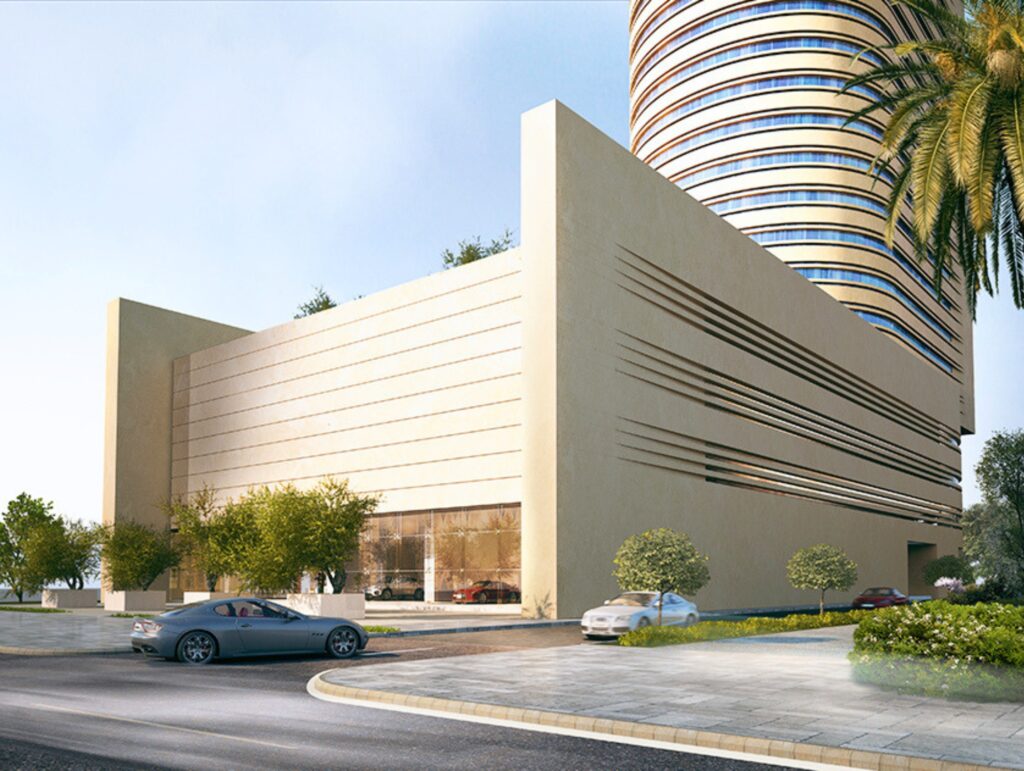
3. Porcelain Façade Systems: High-Density Performance for Extreme Climate Conditions
Porcelain façade systems such as EXATECH and ARGOS represent a new generation of engineered cladding designed specifically for ventilated façade applications in demanding climates like Dubai and the wider GCC.
Manufactured from high-density porcelain, these systems deliver exceptional surface stability, ultra-low porosity, and long-term resistance to UV exposure—making them highly suitable for façades exposed to intense solar radiation, dust, and humidity fluctuations.
In Dubai’s extreme environment, their performance is significantly enhanced when integrated within ventilated façade assemblies. The cavity behind the panels allows continuous airflow, reducing thermal stress accumulation and improving overall envelope efficiency.
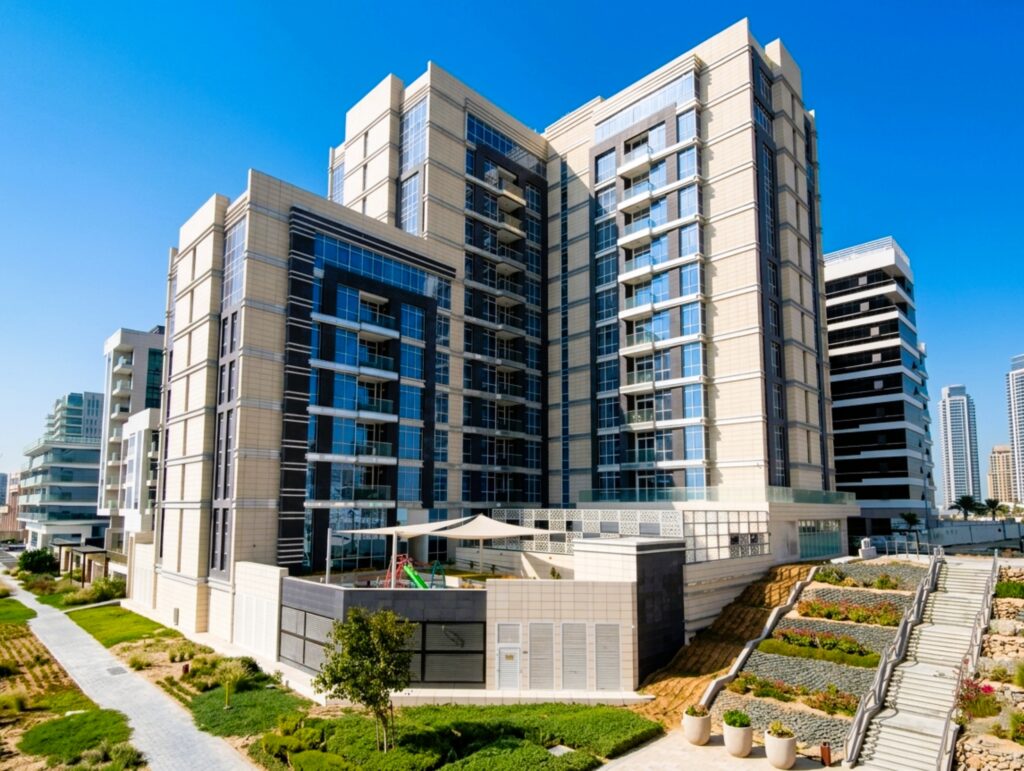
Featured Project: Aamna Residency – EXATECH Porcelain Façade System
The ventilated system improves thermal performance, reduces heat gain, and ensures long-term durability with minimal maintenance.
A strong reference for porcelain façade systems in GCC residential architecture.
Architectural advantages include:
- Extensive range of natural stone, concrete, and mineral-inspired finishes
- High resistance to UV, heat, and color fading
- Non-porous surface for enhanced moisture protection
- Lightweight yet high-strength installation performance
- Suitable for both retrofit projects and large-scale new developments
Porcelain systems like EXATECH and ARGOS play a key role in Top Ventilated Façade Systems for Dubai’s Climate: A Complete Specification Guide for Architects, particularly across education, retail, commercial, and mixed-use developments where durability and design precision must coexist with long-term performance.
4. Terracotta Façades: Thermal Intelligence with Architectural Depth
Terracotta systems, particularly TONALITY, bring a material logic rooted in thermal mass and natural clay composition.
Beyond aesthetics, terracotta offers:
- High thermal performance through mass buffering
- UV-stable natural coloration
- Strong fire resistance properties
- Expressive façade rhythm through louvers and baguettes
In GCC architecture, terracotta is increasingly used in cultural, civic, and educational projects where identity and climate responsiveness intersect.
It remains a critical component in Top Ventilated Façade Systems for Dubai’s Climate: A Complete Specification Guide for Architects due to its balance of tradition and performance.
5. Engineered Stone & Porcelain Systems: High-Density Architectural Durability
High-performance stone and porcelain systems such as ULMA offer the visual authority of natural stone with engineered consistency and reduced structural load.
Their key advantages include:
- Near-zero porosity surface performance
- Extreme UV resistance
- High structural durability in high-rise applications
- Minimal lifecycle maintenance
These systems are increasingly specified for landmark towers and premium developments across Dubai and Saudi Arabia, reinforcing their role in Top Ventilated Façade Systems for Dubai’s Climate: A Complete Specification Guide for Architects.
The Hidden Layer: Substructure Engineering and Installation Precision
While material selection defines aesthetics and surface performance, the substructure defines system integrity.
Aluminium and steel support frameworks must accommodate:
- Thermal expansion and contraction
- Wind load pressures in high-rise environments
- Structural tolerances and façade movement
- Fixing system reliability over time
In Dubai, where tower-scale façades are common, early-stage coordination between architects, façade consultants, and material suppliers is essential to ensure that Top Ventilated Façade Systems for Dubai’s Climate: A Complete Specification Guide for Architects translates into real-world performance.
Why Specification Strategy Defines Façade Success
“In GCC projects, late material changes driven by cost often weaken long-term performance, durability, and maintenance efficiency. A clear specification strategy ensures climate-fit materials, UAE code compliance, lifecycle value, and protection of design intent.”
OBRAS: A Regional Partner in Façade Specification Excellence
With over two decades of experience across the GCC, Obras operates as a specification partner rather than a conventional supplier.
Supporting architects, developers, and façade consultants through:
- Early-stage design consultation
- Material selection advisory
- Technical compliance alignment
- Coordination with façade contractors
This integrated approach ensures that Top Ventilated Façade Systems for Dubai’s Climate: A Complete Specification Guide for Architects is translated into buildable, high-performance architectural outcomes across Dubai, Abu Dhabi, Saudi Arabia, and the wider Middle East.
👉 Obras Project Portfolio
👉 Specification Support & Technical Consultation
Conclusion: Designing the Future of Façades in the GCC
As Dubai continues to redefine global architectural standards, ventilated façades will remain central to sustainable, high-performance urban development.
The future is not about selecting façade materials in isolation—it is about understanding how systems behave under extreme environmental conditions and how they contribute to architectural identity.
Whether through engineered timber warmth, fibre cement precision, terracotta depth, or stone durability, Top Ventilated Façade Systems for Dubai’s Climate: A Complete Specification Guide for Architects represents a shift toward intelligent, climate-responsive design thinking.
In the GCC, façades are no longer just envelopes—they are performance-driven architectural systems shaping the future of the built environment.